
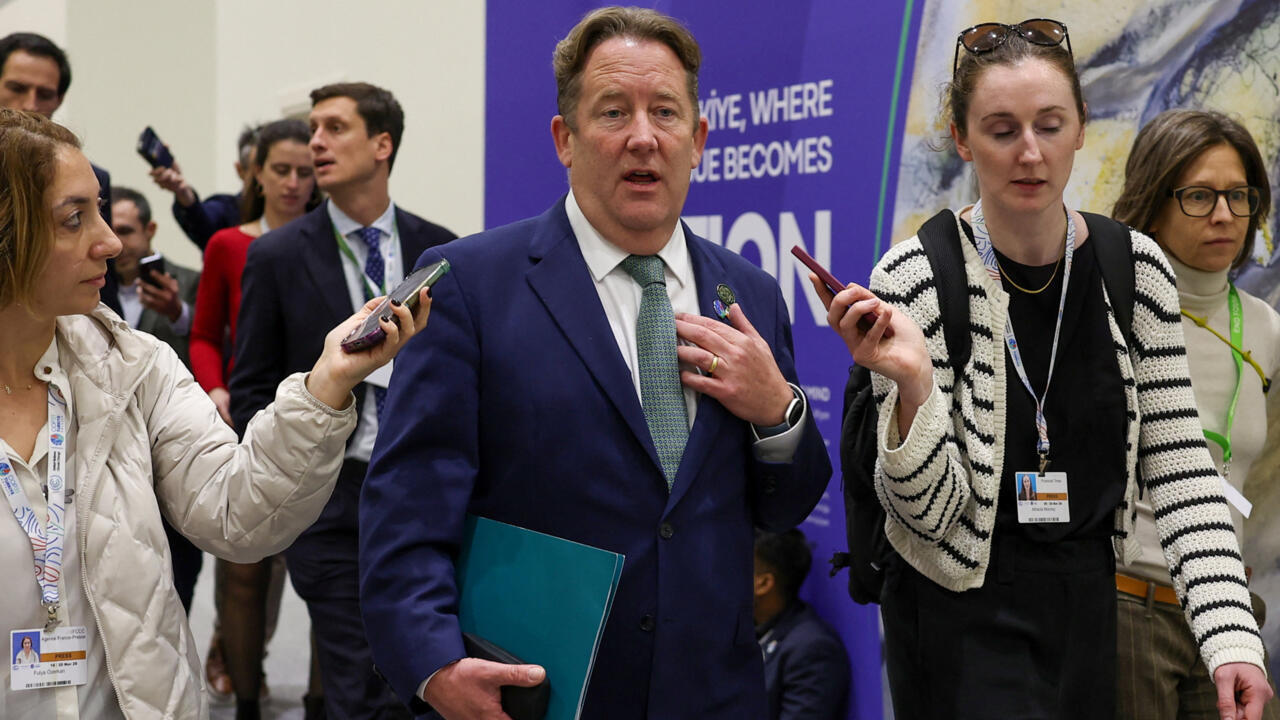
The Cop31 climate summit in Turkey has ended in disarray after the European Union and several other countries rejected a proposed global agreement that failed to explicitly mention fossil fuels. The breakdown, after more than two weeks of negotiations and a record 44 hours of overtime, marks a major setback for international climate diplomacy, with deep divisions over energy policy and financial support for developing nations left unresolved. The Cop31 climate summit in Antalya reached a dramatic conclusion on Sunday when summit president Murat Kurum acknowledged that the proposed agreement had failed to secure the consensus required for adoption. "I understand that there is no agreement on this text. For that reason, these decisions have not been adopted," he told delegates at the closing session. Ireland's Climate and Energy Minister Darragh O'Brien, speaking for the European Union, said the bloc could not accept an agreement that failed to mention the principal cause of global warming. "We will not endorse a cover decision... that does not even mention fossil fuels, which is the key driver of climate change," said O'Brien, whose country holds the EU's rotating presidency. Australia's Climate Change and Energy Minister Chris Bowen, who led negotiations, described the failure as deeply disappointing, identifying fossil fuels and climate finance as the main obstacles. To display this content from X (Twitter), you must enable advertisement tracking and audience measurement. The breakdown came despite last-minute talks between the EU and Saudi Arabia aimed at securing a compromise. O'Brien accused oil-producing countries of obstructing progress, saying the summit had been "hijacked by some oil states". The Marshall Islands, Panama, Vanuatu and Belize also rejected the deal. "We will not compromise our future to benefit fossil fuel interests," Marshall Islands climate envoy Kathy Jetnil-Kijiner told delegates. Under UN climate rules, decisions require consensus, meaning any one of the nearly 200 participating countries can block an agreement. Cop31 draft deal sparks backlash as France warns of 'step backward' Fossil fuel dispute derails negotiations At the heart of the dispute was opposition from major oil-producing nations to language explicitly calling for a transition away from coal, oil and gas. The proposed agreement, known as a "cover decision", was intended to summarise the summit's political commitments and guide future climate action. Instead, it avoided directly naming fossil fuels, referring indirectly to the landmark Cop28 agreement reached in Dubai in 2023, when governments first acknowledged the need to transition away from them. For the EU and climate-vulnerable countries, the omission represented an unacceptable retreat from previous commitments. The dispute unfolded amid soaring energy prices and geopolitical tensions linked to the war between the United States and Iran. Saudi Arabia argued that countries should retain flexibility in choosing how to reduce emissions. "Climate change requires all solutions on the table," said Saudi negotiator Mohammad Ayoub, speaking on behalf of the Arab Group. Another contentious proposal involved expanding carbon capture technologies, promoted by the fossil fuel industry but criticised as expensive and potentially prolonging dependence on coal, oil and gas. UN climate talks run into overtime as countries clash over fossil fuel cuts Environmental organisations urged governments to reject the agreement rather than accept weakened commitments. "This text isn't a climate plan. It's a licence to keep polluting," said Sara Shaw of environmental group 350.org. Turkey and Australia sought common ground through greater emphasis on electrification – replacing petrol-powered vehicles and gas heating systems with electric alternatives. The draft proposed increasing electricity's share of global final energy consumption to 35 percent by 2035, alongside expanding clean energy. However, it did not require additional electricity to come from renewable sources. Coal still generates around one-third of global electricity, while fossil gas accounts for roughly another fifth. India's fossil fuel stance shaped by 'a lot of mistrust', Indian activist says Climate finance divides rich and poor nations Negotiations were also undermined by disagreements over financial assistance for countries facing the worst consequences of climate change. Developing nations have repeatedly demanded more substantial and predictable funding from wealthier countries to help them adapt to rising temperatures, extreme weather and rising sea levels. The removal of a proposed $120-billion climate adaptation target from the final draft particularly angered vulnerable countries. "We need finance, yet our partners showed up to this Cop with empty hands," said Jetnil-Kijiner. "We cannot do this on our own. We cannot survive on empty promises." The dispute highlighted longstanding tensions between wealthy industrialised nations, historically responsible for most greenhouse gas emissions, and developing countries struggling with their consequences. For small island states, funding for coastal protection, resilient infrastructure and disaster preparedness is increasingly vital to their survival. Africa's struggle for electricity puts Cop31 energy goal to the test Scientific warnings overshadow summit's collapse The summit faced pressure to demonstrate progress after another year of destructive climate-related disasters affecting countries from Europe to Nepal and Indonesia. Negotiators also disagreed over how to respond to warnings that the world is approaching a breach of the Paris Agreement's target of limiting global warming to 1.5C above pre-industrial levels. Although the proposed text expressed "deep concern" about temperatures exceeding that threshold, several countries considered its language inadequate. UK climate negotiator Kate Hughes said the draft represented a step backwards. "It moves us backwards on the science... It is a lowest common denominator where it should have been, instead, presenting bold collective ambition on climate action." Another dispute concerned the timetable for assessments by the Intergovernmental Panel on Climate Change (IPCC), the UN-backed authority on climate science. Saudi Arabia, India and Kenya sought to delay the next major reports, while dozens of European, African and Pacific nations wanted them published ahead of the 2028 global stocktake. That assessment will measure international progress on reducing emissions and help shape future climate commitments. The collapse of the overarching Cop31 agreement does not overturn existing commitments under the Paris Agreement or previous UN climate decisions. However, it leaves governments without the new political framework intended to strengthen cooperation on emissions reductions, the energy transition and support for vulnerable nations. The unresolved disputes will now carry over into the next round of international climate negotiations. (with newswires)
Cop31 climate talks collapse as EU rejects deal that omits fossil fuels
Full Article
Original Source
Read the full article at Rfi →KhanList aggregates and links to publicly available news content. We do not host full articles from third-party sources. Always verify important information with original sources.