
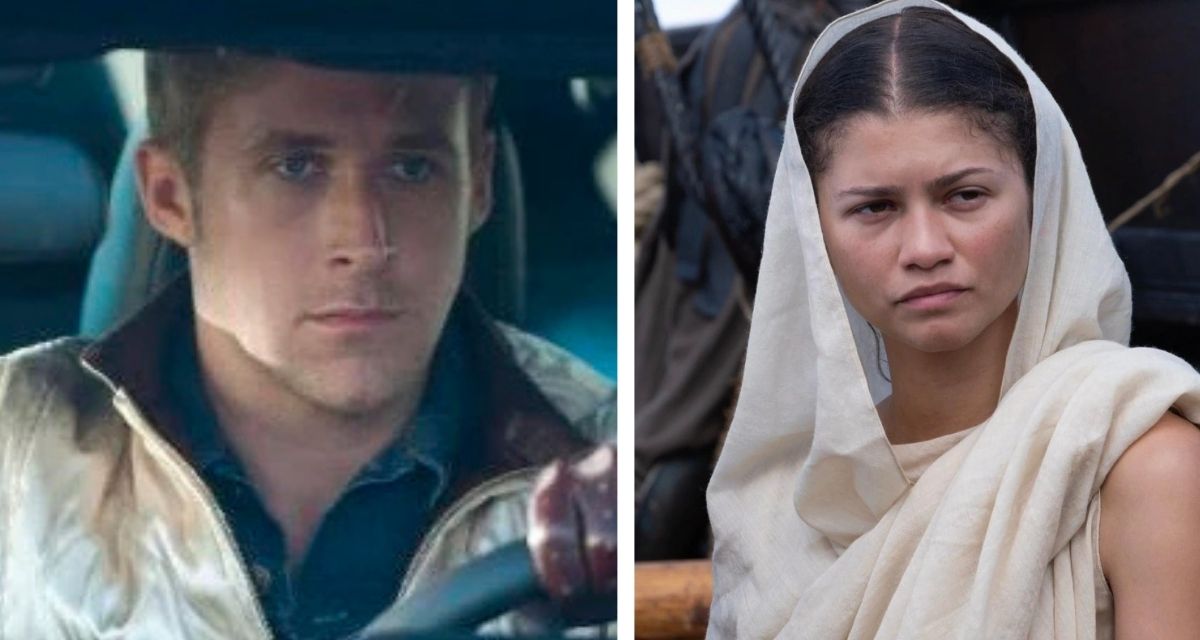
When it comes to acting in front of a camera, actors are often told, “Less is more.” But would doing absolutely nothing with their face result in a believable, movie-worthy performance? According to the Kuleshov Effect theory…yes. A recent video from Lofi Cinema shows how well the technique still works, using modern actors such as Ryan Gosling and Zendaya as examples. The Kuleshov Effect In the 1910s and 1920s, Soviet filmmaker Lev Kuleshov believed audiences instinctively created meaning by connecting two sequential shots, often interpreting them differently than they would be viewed in isolation. In other words, what comes before or after an actor’s close-up can shape how audiences perceive the emotion on their face. To demonstrate this, Kuleshov used identical, expressionless close-up shots of silent film actor Ivan Mosjoukine, then juxtaposed them with three different images: a bowl of hot soup, a child lying in a coffin, and a young woman on a couch. As Kuleshov predicted, audiences thought the actor’s face changed emotion for each scene, believing he looked hungry with the soup, grieving with the coffin, and lustful with the woman. His expression, however, never changed. It’s still used today Kuleshov’s ideas about editing and montage went on to become fundamental to the language of cinema. Alfred Hitchcock used this technique extensively. One famous example is Rear Window, where cutting between Jimmy Stewart’s face and what he looks at turned a blank stare into suspense, suspicion, or judgment. This style of acting has become more prevalent as the industry has shifted toward naturalism, a philosophy based on the idea that people in real life usually conceal their emotions rather than openly display them. Technological advances have also played a role, with high-resolution cameras and the rise of green-screen “volumes.” Has “blank” acting gone too far? Still, plenty of people lament the days of expressive faces. Some have even pointed to the growing use of Botox, which can limit facial movement, as one possible factor behind performances that feel wooden, blank, or artificial. Great screen acting has never been about making the biggest expression. Sometimes a tiny shift in the eyes, or even a subtle twitch of the mouth, is enough to completely change what an audience thinks a character is feeling. The Kuleshov Effect can amplify those subtleties, but it can’t manufacture them. When a face becomes completely unreadable, editing can only do so much to fill in the blanks. “The Kuleshov Effect is a fascinating example of just how much a filmmaker can accomplish with editing. But in the end, no matter how filmmaking technology evolves, audiences will keep craving the same thing: an emotional connection created by a human being.
Cool video explains why great film actors can tell a story without making any facial expressions
Full Article
Original Source
Read the full article at Upworthy →KhanList aggregates and links to publicly available news content. We do not host full articles from third-party sources. Always verify important information with original sources.