
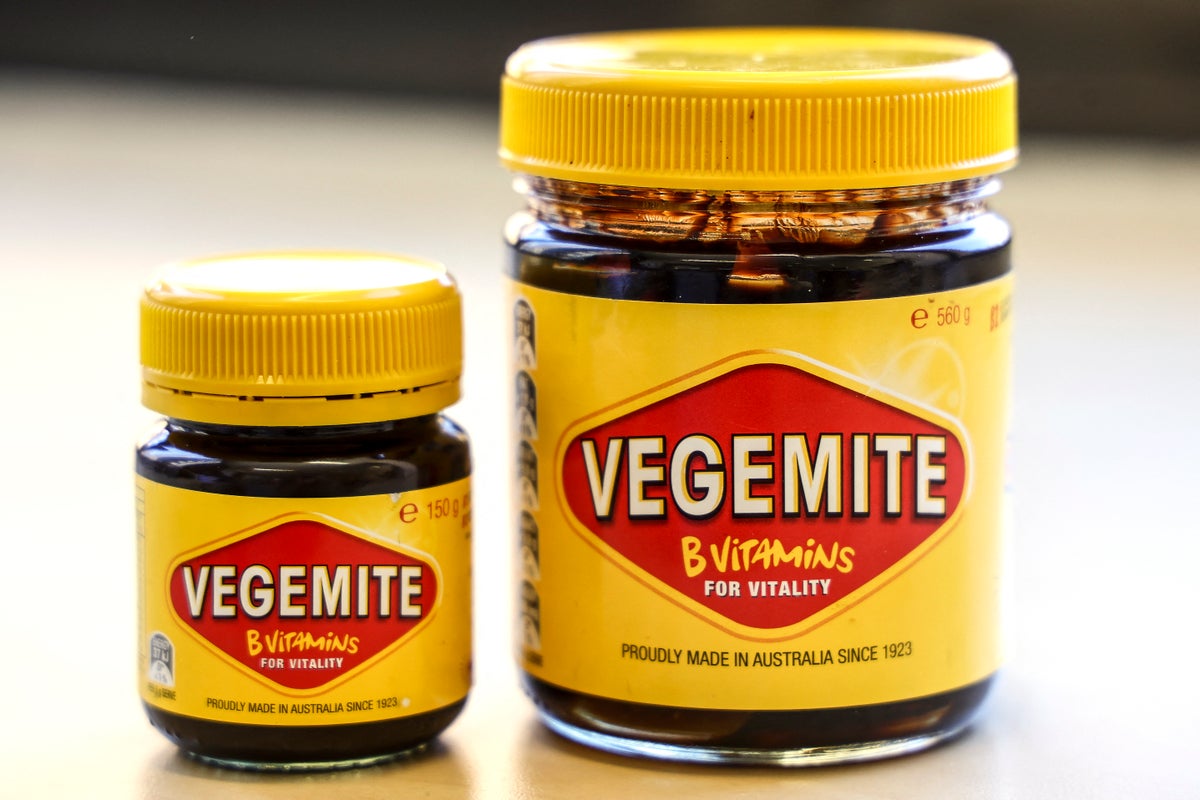
An Australian murderer has lost his legal battle to eat Vegemite in prison, after arguing that the salty spread was so integral to his national identity that banning it prevented him from practising his culture.Andre McKechnie, who is serving a life sentence at Barwon Prison in Victoria, took his fight over the yeast-based breakfast staple to the state’s Supreme Court, arguing that the ban left him feeling disconnected from his family and community.Vegemite, a thick, dark-brown spread made from leftover brewer’s yeast extract, is a staple of Australian breakfasts, typically smeared thinly on buttered toast. First produced in Melbourne in 1923 as an alternative to Britain’s Marmite, it has become a national icon, beloved by some and decidedly less popular with others.The spread has been prohibited in Victorian prisons since about 2006, with authorities arguing that its strong smell could interfere with drug-detection dogs and that it could be used to make alcohol behind bars.McKechnie, however, maintained that it was about more than what he put on his toast.An Australian murderer has lost his legal battle to eat Vegemite in prison, after arguing that the salty spread was so integral to his national identity that banning it prevented him from practising his culture (AFP/Getty)In a 50-page judgment released on Monday, Supreme Court judge Claire Harris acknowledged that the spread had a place in Australian culture but rejected McKechnie’s argument that denying him access to it was unlawful.“Vegemite is a food that may be regarded as part of an Australian culture in that it is a food strongly and traditionally associated with people of Australian background,” she wrote, according to news.com.au.However, the judge was not persuaded that this cultural connection overrode the restrictions that came with imprisonment. “Mr McKechnie’s cultural rights are limited primarily by the fact that he has been sentenced to a term of imprisonment,” she said.McKechnie, who represented himself in court, told the judge that Vegemite had featured in his earliest memories and was closely associated with his family home.“Without being able to consume Vegemite I feel deprived of being able to practice my Australian culture, sad and disconnected from my family and community,” he said in his submissions, according to ABC News.Vegemite, a thick, dark-brown spread made from leftover brewer’s yeast extract, is a staple of Australian breakfasts, typically smeared thinly on buttered toast (Getty Images/iStockphoto)The court rejected his argument that the ban breached legislation requiring prisons to provide food adequate to maintain inmates’ health and wellbeing. That obligation, Judge Harris said, did “not extend to an obligation to provide to prisoners foods of cultural significance to enhance their wellbeing”.During the hearing, Kevin White, a manager at Corrections Victoria, told the court that the smell could interfere with the work of detection dogs.“Any odour, such as Vegemite, which is pungent, would distract a canine from detecting the illicit drugs they are trained to detect,” White testified. He also said he believed the spread could accelerate the process of making homemade alcohol.Victoria is not alone in its hostility to the Australian breakfast staple behind bars. Queensland, South Australia, and Tasmania also prohibit Vegemite in prisons, while New South Wales allows it in correctional centres.McKechnie was sentenced to life imprisonment after being found guilty of the 1994 stabbing murder of property developer Otto Kuhne in Queensland. He was transferred to a Victorian prison about 10 years into his sentence.
Convicted murderer loses court battle over legal ‘right’ to eat Vegemite
Full Article
Original Source
Read the full article at Independent →KhanList aggregates and links to publicly available news content. We do not host full articles from third-party sources. Always verify important information with original sources.