
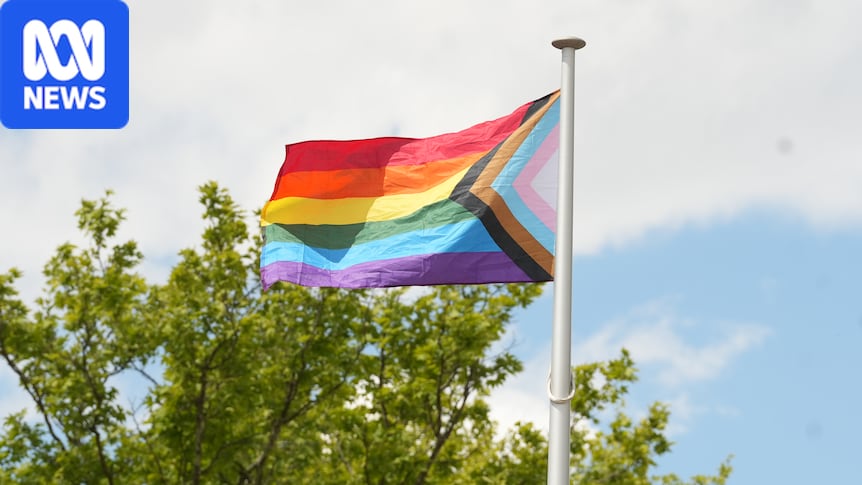
Laws banning practices that attempt to change, suppress or eradicate a person's sexual or gender identity in Tasmania are set to pass the state's parliament, after a decade-long fight.Advocates have praised the laws as being the "most comprehensive and effective" of their kind in Australia in providing protection to the LGBTIQA+ community.The Greens' bill introduces a criminal offence for intentionally engaging in conversion practices towards another person which causes them injury.It includes safeguards for parents and health practitioners who are acting ethically and lawfully.The bill passed the state's lower house with the support of Labor and four independents, along with Premier Jeremy Rockliff and ministers Bridget Archer and Roger Jaensch, after the Liberals granted a conscience vote.It was debated in the upper house this week and passed with one minor amendment, in a debate that supporters and opponents of the bill described as highly respectful.It now returns to the lower house, due to the amendment, where it is expected to pass.Cassy O'Connor says Tasmania will be a "kinder, safer" place with the ban in place. (ABC News: Owain Stia James)Greens MLC Cassy O'Connor told parliament the party's legislation sought to "strengthen that protection from the harm caused by, at best, a misunderstanding of human diversity, the very biological, emotional and psychological facts of it"."And, at worst, ignorance, prejudice and a faith in junk science," she said."Should Tasmania follow the lead now set by other jurisdictions and prohibit conversion practices, our island would be a kinder, safer place for the significant proportion of our population who identify as LGBTIQA+."Ruth Forrest also spoke in favour of the ban. (ABC News: Mackenzie Heard)Independent MLC Ruth Forrest, who also spoke in favour of the legislation, told parliament members of the LGBTQIA+ community were not "ill, damaged, or sinful or broken"."But they can be harmed, broken, made ill and damaged by conversion practices."Tasmania's laws have the most similarities with laws in Victoria, while Western Australia and the Northern Territory are the last jurisdictions without a ban on conversion practices.Politicians share emotional storiesMany MPs shared stories of those impacted by conversion practices, when expressing their support for the legislation, and took time to express how the legislation addressed concerns raised by members of the community.Independent upper house MP Bec Thomas said she heard them, but that the legislation was sound.Bec Thomas says the ban helps create a Tasmania where "every person can live with dignity and authenticity". (ABC News: Kate Nickels)"Reasonable people have raised genuine questions about its reach," she told parliament."But freedom of religion does not include a right to harm another person. Parental rights do not remove a child's rights to safety and dignity. Personal autonomy does not require the law to ignore coercion, misinformation or profound power imbalances."…Importantly, the bill sends a clear message about the Tasmania we want to be."A Tasmania where people are not told they are broken because of who they are. A place where shame is not used as a tool of control, a Tasmania where every person can live with dignity and authenticity."The Conversion Practices Prohibition Bill was introduced by the Greens. (ABC News: Kate Nickels)Liberal MPs were granted a conscience vote on the bill, meaning they did not have to vote along party lines.Upper house independents Tania Rattray and Rosemary Armitage attempted to move several amendments based on feedback from their communities.Rodney Croome said survivor advocates were "elated". (ABC News: Ebony ten Broeke)Equality Tasmania spokesperson Rodney Croome said advocates for conversion survivors were "elated" to see it pass."The conversion ban is a tribute to the bravery of Tasmania's conversion survivors whose stories of the harm they experienced have propelled this important reform," he said."The ban is the most comprehensive and effective of its kind in Australia, taking Tasmania from one of the last states to ban conversion to now having the strongest law."
Conversion practices set to be banned in Tasmania, ending decade-long fight
Full Article
Original Source
Read the full article at Abc →KhanList aggregates and links to publicly available news content. We do not host full articles from third-party sources. Always verify important information with original sources.