
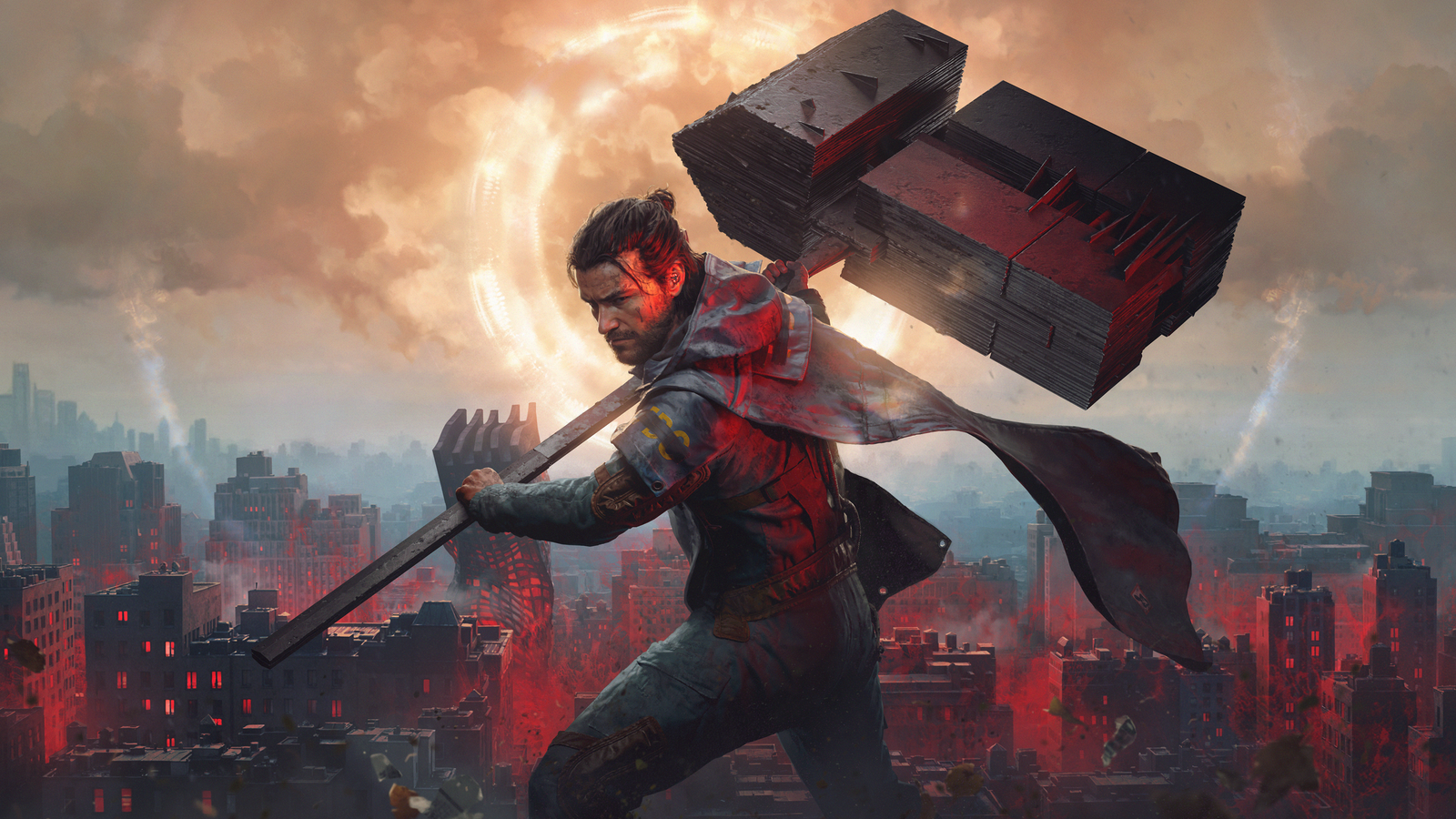
Published Sep 28, 2026, 2:10 PM EDT Giovanni Colantonio is a video game journalist who has covered the industry for two decades. He was formerly a senior editor at Digital Trends and has contributed to publications like Inverse, Fanbyte, and Hard Drive. His specialty is criticism, as he’s focused on a modern approach to video game reviews that’s focused on the nuances of how interactivity communicates to players. He is currently a member of the New York Video Game Critics Circle. Even single-player games feel as malleable as multiplayer ones these days Image: Remedy Entertainment A few weeks before its official Sept. 24 launch date, I played through Control Resonant — in some form. The version of Remedy Entertainment’s trippy action RPG you can play today is so different from what I played that it may as well be entirely new to me. That’s thanks to a much-needed day one patch that completely overhauled combat. Though that doesn’t entirely fix my gripes with what, at the time, I felt was a surprisingly shallow hack-and-slash game filled with placebo progression hooks, it vastly improves Resonant’s fatal flaw. It also reveals the slippery nature of modern games. In an age where developers can completely overhaul a game on the fly, it becomes more challenging to know when the best time to play a game is. Do you jump in on day one to satiate your hype, or do you give it a few weeks, a month, or even year once patches iron out the frustrations that the early birds dealt with? In today’s gaming landscape, patience is increasingly a virtue. If you’re playing Control Resonant today and scratching your head about early reviews that criticized its combat, here’s what the game was like pre-patch. Previously, enemies were pure damage sponges. While the puny Hiss critters were easy to take out, anything bigger than that required a lot of slashing to take down. The relief was supposed to come from Resonant’s Falter status effect, a stagger system that allows Dylan to zip directly to enemies and execute them. But the amount of times you’d need to hit an enemy to fill their Falter gauge was so high that you were more likely to just kill them the old-fashioned way first. This didn’t make fights difficult, necessarily, but it did make them ruthlessly boring. That was partially due to missions like “The Sinkhole,” which throws waves and waves of beefy enemies at Dylan. Even worse were the Resonant battles, the game’s major boss fights. One of the earliest ones players are likely to come up against is the Deserter, a fiery boss hiding out in a factory. Before the patch, the Deserter fight was an absolute slog. Its attacks were easy enough to dodge, but it was an exhausting endurance test that could take a good 20 minutes of repeated attack cycles to beat. The best way to deal with that initially was to head into the accessibility menu. To Remedy’s credit, Resonant features an excellent amount of customization that lets players rebalance combat on the fly. Let it be a reminder that an attention to accessibility in games benefits all players. I made heavy use of that menu during my playthrough, toggling the settings on and off when fights felt flat out boring. That didn’t totally save my playthrough, mind you; preset accessibility settings like Field Agent, which significantly reduces the difficulty by taking down enemy health and increasing Falter, trivialized fights. I struggled to find the right balance, but I could at least see how combat was supposed to flow. Image: Remedy Entertainment Remedy was right to rush out a change before early players could get too deep, because the version of Resonant out now is significantly more enjoyable to play. Battles are less about burning down enormous health bars, and more about building up Falter so Dylan can zip from enemy to enemy and chain finishers. It’s faster, more fluid, and better plays to the gravitational thrills of Resonant’s movement. The patch doesn’t fix every problem I had in my first playthrough. I still largely feel like I’m pressing one button over and over to trigger a set combo. Dylan’s skill tree is a disappointment too, as so many unlockable powers add passive perks that don’t really change how I play. I’ve yet to find much depth in an action RPG that prioritizes higher numbers over skill and expression. That was a core part of Willa Rowe’s own review for Polygon, which argued that Remedy struggled to nail its first attempt at a proper action RPG. Even with a good patch, I largely agree when it comes down to the fundamentals of combat. But Resonant is a different game now, and one I wish I could have experienced on my first playthrough to better inform my feelings on it. Free sign-up Get Polygon’s Wishlister newsletter A weekly cheat sheet to what you’ll eventually love to play. No buying, no commitment — just saving for later. Sign up free Free. Unsubscribe anytime. From an inside baseball perspective, it’s an interesting challenge for critics: How do you review a moving target? This question hung over Cyberpunk 2077 in 2020, a game that launched in a barely playable state on consoles that would clearly get overhauled over time. (Reviewers were infamously only given access to PC versions ahead of release.) It also happened to Remedy’s last game, 2025’s FBC Firebreak. After its release, Remedy significantly re-tuned the live service shooter to fix some of the most common complaints about progression. I’ve yet to go back to it since then … so, have I really played it at all? If you want a more recent, and extreme, example of that, look to this year’s Crimson Desert. Following a wave of criticism at launch from players and critics alike, developer Pearl Abyss has spent the entire year revamping its game, right down to its basic controls. If you played it in March, you arguably haven’t really played Crimson Desert — at least not the game as it will be remembered long-term. Similarly, Bungie’s Marathon is currently in the midst of a radical overhaul that will turn the extraction shooter into a different game altogether. I loved everything about the launch version of that game and the creative decisions tied to its multiplayer format. If it shifts to a PvE game that wipes its high-concept strengths away, will I still be able to say that I think Marathon is a great work of art? Bold creative choices begin to feel like bugs to be fixed if enough players complain about them. Control Resonant is a much smaller example of that this year, but still a fascinating one to consider. More updates are already planned for the game, including the addition of a heavily-requested photo mode. Even single-player adventures can now function like live service games that shapeshift to meet a community’s feedback. (Also see Marvel’s Wolverine and its nerfed scent trails as an example.) Today’s gaming landscape increasingly asks us to put faith in a game’s foundation above its moment-to-moment feel, and trust that the developers will strengthen the surrounding structure eventually. Is that a good or a bad thing? I suppose it depends on when you play a game. It’s great news for anyone who tends to jump into games long after their release day. They get to play the best possible version of that game, while day-one players increasingly become early access playtesters. As someone who fell into the guinea pig group with Resonant, I can’t say that I’m entirely satisfied with the 25 hours I spent with it knowing how much I likely would have enjoyed it six months from now.
Control Resonant Proves Everything Is a Live-Service Game Now
Full Article
Original Source
Read the full article at Polygon →KhanList aggregates and links to publicly available news content. We do not host full articles from third-party sources. Always verify important information with original sources.