
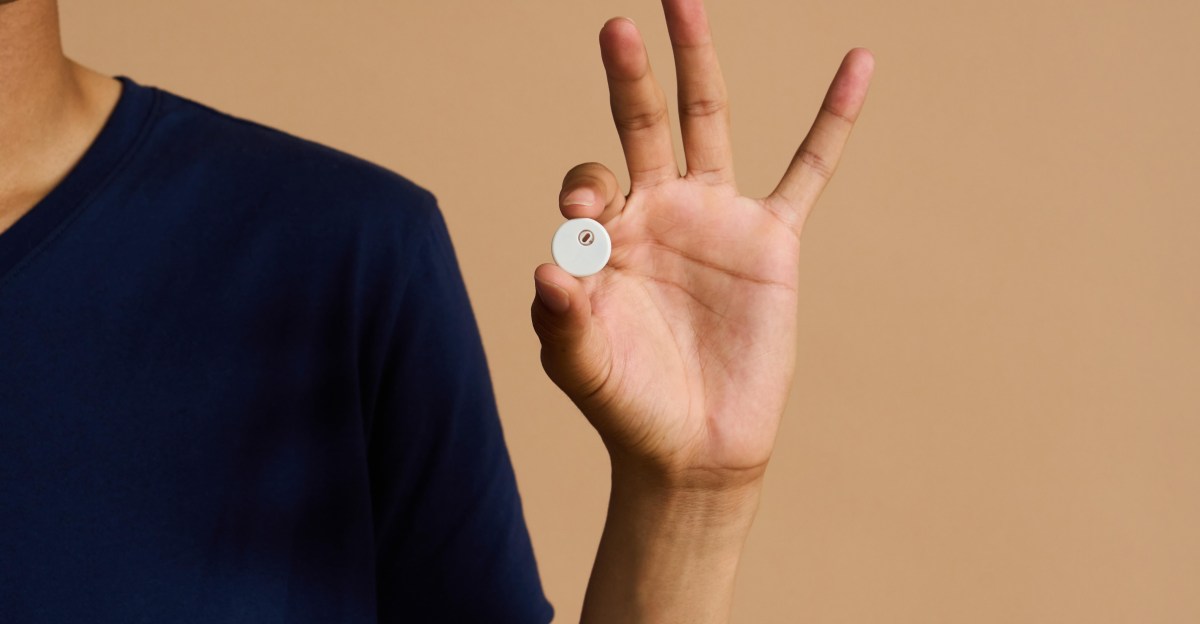
This is Optimizer, a weekly newsletter sent from Verge senior reviewer Victoria Song that dissects and discusses the latest gizmos and potions that swear they’re going to change your life. Opt in for Optimizer here.My mom was a dramatic woman prone to overreacting. When I was a snotty teen, I told her she needed to take several chill pills. Most of the time, I was right. Back in 2004, when she was swearing in Korean and hurtling down the highway in a Honda Odyssey that had no business going 20mph over the speed limit, swerving in and out of traffic as I vomited bile into a plastic baggie, I have to admit that she was right to rush me to the emergency room.After two days of nonstop vomiting, I thought I just had a gnarly stomach bug. Instead, I watched as doctors furrowed their brows as I failed to keep down tiny sips of water. They asked if I was diabetic. My mom said no; I was just on a ridiculous low-carb diet. Dizzy and disoriented, I was told to try peeing on a strip of paper. It changed colors. After that, things went blurry as they frantically worked to get me into a bed. I don’t remember much else, except waking up several hours and two whole IV drips later to a doctor lecturing my mom about why unsupervised diets in teens can be dangerous.In an ill-advised attempt to lose some weight, I’d accidentally created a situation where the ketones in my blood had reached toxic levels — the official term: ketoacidosis.This memory was the first thing I thought of when I heard last week that Abbott had obtained FDA authorization for a new continuous glucose monitor (CGM). The Libre Duo is the first 2-in-1 CGM that measures both glucose and ketone levels. As for why diabetics would want to know about ketones, it’s the same reason why I ended up in the ER roughly 22 years ago: ketoacidosis.Ketoacidosis sucks, but it is somewhat common for diabetics. Diabetic ketoacidosis (DKA) occurs when there’s not enough insulin to turn blood glucose into energy. The liver then turns to burning fat, and ketones are a byproduct of that process. That’s not inherently bad, but too many ketones cause blood to become highly acidic. In diabetics, this can be an alarmingly fast process. It can also be fatal if left untreated. It’s typically a concern in Type 1 diabetics, since they don’t produce enough insulin. However, it can also occur in Type 2 diabetes — which develops over time, often due to lifestyle factors.“It’s actually the most common hyperglycemic emergency for people living with diabetes. It’s the leading cause of hospitalization, and it’s increased quite rapidly over the last decade,” says Mark Taub, vice president of technical operations for Abbott’s diabetes care business. “The symptoms of rising ketones are easily missed — they’re a lot like a flu or infection.”According to Taub, the new Abbott sensor measures beta-hydroxybutyrate — a type of ketone — and is intended to function like a “check engine light.” Worn for 10 days at a time, the sensor can not only deliver alerts when a diabetic’s glucose levels are out of range, but it can do the same for ketones. The idea is to not only provide an actionable warning system, but to do so in a way that’s already familiar to diabetics. It uses the same app, works with smartwatches, and allows caregivers to monitor the glucose / ketone levels of loved ones — a potentially huge benefit, as DKA is a significant risk among diabetic children.“DKA is one of the primary fears or dangers of uncontrolled or unmonitored diabetes,” says Dr. David Ahn, chief of diabetes at the Mary and Dick Allen Diabetes Center for Hoag Hospital. Ahn notes that ketone monitoring is much more common in children as part of a standard diabetes education protocol. “The overwhelming majority of adult clinicians, and even endocrinologists like myself, don’t routinely prescribe ketone strips … in a perfect world, [ketone strips] would be one of the things that we send patients home with. But in practical scenarios, it often just isn’t a top priority.”Ahn also notes that ketone monitoring could be helpful in two specific treatment scenarios. The first is for insulin pump users. They face a higher risk of DKA because if there’s an undetected pump issue — such as a leak or connectivity issues — it could inadvertently lead to an interrupted insulin supply and, fairly quickly, ketoacidosis. The second scenario is for diabetics taking SGLT2 inhibitors — a class of oral medications that help lower blood sugar by helping diabetics excrete excess glucose in urine.“SGLT2 inhibitors are quite common, but they’re primarily a Type 2 diabetes drug,” says Ahn, who says that anecdotally, clinicians have found that it helps with Type 1 diabetics too. “The problem is that our biggest clue that a patient has DKA is high blood sugar. When you’re taking an SGLT2 inhibitor, you have this uncommon pattern where your sugar might not be that high, but you can be in raging ketoacidosis.”That, Ahn says, has been the major reason why the FDA has yet to approve SGLT2 inhibitors for Type 1 diabetics, even though it could help control blood sugar. So on paper, a 2-in-1 glucose and ketone monitor could act as a fail-safe, opening up new treatment options for Type 1 diabetics. That, combined with helping diabetic children and insulin pump users, means this tech should be a no-brainer, right?Well, yes and no.CGMs are an imperfect technology. Peruse any diabetic subreddit, and you’ll see folks who — while grateful for the peace of mind CGMs can provide — have concerns about accuracy, data fatigue, and interpreting what their glucose levels mean. Glance at discussions about the Libre Duo, and you’ll find plenty of Type 1 diabetics who aren’t sold on the idea. Some diabetics claim they haven’t needed to check for ketones in over a decade. Others worry about false positives triggering disruptive alerts. (And after testing the Dexcom G7 for the past few weeks, alerts can be quite loud.)“I think it’s going to maybe be a rocky first year, or couple of years, but I’m also excited because I think we’re going to learn a lot. There’s so much we don’t know about ketone levels on a continuous basis,” Ahn says. “If you think about it, a ketone strip doesn’t even typically give you a number. It’s a color code of mild, moderate, and severe.”This is one of the clearest examples of how wearable technology can be a double-edged sword. On the one hand, the tech opens up a bigger picture of what’s going on in the human body under a wide range of previously unmeasurable scenarios. That can end up being helpful for medical discoveries and for building a greater understanding of certain conditions than spot-check tests. It’s why so many medical researchers see the potential in using wearables. However, the challenge is tuning the massive amount of continuous wearable data to identify and draw a user’s attention to the correct signals.Abbott’s Taub says the company worked with the FDA and the clinicians to come up with ketone performance standards for the Duo. But even among the professionals, there’s still a degree of guesswork when it comes to interpreting new data.“There was a recent consensus statement published by top experts basically saying, ‘This is our guidance on ketone monitoring.’ They set a cutoff of 3 mmol/L. But even in that article — and I’ve talked to the authors of that article — that’s our best guess as to what numbers we should start worrying about,” explains Ahn. He went on to say that factors like pregnancy, illness, fasting, and heavy exercise are all instances outside of DKA that could cause ketone levels to temporarily rise.“The medical community is a little anxious about understanding the signal-to-noise ratio,” Ahn says. “I think there’s going to be a lot of false positives.”Eventually, it’s likely that the Duo sensor will follow a familiar wearable script. It’ll undoubtedly enable the medical community to learn a great deal more about ketones and DKA. The early stages will be a tad bumpy, especially since wearable tech has a complicated relationship with accuracy. For now, Taub says the Duo will require a prescription, and Abbott doesn’t have immediate plans to expand access to over-the-counter applications. But it’s not hard to see a scenario where, down the line, the Duo’s technology is marketed to a wider consumer base.Metabolic tech is the new wearable frontier. Health tech startups increasingly want bodily fluids to measure metabolism. GLP-1s are an ever more popular treatment. The populace is experimenting with gray market peptides. The keto diet — which gets its name from ketones and where a metabolic state of fat-burning called ketosis is the ultimate goal — has been popular for close to 20 years now. You don’t have to be a genius to see how various consumer wearable companies could look at the Duo and see a new data field riddled with dollar signs. From there, it’s not hard to see wellness influencers flattening a genuinely helpful technology as the “secret hack” the medical institution “doesn’t want you to know.”This is, after all, what happened with CGMs.The Duo makes me reflect on some periods in my life where I was less wise. I ended up in the ER with ketoacidosis, a rare feat for non-diabetics, because I was a stressed-out teen lured into a fad diet by glossy magazines and celebrities wasting away in low-rise jeans. Would some version of the Duo have helped prevent that? The self-quantifying nerd in me says yes. The wearable expert in me suspects that, given my previous experiences with CGMs, I personally may have avoided an ER trip and instead spiraled into data obsession and then fatigue.None of this is to say that the Libre Duo is bad. Wearable tech is always a neutral tool with the potential to enable a lot of good — it just requires thought and discernment to be used in a truly healthy way. The thing is, the vast majority of people in their day-to-day lives won’t need to monitor for ketoacidosis. When medical science adds another data set to our lives, it’s important we ask why; that we understand what it actually tells us, and not just what we hope it says, or what we hope it can do for us.Follow topics and authors from this story to see more like this in your personalized homepage feed and to receive email updates.Victoria Song
Continuous glucose monitors are about to get more complicated
Full Article
Original Source
Read the full article at Theverge →KhanList aggregates and links to publicly available news content. We do not host full articles from third-party sources. Always verify important information with original sources.