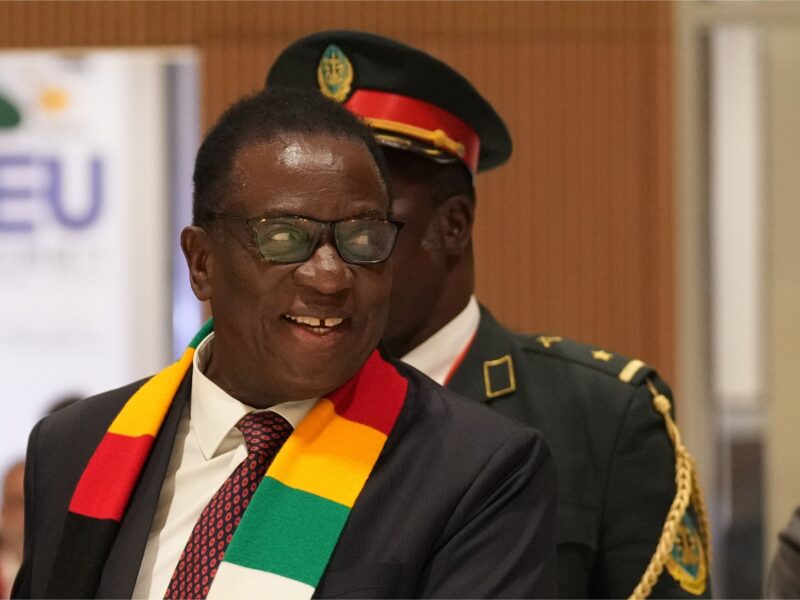
Calls have emerged on social media for a national stayaway or demonstrations this Friday.(AFP) — From the cramped cubicle where he sells phone accessories, Stephen Ngwere was sharply critical of Zimbabwe’s new constitutional changes but unsure if he would join calls to protest.The amendments scrap presidential elections and open the way for President Emmerson Mnangagwa, 83, to stay in office beyond the end of his second term in 2028, among other measures.Opposition groups have filed court challenges arguing the changes should be put to a referendum and accused Mnangagwa’s Zanu-PF of undermining democracy to reinforce its 46-year grip on power.Calls have meanwhile emerged on social media for a national stayaway or demonstrations this Friday, meeting with mixed reaction.“It’s now up to us to resist this regression into tyranny,” said Ngwere, believing the amendments signed into law on July 7 had snuffed out hopes for improvements to the hard lives of many.Young people must “step up to help change the fortunes of our nation”, the 35-year-old told AFP in the capital Harare, still unsure if he would take part in any protest action.The newly formed People’s Coalition – launched by prominent opposition figures as the constitutional amendments sailed through the Zanu-PF-majority parliament – has been the main group to voice support for a stayaway.Others have warned of the risks of protests not authorised by the government, accused of stifling dissent through arrest, intimidation and tainted elections that have fractured and weakened the opposition.Around 100 people were arrested for taking part in small demonstrations against Mnangagwa in April last year.For unemployed Harare resident Bruce Peter, 31, calls for demonstrations were merely “a mischief by a few opposition players who are trying to seek relevance”.‘Deepening polarisation’ -The influential Zimbabwe Council of Churches on Tuesday threw its weight behind calls for a referendum, noting “deepening national polarisation” and serious “contestation” over the amendments.It said any protests must be peaceful and authorities should refrain from “arbitrary arrests, collective punishment, intimidation or use of force”.The Zanu-PF, reportedly riven by internal divisions, says the constitutional changes will bring stability and policy continuity as Zimbabwe posts some of the region’s fastest growth rates.Mnangagwa came to power in 2017 in a military-backed coup that ousted Robert Mugabe at the age of 93 and after 37 years in power.The amendment extending parliamentary and presidential terms from five to seven years means he could stay on until at least 2030.A positive IMF review this week said Zimbabwe recorded strong growth of 8.3 percent in 2025, continuing into early 2026 and supported by improved agricultural production, robust mining activity, and favourable gold prices.“We hear about growth, but it’s not ours,” said Tendai, a 40-year-old teacher in the second city, Bulawayo, whose salary barely covers rent.She was “unequivocally against the amendments” but would only join protest action led by a convincing opposition group, she said, not giving her full name for fear of retaliation.The “systematic dismantling” of Zimbabwe’s main opposition and “fear of the persistent repressive politics” left little space for organised dissent, said Brian Raftopoulos, an analyst based in South Africa.Muted public reaction to the constitutional amendments does not suggest support but “fear, political fatigue… and limited civic space”, said analyst Reason Wafawarova.Joseph, a Bulawayo nurse who struggled to provide for his family even with extra shifts, also objected to the amendments but said he would not raise his voice.“We are effectively heading towards a one-party state… these guys do not hesitate to kill; they will do anything to stay in power,” said the 38-year-old, also giving only one name.Subscribe to our free newslettersOur weekly newsletter Closing Arguments offers the latest about ongoing trials, major litigation and rulings in courthouses around the U.S. and the world, while the monthly Under the Lights dishes the legal dirt from Hollywood, sports, Big Tech and the arts.Additional Reads
Constitutional changes raise tensions in Zimbabwe
Full Article
Original Source
Read the full article at Courthousenews →KhanList aggregates and links to publicly available news content. We do not host full articles from third-party sources. Always verify important information with original sources.