
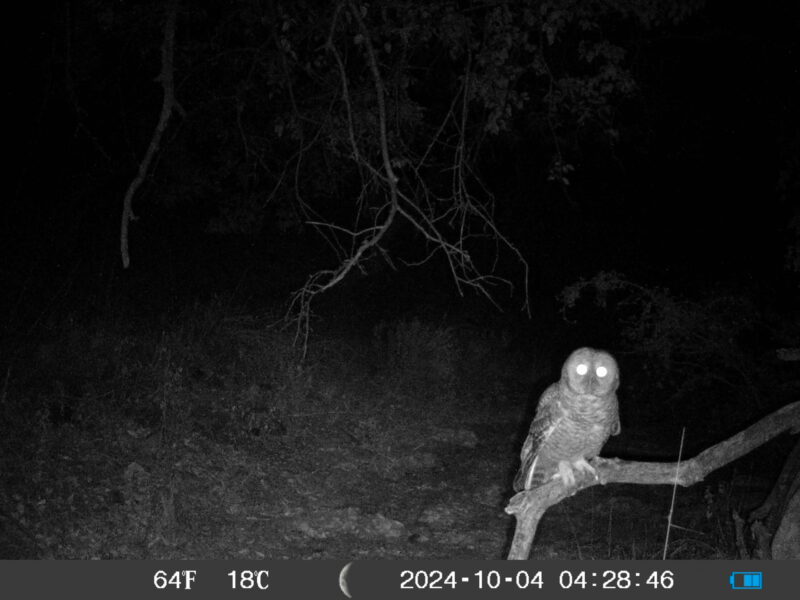
In its environmental assessment, the Bureau of Land Management acknowledged it did not consider the effects of groundwater pumping on the threatened yellow-billed cuckoo.TUCSON, Ariz. (CN) — The Trump administration ignored concerns over impacts to Mexican spotted owls and at least five other threatened or endangered species when it approved exploratory drilling for a copper mine in southern Arizona, the Center for Biological Diversity says in a new lawsuit.Opponents of the mine — operating along two miles of Copper Creek, a tributary of the Lower San Pedro River near Mammoth, Arizona — say it will trample the ancestral lands of the San Carlos Apache Tribe and degrade groundwater at alarming rates, leading to habitat loss and land subsidence downstream.“Copper Creek Canyon and the broader Galiuro Mountains are a vital part of the ancestral territory of the Apache people,” San Carlos Apache Tribe Chairman Terry Rambler said in a Monday press release. “For decades, our tribe has sought protection of the yellow-billed cuckoo and other species occurring throughout the Lower San Pedro Watershed. Once again, however, the Bureau of Land Management has failed to consult with the tribe before allowing harmful activities that will degrade and destroy our cherished lands and the species occurring within them.”In the federal lawsuit filed Monday in Tucson, conservationists and the tribe ask the court to halt exploratory drilling until the U.S. Bureau of Land Management and the U.S. Fish and Wildlife Service evaluate the project’s threats to wildlife in accordance with the Endangered Species Act.The Canadian-owned Faraday Copper has conducted exploratory drilling in the Copper Creek area since 2022. In June 2025, the bureau released its final environmental assessment, approving more exploratory drilling and finding no significant impact on the Mexican spotted owl or the yellow-billed cuckoo.Despite submitting photo evidence, the Center for Biological Diversity says the bureau incorrectly concluded no Mexican spotted owls are in the project area, which spans about 65 square kilometers.“Federal officials knew that Mexican spotted owls were in the project area and still approved more than 1,300 acres of industrial drilling on our public lands,” said Russ McSpadden, Southwest conservation advocate at the Center for Biological Diversity. “The Endangered Species Act requires federal agencies to follow the best available science and protect threatened wildlife before any damage occurs. We’re asking the court to stop this drilling and give these imperiled owls the protections they deserve and that the law requires.”Although the project is not on the reservation, the San Carlos Apache Tribe sent numerous letters requesting consultation and explaining the historic and cultural importance of the entire Galiuro mountain range to many historic Apache bands that make up the tribe. The bureau ignored those letters, according to the center.The project includes industrial drilling at 67 sites, bright lights, noise from heavy equipment and truck traffic, and surface disturbance that disrupts owl breeding, hunting and roosting behavior, according to the center. The project will withdraw at least 70,000 gallons per drill rig per month.In the environmental assessment, the bureau acknowledges groundwater declines are the “primary driver of declines of riparian species.” In the same document, it states it did not evaluate the effects of groundwater pumping on the cuckoo.In making its final decision, the bureau relied on a third-party consulting company that found in its Biological Evaluation that the project may affect, but is not likely to adversely affect, the threatened yellow-billed cuckoo. The agency engaged in an informal consultation for the cuckoo but not for the Mexican spotted owl based on the assertion that none are present in the area.“The Lower San Pedro Watershed is one of Arizona’s most important wildlife corridors, yet federal agencies ignored compelling evidence that this landscape is home to threatened owls,” said Melissa Crytzer Fry, chair of the Lower San Pedro Watershed Alliance.The San Pedro remains the last major undammed river in the Southwest, and accordingly, its watershed “contains four of the rarest habitats in the Southwest,” according to the center.Mexican spotted owls are rare birds that depend on the Southwest’s rugged canyon and forest habitat. Federal data estimate roughly 1,300 known owl territories in the U.S., representing only a few thousand birds in small, fragmented and declining populations. Mexican spotted owls have been protected as threatened under the Endangered Species Act since 1993.The plaintiffs challenge the bureau’s actions under the Endangered Species Act, the National Environmental Policy Act and the National Historic Preservation Act.Subscribe to our free newslettersOur weekly newsletter Closing Arguments offers the latest about ongoing trials, major litigation and rulings in courthouses around the U.S. and the world, while the monthly Under the Lights dishes the legal dirt from Hollywood, sports, Big Tech and the arts.Additional Reads
Conservationists say feds failed to consider Arizona mining effects on Mexican spotted owl
Full Article
Original Source
Read the full article at Courthousenews →KhanList aggregates and links to publicly available news content. We do not host full articles from third-party sources. Always verify important information with original sources.