
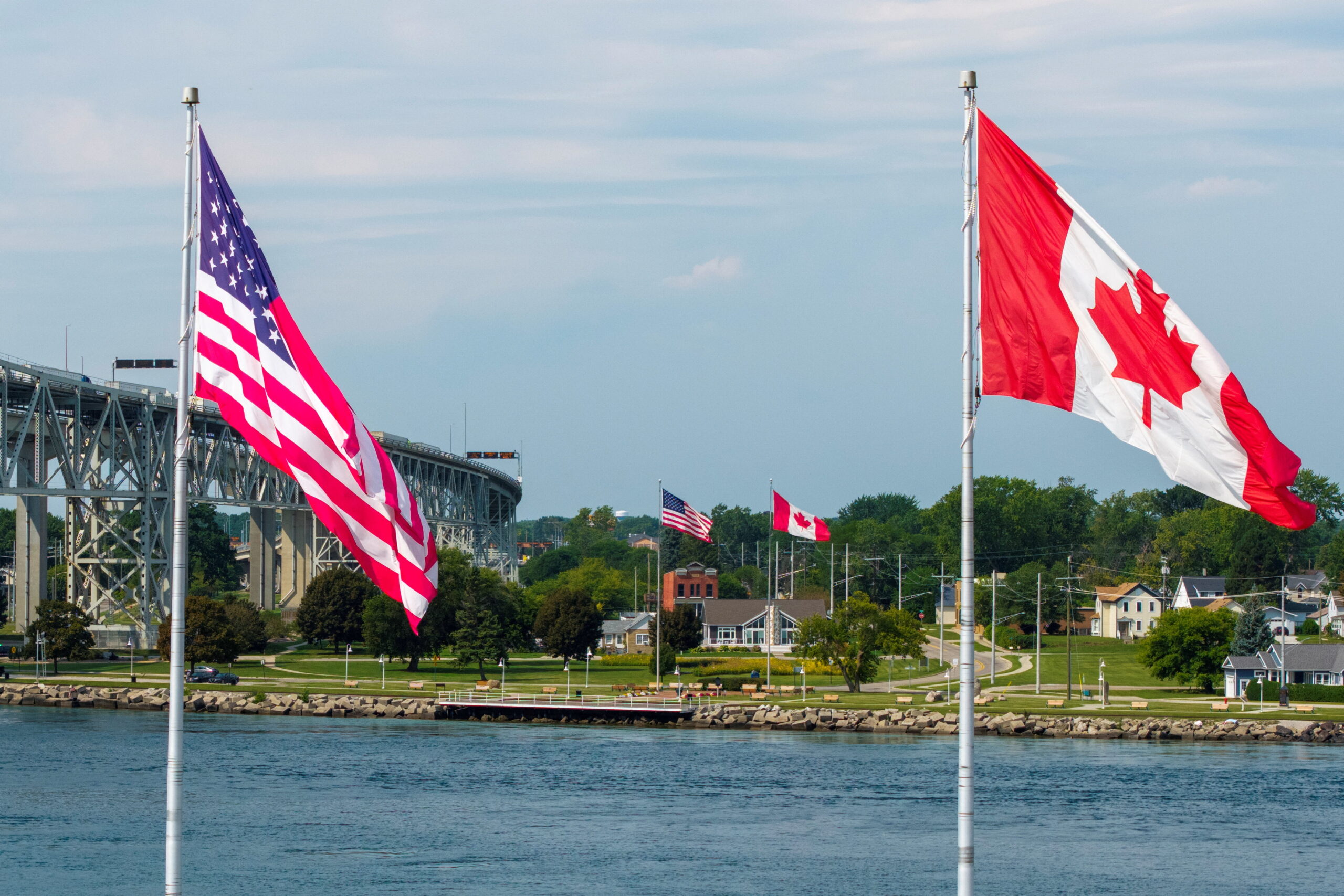
Once the new Congress swears in, one of its first moves may be restricting US President Donald Trump’s tariff authorities—at least, some of them. To be sure, the majority of executive trade authorities are likely to stay in place. That includes the national security authority under Section 232 of the 1962 Trade Expansion Act and the unfair trade practice authority under Section 301 of the Trade Act of 1974. But there appears to be enough bipartisan support to repeal Section 338 of the Tariff Act of 1930 and override Trump’s veto. In August, Trump invoked Section 338 against Canada—the first time the authority has even been used to impose tariffs. In doing so, he placed 50-percent tariffs on roughly twenty billion dollars worth of Canadian goods. Rather than conceding, Canada imposed retaliatory tariffs, leading to a tit-for-tat trade war with little progress made since and no end in sight. But what would change if these tariffs were overturned? Below is a breakdown of how repealing these tariffs would impact trade flows, which products would be most affected, and the issues that would continue to persist in the US-Canada relationship. The headline tariff rate would decrease Despite targeting a relatively small share of the total trade between the US and Canada, the 50 percent tariffs have impacted the headline tariff rate considerably, in part because they apply regardless of whether a product is covered by the United States-Mexico-Canada Agreement (USMCA). Following the imposition of these duties in late August, the overall tariff rate on imports from Canada increased from 2.8 percent in July to 4.2 percent in September. For tariffed products, the average tariff rate shot up from around 1.7 percent in July to 33.0 percent in September. Removing the Section 338 tariffs would bring the average US tariff rate on Canadian goods back to its baseline of around 3 percent and dramatically decrease the rate on tariffed goods. But within the broader tariff regime, repealing these duties would be a drop in the bucket: The average tariff rate on Canada was just 0.1 percent in January 2025, before the Trump administration imposed its tariffs. That shows it would take more than repealing Section 338 to return the tariff rate—and the broader relationship—back to normal. Impacted US importers would catch a break US importers of goods subject to the Section 338 tariffs would see their costs fall. In September, US businesses paid around $385 million in duties on imports subject to the Section 338 tariffs, up from $33 million in tariffs on the same products in July. Importers of goods subject to these tariffs—everything from silver jewelry to swimming pools—would see relief, but other Canadian goods would still face Section 301 and Section 232 tariffs. Additionally, while a bill in Congress currently calls for providing refunds for tariffs paid, the timeline is uncertain, meaning businesses that are struggling under the 50 percent tariffs today may shutter before the refunds arrive. Affected US exporters would regain competitiveness Canada’s retaliatory tariffs impact US exporters, as US goods become less competitive when taxed 50 percent upon entering the Canadian market. Canada’s retaliation list is dollar-for-dollar, but not product-for-product, the same as the US tariff list, so it impacts roughly twenty billion dollars worth of US exports. Smartphones, perfumes, paper towels, and cheese, among other goods, are subject to 50 percent retaliatory tariffs, and a de-escalation in the trade war could offer these exporters a break. But Canada’s retaliation list is broader than this too. It imposed retaliatory tariffs in response to Section 232 steel and aluminum and auto tariffs—and it’s unlikely those will be repealed without a broader pullback from the US. A repeal can’t relieve all tension A rollback of Section 338 tariffs may deflate some of the tension between Canada and the US, but not all issues in the relationship can be so quickly resolved. The 10-percent tariffs on non-USMCA-claiming Canadian imports under Section 301 would remain. Likewise, the Section 232 tariffs on steel, aluminum, and trucks would still be in place, and tariffs on autos and parts are set to double to 50 percent in January 2027 if Washington and Ottawa fail to reach a deal. Additionally, the US declined to renew USMCA in July, which kickstarted a decade-long negotiation period, adding uncertainty and strain to the relationship. Repealing Section 338 may be a good place to start for a Congress wanting to rein in Trump’s tariffs. The tariffs are relatively small on a macro scale, politically salient, and separate from the broader regime created by Section 301 and Section 232, meaning Section 338 can be removed without undermining Trump’s broader policy objectives. Other countries may also breathe a sigh of relief after the repeal, seeing as the Section 338 tariff authority doesn’t require any process or investigation and thus contributes to much uncertainty while it is on the table. Repealing these duties may be a quick and relatively light lift. But the still present high tariffs, distrust, and deep tension between the US and Canada may not be so easy to unwind. Madeline Chalecki is an assistant director at the Atlantic Council’s GeoEconomics Center. Josh Lipsky is vice president and chair of international economics and senior director of the GeoEconomics Center at the Atlantic Council. Image: Canadian and U.S. flags fly on both sides of the St. Clair River near the Blue Water Bridge, connecting Sarnia, Ontario, and Port Huron, Michigan, in Sarnia, Ontario, Canada, September 2, 2026. REUTERS/Carlos Osorio
Congress could soon rein in Trump’s tariffs on Canada. Here’s what that could look like.
Full Article
Original Source
Read the full article at Atlanticcouncil →KhanList aggregates and links to publicly available news content. We do not host full articles from third-party sources. Always verify important information with original sources.