
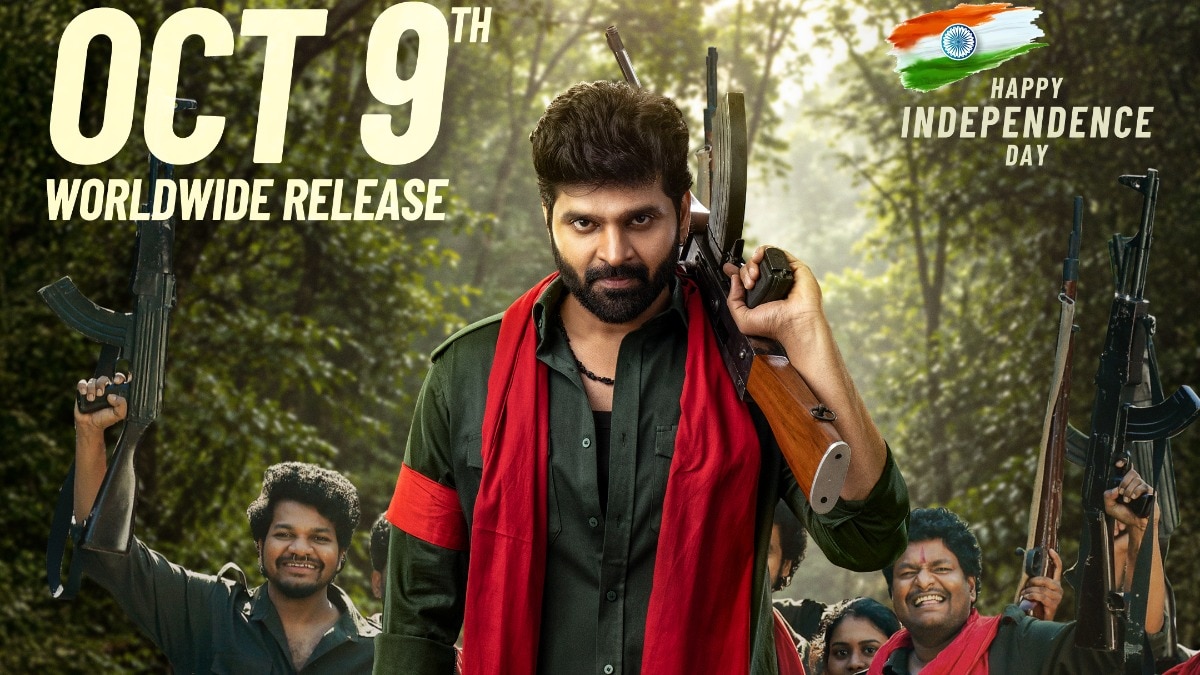
Sree Vishnu is one of Telugu cinema’s more interesting actors, with a knack for experimenting with subjects beyond the usual commercial template. His comedy films deserve particular appreciation for the ideas they explore. Unfortunately, Comrade Kalyan is another reminder that an interesting premise does not guarantee an interesting film. Despite its unusual blend of comedy and Naxalism, director Janakiram Marella’s film settles for predictable gags, exaggerated characters and recycled humour.The film also raises a larger question: why must every interesting idea in Telugu cinema be padded with template comedy, movie references and memes? Comrade Kalyan makes one wonder whether filmmakers would be equally willing to attempt comedy around other prominent political ideologies in today's India. That is a debate worth having, but let’s not lose our way, much like the director, who seems to have lost sight of his own interesting idea.Set in Madugula in 1992, the story follows Kalyan (Sree Vishnu), a devoted fan of actor R Narayana Murthy who leases a theatre to screen his films. When Sithara (Mahima Nambiar) saves his mother (Radikaa Sarathkumar) from a life-threatening situation, Kalyan falls in love with her. A series of unexpected events takes him from his ordinary village life into the forest, where he finds himself leading a gang plotting against a minister. How he ends up in this unlikely situation forms the crux of Comrade Kalyan.On paper, it is a promising idea. The problem lies in its execution. The film assumes audiences will overlook logic in exchange for laughs, but that bargain works only when the comedy is consistently funny. Here, the jokes are so familiar that one can often anticipate the punchline before the characters deliver it. There are moments when the film gets things right. The Telugu-to-English love letter scene is amusing, while Satya's Dubai Babu provides some of the first half's liveliest moments. His 'a friend in need is a friend in a beard' one-liner and 'Mohanlal salaam' outburst land because of his timing and delivery. The sequence in which Kalyan becomes Comrade Kalyan is also intriguing, provided one is willing to suspend disbelief. The film occasionally hints at the sharper commentary it could have offered. A scene in which the captive minister serves tea to the Naxal gang while his own driver drinks tea on the sidelines suggests a subtle shift in the balance of power. The opening also establishes the Naxal backdrop before introducing Sree Vishnu through an Anna song, gradually revealing his character. These moments show the director understands the potential of his setting, making the reliance on routine comedy all the more frustrating.The first half is passable, with Shine Tom Chacko's police officer, Radikaa's card-playing mother and Sithara's introduction providing varying degrees of entertainment. The heroine's Odia background, however, adds little beyond a handful of comedy episodes, while the humour involving Upendra Limaye frequently falls flat.The second half is where the film begins to feel like an endurance test. Once Kalyan enters the forest, opportunities for organic comedy diminish, and the screenplay struggles to compensate. The minister's kidnapping offers another chance for confusion-based humour, with Vennela Kishore brought in to generate laughs. Some of it works, but the material feels too familiar to leave much of an impression.The larger problem is the film's treatment of Naxalism. The subject carries considerable political and social weight, yet the police and Naxalites are reduced to gullible caricatures. Can an ordinary man really manipulate both groups so effortlessly? The comic premise allows room for exaggeration, but the writing repeatedly mistakes implausibility for humour.Retaining Satya throughout the second half is a sensible decision, but even he cannot rescue material that has run out of steam. The same characters return with variations of the same jokes, while Upendra Limaye's track becomes increasingly tiresome. The climax compounds the problem by abandoning comedy for a heavy-handed message. For a film built around Sree Vishnu's comic strengths, ending on such a serious note feels particularly misguided.Sree Vishnu brings his usual ease to the role. His timing occasionally makes otherwise ordinary dialogue work, and it is easy to see why a less capable performer might have struggled with Kalyan. Satya is equally effective when the writing gives him something worthwhile to do. Shine Tom Chacko's character remains underwritten, Mahima Nambiar gets little to work with, and Radikaa's initially lively presence gradually loses its charm. Upendra Limaye, meanwhile, needs material that takes him beyond this repetitive comic territory. Sai Sriram's cinematography is a significant asset, capturing the village and forest settings beautifully. Vijay Bulganni's music is serviceable, and the production values are solid. However, technical polish cannot compensate for a screenplay that lacks consistency and conviction.Ultimately, Comrade Kalyan has a promising idea and occasional flashes of humour, but both are buried under predictable comedy. It is frustrating to see a filmmaker approach an unusual subject only to retreat into familiar jokes. For audiences seeking undemanding time-pass entertainment, the film may offer a few laughs. For everyone else, it is another missed opportunity.- Ends
Comrade Kalyan review: Sree Vishnu's naxal comedy gets lost in the woods
Full Article
Original Source
Read the full article at Indiatoday →KhanList aggregates and links to publicly available news content. We do not host full articles from third-party sources. Always verify important information with original sources.