
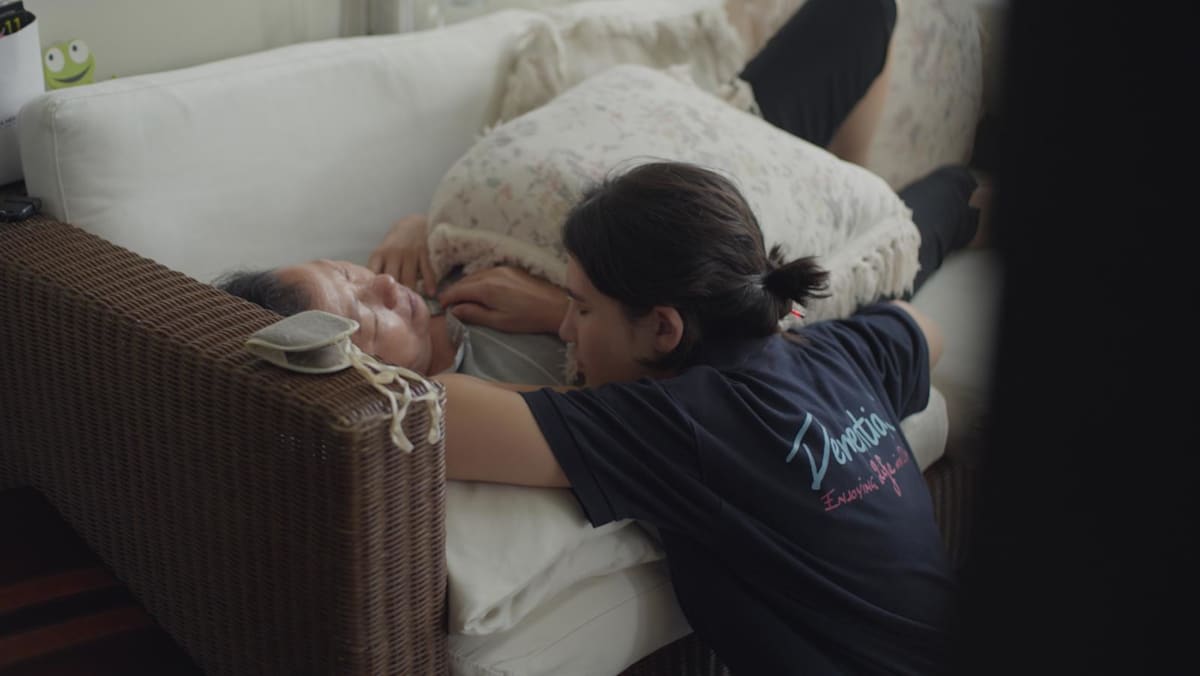
Commentary As Singapore officially becomes a 'super-aged' society, it bears repeating: Dementia is not normal ageing, say Dementia Singapore’s Bryan Tan and Philip Yap. New: You can now listen to articles. This audio is generated by an AI tool. 27 Nov 2026 06:00AM SINGAPORE: His memory was “not as good as before” and he started having trouble navigating and managing his finances. But Tom*, recently retired at age 70, attributed it to “senior moments”.After some persuasion from his wife, he sought medical attention and was diagnosed with early Alzheimer’s Disease, the most common form of dementia. Tom was sceptical. He felt well and independent, and “very far” from what his late mother who had dementia used to be. He believed he would get better if he exercised more, ate more healthily and went to bed earlier.As Singapore officially becomes a 'super-aged' society with more than 1 in 5 citizens aged 65 and above, it bears repeating: Dementia is not normal ageing. With age, we may experience mild memory decline – but not to the point of being unable to cope with day-to-day living. By 2030, an estimated 152,000 people in Singapore could live with this crippling illness that progressively diminishes the mind and body. A diagnosis of dementia often conjures anxiety of an uncertain future and is experienced as the beginning of the end. Yet, despite the inevitable losses, we have more ways now to help people with dementia live as well as possible for as long as possible. NOT JUST A BRAIN DISEASEBut dementia is also not just a medical condition.Understanding dementia as a disease of the brain is necessary for accurate diagnosis and timely treatment. Today, we finally have treatments that target the plaques and tangles in Alzheimer’s Disease and bring about some slowing of cognitive decline. However, the benefits of these treatments are modest – estimated to be one year of “time saved” over a 4-year period of progressive deterioration with dementia. Even as the treatments can slow decline, they also come with a very hefty price tag, with no subsidy currently, and the risk of adverse effects such as brain swelling and bleeding. But if we see dementia only as a biomedical problem, we risk looking for only medical solutions.How people live with dementia also depends on their general physical and psychological well-being, their personality and life history, as well as the people and environment around them.Framing dementia with this enhanced biopsychosocial approach is more valuable and hopeful because it opens more possibilities for interventions. It means families, friends and the wider society can step up to help beyond what doctors and healthcare professionals provide. THE STRUGGLE TO PROVIDE AND ACCEPT HELPIn our interactions with people living with dementia, what many fear most after diagnosis is the loss of a familiar way of life, personal identity, freedom and control, as well as the stigma of living with dementia. To cope with this, people with dementia may become more determined to maintain a semblance of normalcy and assert their identity and independence. Yet, the lack of appropriate support and assistance can accelerate dementia progression. They can forget whether they have eaten or taken their medication, which may result in skipped meals or inappropriate doses that can worsen their physical health.When their psychosocial needs are not met, they are more likely to experience anxiety, shame, denial and depression. Their self-awareness can also diminish. Some may be unaware of their declining abilities while others, like Tom, dismiss them as normal age-related changes and get defensive when offered help.Stoic insistence on handling matters personally could unwittingly put them at risk of harm, for example, getting lost outside home and falling victim to financial scams.Refusing help can lead to tensions at home and strain relationships, especially when family members or caregivers are accused of encroaching on their freedom or controlling their life. Such conflicts add to the frustration and exhaustion so many caregivers already bear in silence. For those living with dementia, the challenge is to recognise they need not desperately hold on to every aspect of life, and that accepting help from those they trust does not mean surrendering everything. For families, importantly and particularly in the early stages after diagnosis, the challenge is not to take over. Rather than attempt to help the person remember or insist on factual correctness, families must learn to step into the person's lived reality with empathy, preserve emotional security and ensure safety.NO ONE CAN OR SHOULD FACE DEMENTIA ALONEIn Tom’s case, his reluctance to accept the diagnosis stemmed largely from seeing how advanced dementia reduced his mother to a bedridden state. He feared facing the same fate and becoming an immense burden to his family.A counsellor from the Post-Diagnostic Support programme helped Tom come to terms with his diagnosis. They explored Tom’s hopes and worries, deciphering what mattered most and helping him build coping skills for living with dementia, yet allowing him to grieve what he could lose. Through facilitated candid conversations, Tom and his family were able to confront their fears together.About six months after his diagnosis, Tom decided to make plans for the future. He formally documented his wishes in the case of life-limiting situations in the future in an advance care plan. He also applied for a Lasting Power of Attorney to entrust his wife and son with the power to make decisions on his behalf when he eventually loses mental capacity.Good dementia care should be about the person – engaging meaningfully, enabling agency and upholding personhood – and not just focused on their declining abilities. And when memory fades, families provide the continuity between past and present. Such person-centred care is meaningful, but not easy for families to provide alone. Eventually, caregivers take on custodial care completely and it can become physically gruelling and emotionally draining.Community care organisations can step up. Dementia Singapore and Lien Foundation recently launched the Post Diagnostic Support Plus programme to support families and caregivers into the advanced stages of dementia. Friends and the wider social network also play an indispensable role. Participation in long-standing friendships, neighbourhood activities, recreation and rituals help preserve their sense of identity, purpose and belonging. Programmes such as Voices For Hope give them a space to speak about their diagnosis and experiences, and feel less stigmatised and more empowered.Just as dementia is neither normal ageing nor just a medical condition, those living with dementia should not be seen as people fading away or passive recipients of care but dignified members of the community.*A pseudonym was used in this commentary.Bryan Tan is CEO and Dr Philip Yap is Chairman of Dementia Singapore.
Commentary: Living well with dementia means more than treating the disease
Full Article
Original Source
Read the full article at Channelnewsasia →KhanList aggregates and links to publicly available news content. We do not host full articles from third-party sources. Always verify important information with original sources.