
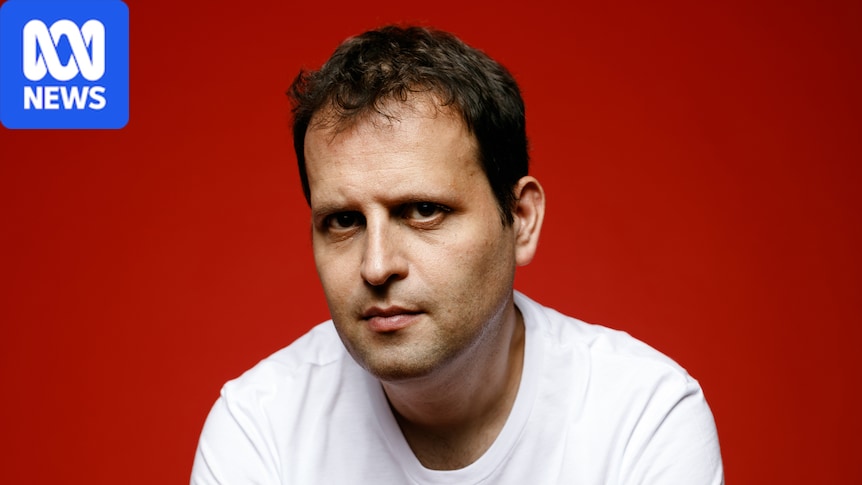
Years after UK comedian Adam Kay left the medical profession, he is as determined as ever to use his creativity to explore some the industry's concerning truths.Kay was a global bestseller for his memoir This is Going to Hurt and won a BAFTA TV award for its remake.After working six Christmas periods on the wards, 'Twas the Nightshift Before Christmas dives back into the treasure trove of his junior doctor diaries, revealing the realities of frontline workers during the festive period in a live show.WARNING: This story contains mention of suicide.----There's quite a funny juxtaposition wearing a novelty tie at Christmas on the wards while also having to deliver some pretty hard news. What is it like to do that in the moment? It's inevitable that over the Christmas period you'll have to work a lot of shifts often where you'd much rather be at home, and so you do what you can in the absence of being around your friends and family to make things a bit more fun. It does occasionally mean you're doing CPR wearing reindeer ears or something. The wards get dressed up; you can make quite a good reindeer out of a speculum with a couple of googly eyes and a little red pom-pom on the end that looks a bit like a reindeer. So the gynaecological and obstetric wards often have those.But the patients don't particularly want to be in hospital on Christmas Day. So I think it's generally a good thing having a bit of decoration up and the odd novelty tie. Your diaries from your time as a doctor seem to be a never-ending source of inspiration for your work. Will you ever run out of material?I keep writing my diaries. They are obviously less about life and death — it's mostly just the weird and awful things my toddlers have done. I'd say the well has run pretty dry of my medical diaries, so I'm going to have to at some point retrain as a priest or something but time will tell whether there's a market for diaries of me complaining that my kids have put crayon up the walls. How does humour show up in your family day-to-day? Oh, I think it's crucial. It's part of me.A lot of what I do with the kids is just total nonsense because that's my language. They're just of the age where they realise that it's funny to change a word in a song to "poo" or something. The main way it manifests now is their nursery sending feedback that they sang some sort of profane version of a nice nursery rhyme they were all meant to be doing in class. And I'm like: "I have no idea how that happened."As a comedian, that must be one of your proudest moments as a dad. Yeah, exactly. That's all I want from them, to get in trouble at school. Bouncing between being an author and on TV and being comedian, do you get restless between your creative pursuits? I think that's spot on. I had my sensible job for a long time, which I gave up to do creative stuff. I think I always want to — if it doesn't sound too wanky — feel challenged by what I do.I never want to just do the same thing again and again and again because it'll just be diminishing returns. And if I won't enjoy it as much, it's not going to be as good for the audience, whether they're a live audience or a reading audience. And so I do that by making sure that I jump from thing to thing. Is that the sort of intensity you still crave after finishing being a doctor? I definitely don't crave the same intensity. I definitely don't miss the stakes being quite so high. I like what I do. I'm really, really lucky to be in the position where I was a writer.Adam Kay draws inspiration from his time working in health care during the holiday season for his latest show. (Supplied: Darren Gerrish/WireImage for The Royal Academy of Arts)To now be in the position where I'm the person who's choosing the things I do is so fun and such a privilege and so few writers get to do that. I want to be busy and as long as the quality stays there, I don't mind if people like my stuff or don't like my stuff — that's down to them.I never want anyone to say, 'oh, we dialled this one in', or 'he just sort of churned that one out'.So I always make sure that I'm proud to have my name on it, whether it's a TV series or a picture book for four-year-olds.So at what stage in your creative process are you thinking about the audience then? Ultimately my first thing I did that came to mainstream attention was from something that was never intended to be read by a single person. Those diaries were just my diaries and I was just writing them for me. And so by sort of following that model through, I should write everything for me.Adam Kay won four awards at the 2018 UK National Book Awards. (Getty Images: Mike Marsland)And a lot of the stuff I write is funny. If it makes me laugh, then I hope it makes someone else laugh. And so that's my benchmark. Since you've left medicine, do you feel like the culture has improved?Every single time after a show I'll sit and do a signing afterwards. People say "this could be set in a hospital here" because they seem to be pretty universal issues.Most hospitals now feel like there's a pressure on them to have some kind of acknowledgement that they need to be doing something for their staff. But a lot of the time when you scratch the surface, their wellbeing service is something like free Zumba classes once a fortnight or a half-price meditation app. So I think there's now an acknowledgement this is something that there needs to be something done about, but I think what's being done is slightly inadequate.Why do you still feel so passionate about bringing to light these challenges? What keeps you going? The arts are immensely powerful and can be used to effect change.A lot of what I do and and have always done has been a confidence trick — you're reading a book that says on the front cover it's the diaries of a doctor and they're all funny, but essentially that book was there to trick people into reading it actually to tell people how tough the job is and the impact it has on a human being.I don't think I'm trying to be too heavy-handed with it, but this is one particular thing where it's just so, so, so important. In the National Health System (NHS) over here [in the UK], a doctor takes their life every three weeks. A nurse takes their life every single week. And it's never, ever talked about. It's never a headline. I use the platform I've got to bang that gong because I know people who've lost their lives in that way. It's so common, and the first stage to resolving a problem, whatever it is, has to be admitting the problem even exists. So the quick answer is because it's really important and I'm really lucky to be able to have a bit of a voice. I think it's really interesting that you're talking about the way arts and sciences can collide here.They can and should. If my first book was called A Harrowing Polemic About The Polity Of A Junior Doctor, I think it would have sold nine copies and I certainly wouldn't be being flown all around the world to talk about it. So it's exactly the same way as I chop up the carrot really small so the kids don't notice it in their ice cream, you sort of have to, you know, get it in there subtly. I'm not talking about the suicide of staff in this show, but I am talking about the sacrifice maybe that while we're eating our Christmas dinner out there, tens of thousands of people will be doing their shifts all around Australia in their hospitals.We never really think about them when we're not using them. It's very, very rare that we remember to say thank you.I've still got half a dozen thank you cards that patients gave me over the years — and there's only half a dozen because I clearly wasn't too good a doctor — but they didn't just get me through bad days and weeks, they got me through bad months and bad jobs, because it really means a lot. I've thrown away 99 per cent of everything I've kept from my time as a doctor.I will never, ever, ever, as long as I live, get rid of those cards. I'm doing this show as a reminder to people that if you've had any interaction with the healthcare professions over the year to maybe just send them a note that says, 'that's what you did, Merry Christmas'. Because the level of effort and expense that requires is magnified literally a hundredfold in terms of the difference and meaning that makes for the person on the other end of it. Adam Kay's 'Twas The Nightshift Before Christmas live show tours Australia from November 30.This interview has been edited for clarity and brevity.
Comedian Adam Kay on hospital nightshifts and six things he won't throw away
Full Article
Original Source
Read the full article at Abc →KhanList aggregates and links to publicly available news content. We do not host full articles from third-party sources. Always verify important information with original sources.