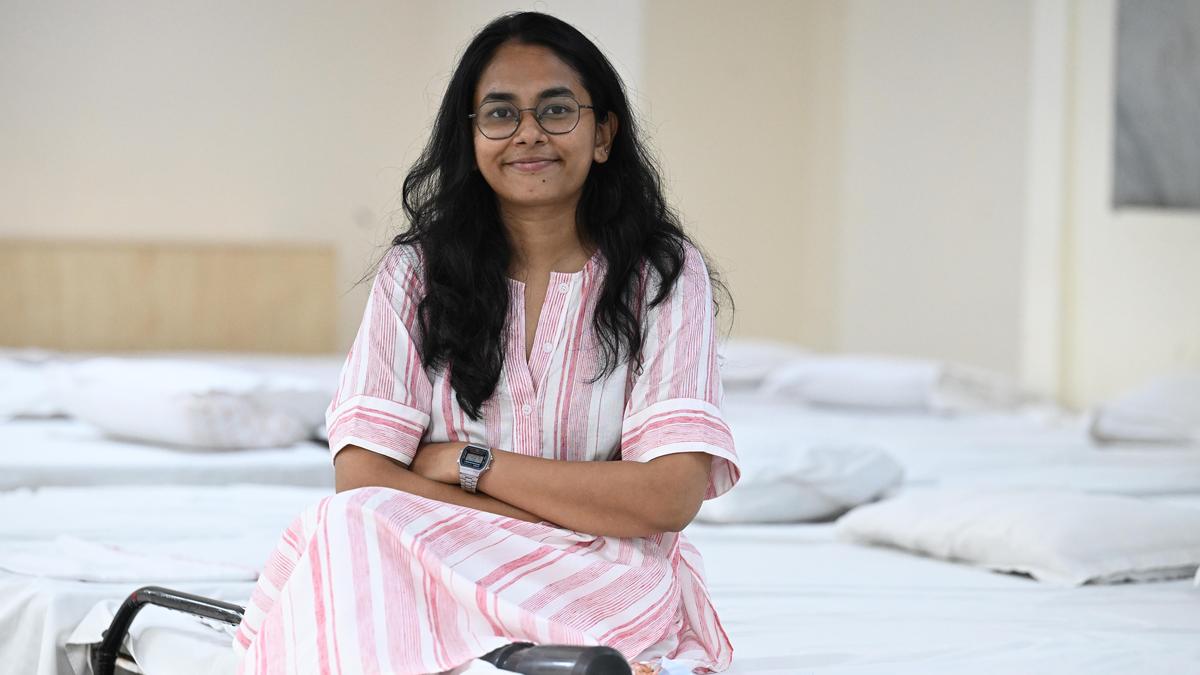
Long before the police lathi-charged the Gen Z protesters in Delhi, Aishe Ghosh was attacked by masked men wielding iron rods, sticks and acid, on her college campus in January 2020, as the police stood by. A photo of the petite student leader, injured after she confronted the attackers, blood pouring down her forehead, went viral then.Ghosh, now 30, was at the Jantar Mantar protests from the start and participated in a symbolic three-day fast when activist Sonam Wangchuk was hauled out of the venue by the Delhi Police. Her postmortem of the biggest protest India has seen in years is important because she was at the forefront of the 2019 protests against the Citizenship Amendment Act (CAA) and the National Register of Citizens (NRC). “We were the Gen Z of that moment,” she says, confirming that she feels a strong sense of déjà vu.When the anti-CAA/NRC protests began, Ghosh, who represented left-wing student groups (Students’ Federation of India, SFI), was a freshly-minted student union president at Jawaharlal Nehru University (JNU). She had won with a comfortable margin against her rival from the Hindu right.The protests deeply impacted Ghosh, who had grown up in industrialised Durgapur, West Bengal, with a machine operator father and a homemaker mother. Her father was associated with a labour organisation and she was familiar with trade unions and strikes. In 2021, she became the first sitting president of the JNU students’ body to contest an Assembly election. She fought on a CPI(M) ticket and lost. She remains the national joint secretary of the SFI. Aishe Ghosh at an anti-NRC & CAA rally in Kolkata, February 2020. | Photo Credit: Getty Images From fear to hopeThe days Ghosh has spent at the protest called by the Cockroach Janta Party (CJP, a satirical youth-led group born from a top judge’s insult that became Gen Z’s badge of pride) — a very different beast from the dissent campaign of 2019-20 — have filled her with optimism. Back then, the state targeted minorities speaking up about citizenship and turned the heat on student protesters from two key Delhi universities: JNU and Jamia Millia Islamia.This time, groups from across India came together seamlessly. “People of every age group, from 18 to 70, are trying to unite with their issues and experiences of what they have faced in the past 12 years. There is no everyday narrative-building vilifying any community,” says Ghosh when she speaks to me two days before the resignation of education minister Dharmendra Pradhan. “In this movement, nobody is asking which university you are from.”Ghosh, who is now a Ph.D student studying women in higher education in Uzbekistan, and others from student organisations coordinated with CJP leaders at the forefront of the protests. They marvelled at the unique manner in which this generation dissents, their creativity and positivity, and at the melting pot of caste, religion and region that assembled at Jantar Mantar. “They already know how the propaganda works,” she says. “The best part of this movement is that it has made people fearless. There is a large segment of people saying, ‘What are you going to do? We don’t care’.”Political awarenessOlder students like Ghosh, who have been fighting against the commodification of education, utilised the gathering to give younger protesters a daily history lesson about systemic failures and injustices. They told them about anti-CAA student protesters such as Umar Khalid and Sharjeel Imam who are still in jail six years later, charged under stringent terrorism laws. “I personally feel that when we are speaking about this government’s anti-student policies, we can’t avoid speaking about them,” she says. That makes sense because those names are anathema to the security establishment, even in a Congress-ruled Karnataka, where their names on a placard during the NEET protest sparked a police FIR. Aishe Ghosh with Umar Khalid (far left) at an anti-CAA protest meeting in Jantar Mantar, March 2020. | Photo Credit: Sandeep Saxena They also spoke of university students Rohith Vemula and Payal Tadvi who died of suicide because of caste-based harassment. They introduced young protesters to S. Anitha, who fought in the Supreme Court against the implementation of NEET in 2017 because it was skewed against poor students, and later died by suicide.Ghosh says that since the people leading the recent protests have not been a part of the country’s long-running students’ movement, the responsibility of veteran student leaders is to ensure that the protesters learn about the bigger picture before they head back home. “Protests politicise people. So many students who were never a part of any politics have spoken here,” she says. “Victory is one thing but as second-line organisers, can we empower them to speak up when they go back home?”Thanks to her influence, her family has become more political. “Family gatherings are no more just about personal lives; somewhere the political discussions come up,” she says. “My mother hardly used to speak about politics, but now she is very updated about what is happening.” Days after the latest protest ended, the Delhi Police attempted to arrest Ghosh in connection with a 2021 case.She never thought she would see such a rebellion, where the youth would come together and speak up so openly. “A lot of people have been on the verge of speaking up every day since 2014, and it makes those of us who have spoken up these past 12 years hopeful. All our work has not gone in vain,” she says. “Speaking up matters. This movement is a reflection of that.”The writer is a Bengaluru-based journalist and the co-founder of India Love Project on Instagram.
Column | 'We were the Gen Z of that moment’: student leader Aishe Ghosh
Full Article
Original Source
Read the full article at Thehindu →KhanList aggregates and links to publicly available news content. We do not host full articles from third-party sources. Always verify important information with original sources.