
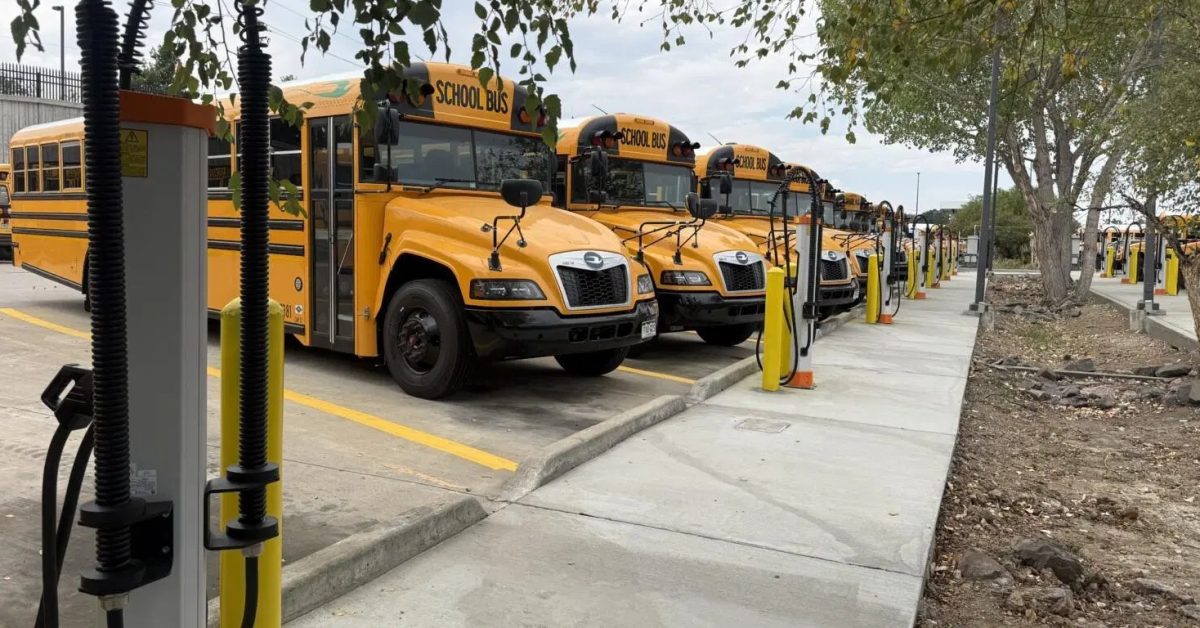
Photo: Kempower Colorado’s largest electric school bus fleet has a new charging hub to keep its 28 buses ready to run their daily routes. Denver Public Schools (DPS) has installed 26 charging plugs at its Hilltop Bus Terminal, backed by a Kempower distributed charging system with a total power capacity of 650 kilowatts. Electrical systems provider Winn-Marion led the project, while PowerFlex manages the depot’s smart charging and energy use. The charging hub is ready ahead of the district’s first day of school on August 24. DPS recently added 25 Blue Bird Vision electric school buses to its three existing electric buses, bringing the fleet to 28. The district says the expansion means electric buses now make up 12% of its yellow school bus fleet. The Hilltop depot has 13 dual-port Kempower Satellite dispensers that dynamically distribute its available 650 kW across the plugs. That lets the district send more power to buses scheduled for longer routes while giving less to those that don’t need as much energy. It’s a useful setup for school buses, which generally return to the same depot and have predictable periods when they aren’t in use. According to figures DPS provided to Denver7, the electric buses cost about $400,000 each, compared with $140,000 for a diesel bus, but grants and rebates covered the buses and charging infrastructure. DPS estimates that electricity will cost around $1,900 per bus each year, compared with $6,800 for diesel. Across the 25 new buses, that’s a projected annual fuel savings of about $123,000. The district also expects the electric buses to require around 75% less maintenance because they don’t have engines, transmissions, or many other moving parts found in diesel buses. However, DPS says it doesn’t yet have enough real-world data to compare the lifetime costs of the two bus types. Each electric bus has a $93,000 battery covered by an eight-year warranty, and major repairs could begin around years nine or 10 – roughly when its diesel buses also start needing more expensive work. The district plans to use its new monitoring system to track electricity consumption, maintenance, and efficiency. DPS has set a goal of cutting its overall greenhouse gas emissions by at least 90% by 2050, and transportation currently accounts for 14% of those emissions. And let’s not forget the expensive health costs of diesel: 26 million US children ride school buses, and 95% of the nation’s school buses are diesel-powered. The American Lung Association says diesel exhaust is linked to asthma attacks, lung damage, and other serious health problems, with children especially vulnerable because their lungs are still developing. Kempower says its equipment is also charging electric school buses in Quebec, Louisiana, Kansas, Massachusetts, Indiana, and Wisconsin. Read more: Blink and Kempower expand US East Coast EV fast charging If you’ve ever considered going solar, make it easy by finding a trusted, reliable solar installer near you that offers competitive pricing by checking out EnergySage. It has hundreds of pre-vetted solar installers competing for your business, ensuring you get high-quality solutions and save 20-30% compared to going it alone. Plus, it’s free to use, and you won’t get sales calls until you select an installer and share your phone number with them. Your personalized solar quotes are easy to compare online, and you’ll get access to unbiased Energy Advisors to help you every step of the way. Get started here. FTC: We use income earning auto affiliate links. More.
Colorado’s largest electric school bus fleet gets a 26-plug charging hub
Full Article
Original Source
Read the full article at Electrek →KhanList aggregates and links to publicly available news content. We do not host full articles from third-party sources. Always verify important information with original sources.