
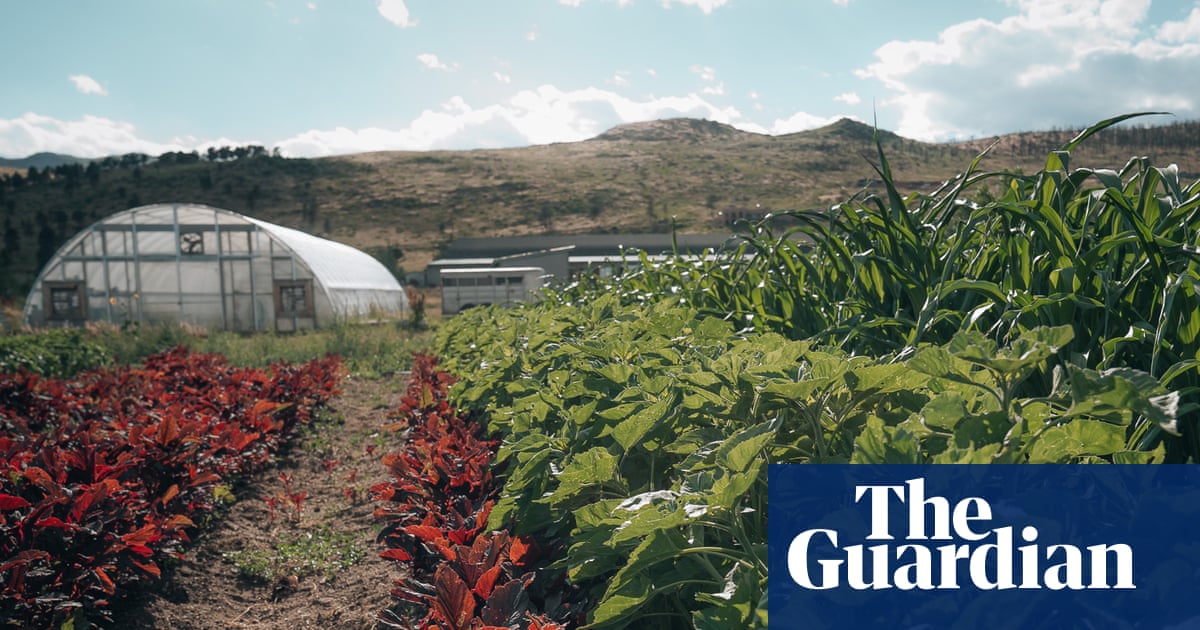
Soon, weed-killing chemicals will start falling from the sky over the Red Hill area of Boulder county, Colorado.The wildland is known for its biodiversity, home to hundreds of important species and a concentration of rare environmental resources. It is a key habitat for beloved herds of elk and bighorn sheep, with farms and ranchland lying at its base.But any day now, hundreds of acres of Red Hill are set to become the target for drone spraying of a chemical herbicide that some researchers warn come with concerns.County officials say the plan is an effective and essential move that will wipe out invasive weeds and mitigate the risk of dangerous and costly wildfires that could use the unwanted vegetation as fuel.They tout Boulder county as “ground zero” for research and testing of indaziflam - a relatively new herbicide developed by Bayer, the German chemical and pharmaceutical conglomerate, that has been approved for use across millions of acres of public lands as a tool for preserving native ecosystems.But the drone spray project has prompted an outcry from many people living and working in the area as some scientists say the chemical comes with serious risks for vulnerable species and poses health dangers for people and animals, including through water that runs off the steep slope into rivers and creeks and into groundwater supplies for crop irrigation, though the chemical’s manufacturer denies that it is unsafe.In June, two University of Colorado researchers added fuel to the community concerns, publishing a journal article highlighting risks to ecological and human health from indaziflam spraying and arguing that the cheatgrass issues cited as a basis for spraying are overblown. They cited prior published studies that raise concerns about genotoxicity and neurotoxicity.“It really directly affects all residents downstream from this,” said Azuraye Wycoff, owner of Yellow Barn Farm, a regenerative agricultural operation tending to crops, sheep, pigs and other livestock located at the base of Red Hill. “There are a lot of people in our community who are really livid about it.”Opponents fear the work could start this month.The weed killer indaziflam will be sprayed near Yellow Barn Farm. Photograph: Yellow Barn FarmAdding to the worries is evidence that the indaziflam product to be used, sold under the brand name Rejuvra, contains per- and polyfluoroalkyl substances (Pfas), a class of chemicals linked to a range of health risks and known to persist in the environment. There have been years of ongoing federal and state actions to rein in Pfas contamination.The drone plan for Boulder county is not new. Spraying over Red Hill was supposed to start last year but county officials paused the plan in the face of a backlash from community residents.The county plan includes mitigation measures aimed at protecting people and protected species, such as no-spray buffer zones around residential properties and measures to reduce chemical drift. But critics are not mollified.They say particularly in a place like Boulder county, which boasts of its commitment to environmental health and sustainability, non-chemical measures should be pursued.Overall, the county plan encompasses more than 2,000 acres (810 hectares) and extends beyond Red Hill. A group of local environmental advocates sued in 2024 to challenge the county’s broad plans. They alleged, among other things, that the drone spraying of terrain adjacent to homes, organic farms, trails and water features violated Fifra, a federal pesticide law, by contradicting labeling prohibitions of applications that will contact persons “directly or through drift”. But in a 9 October ruling, a district court judge ruled against the plaintiffs, dismissing their claims.Now, with the drone spray plan for Red Hill revived, community members are scrambling to see whether they can find another way to delay the plan.Opponents are pushing a “Delay the Spray” call for action to mobilize residents to contact the county. And two conservation groups have filed a notice of intent to bring a new lawsuit against Boulder county officials, this one alleging violations of the federal Endangered Species Act.Even some Boulder City officials have questioned the wisdom of the spray strategy after recently completing a series of multiyear studies about the effects indaziflam could have on the area.The city’s report warns of “regulatory testing that shows potentially serious health impacts to people and wildlife, and high toxicity to invertebrates”. The report cites published research showing indaziflam can have genotoxic effects, or effects on the genes and chromosomes, and notes that the US Environmental Protection Agency (EPA) has identified concerns with the chemical as well. In a 2010 report, the EPA said indaziflam was “highly toxic” to fish, for instance. The agency also reported neurotoxicity seen in animal studies as well as effects on the liver, stomach and reproductive organs.The city’s study findings also highlight particular concerns about the unintended consequences that spraying indaziflam could have on the viability of native seeds. Survival of native plants is critical to ecological balance, and indaziflam, which the city study found persists in the soil for years, could threaten that balance.“Indaziflam is very effective at killing all seeds, with just a few minor exceptions,” said Brett KenCairn, a senior policy adviser for the city of Boulder on “climate and resilience”. KenCairn declined to offer an opinion on the county’s spray plan but said that, in the aftermath of wildfires, “we are desperately going to need that Indigenous seed bank”.The city shared its report with Boulder county officials in September, but the county remains undeterred.Protecting Boulder county’s “extraordinary” biodiversity and environmental health is at the core of the county’s approach to weed management, said a Boulder county spokesperson. The chemicals used in the spray plan “are specifically designed to target plant biology and have minimal impact on mammals”, including people, the spokesperson said. Drones are needed because of the rugged terrain that is “unsuitable” for other methods, she said.Bayer did not respond to a request for comment. The company sold its indaziflam product Rejuvra in 2022 as part of an asset divestiture that led to the formation of a new company called Envu.Envu, which now sells Rejuvra, said a wider base of evidence supports the safety and efficacy of the product.“Cheatgrass and other invasive grasses pose a serious threat to western rangelands, damaging native ecosystems and increasing wildfire risk,” said Jennifer Poore, a spokesperson for Envu. “A substantial body of independent scientific research shows the importance of managing these invasive species and supports the effectiveness of indaziflam as one of the tools available to land managers.”Bayer, and subsequently Envu, have marketed indaziflam for extensive use against invasive weeds, saying it will help the growth of perennial native vegetation, not harm it. In Boulder county, and elsewhere, a chief goal is to wipe out cheatgrass, a type of weed that researchers say pervades more than 50m acres amid the Rocky and Cascades mountains and the Sierra Nevada range. Cheatgrass can choke out native plants, leading to a loss of diversity and more intense and more frequent wildfires, according to government research.The June paper from the University of Colorado researchers not only warned of potential environmental and human health effects of indaziflam, but pointed out that some published studies championing the use of indaziflam for spraying on public lands were written by people associated with Bayer.“This adds indaziflam to the unfortunate list of products that have been promoted by commercial interests in the scientific literature without adequate disclosure,” researchers G Robert Brakenridge and Tim Seastedt wrote. “Tobacco, DDT and OxyContin are other examples.”The concerns about indaziflam are disputed by Derek Sebastian, a scientist who worked for Bayer in the development and commercialization of indaziflam and now works for Envu as government relations and sales manager.“There is an established body of peer-reviewed scientific research examining the use and efficacy of indaziflam, including its positive role in supporting biodiversity, fire prevention and preserving carbon sequestration,” Sebastian said.Envu strongly rejects any allegations of undisclosed conflicts of interest, said Poore.Ashley Stolzmann, a Boulder county commissioner and the lone opponent to the spray plan on the three-member board, said she is astonished that the plan is going forward in the face of evidence of harm and strong community opposition.“I continue to oppose what we’re doing,” Stolzmann said. “The community never supported this.”This story is co-published with the New Lede, a journalism project of the Environmental Working Group
Colorado community fights plan to use drones to spray weed killer
Full Article
Original Source
Read the full article at Theguardian →KhanList aggregates and links to publicly available news content. We do not host full articles from third-party sources. Always verify important information with original sources.