
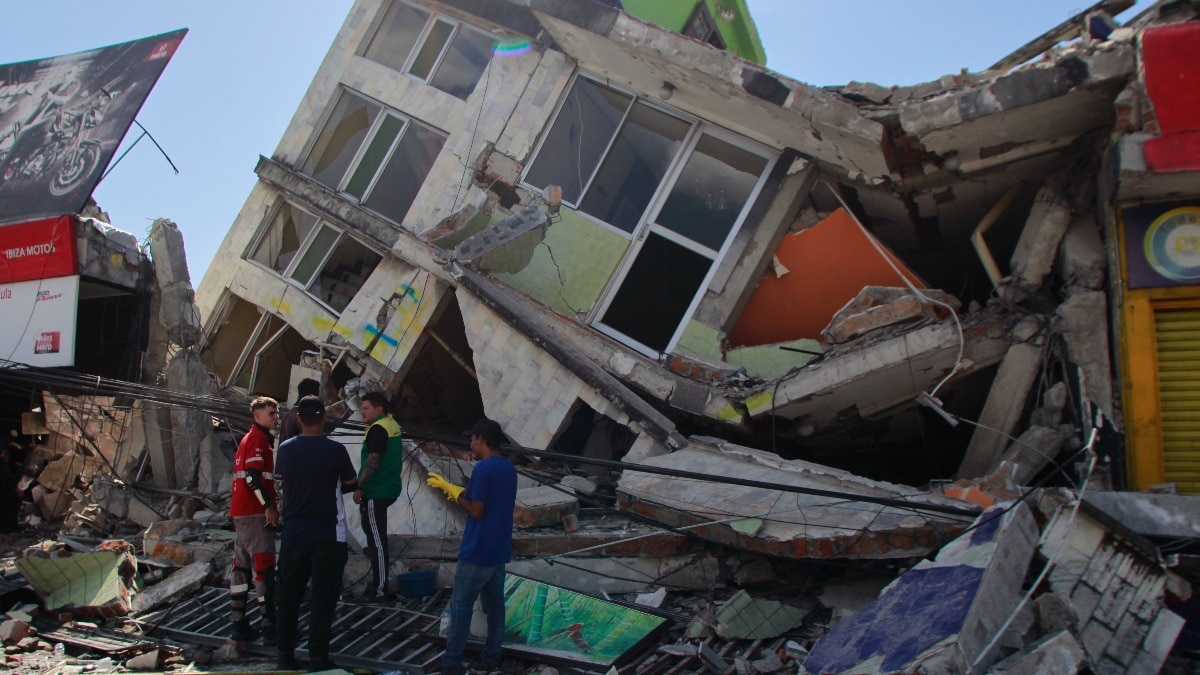
The death toll from Colombia's powerful earthquake has risen to at least 164 and is expected to rise further.Meanwhile, rescue teams are still searching collapsed buildings and remote areas as authorities assess the full scale of the destruction, news agency Reuters reported.A 7.4-magnitude earthquake struck western Colombia on Monday, August 10, causing widespread destruction and deaths.The US Geological Survey (USGS) placed the quake at a depth of about 107 km and the Colombia's Geological Service described it as the strongest earthquake recorded in the country in the 21st century. A vehicle is crushed by debris after an earthquake struck Cali, Colombia. (Photo: AP) The earthquake caused widespread damage in cities including Cali, Pereira, Quibdo and Manizales, with buildings collapsing and hospitals and other infrastructure damaged.Rescue workers have been searching through rubble for survivors, while difficult access and communication problems in parts of remote Choco have made it harder to establish the full toll. What remains on most people's minds is the obvious question: what was behind this deadly earthquake?WHAT CAUSED THE COLOMBIA EARTHQUAKE?The answer behind the question lies deep beneath one of South America's most seismically active regions. A man carries a dog as he walks past a collapsed building in Colombia after an earthquake. (Photo: AFP) Colombia sits where several major tectonic plates interact, making earthquakes a regular occurrence.Along with the broader movement of the Nazca and South American plates, the region contains a complex network of faults where stress can build up and suddenly be released.The latest earthquake occurred deep underground and involved strike-slip movement, in which blocks of Earth's crust move sideways against each other.The depth of the earthquake would normally reduce the shaking felt at the surface, but its large magnitude still produced powerful tremors across western Colombia. dents and rescue workers search through the rubble after an earthquake struck Cali, Colombia. (Photo: AP) At least 21 aftershocks had been recorded by Monday night, according to Colombia's Geological Service, and further tremors were expected.ARE EARTHQUAKES COMMON IN COLOMBIA?Colombia experiences earthquakes regularly, but most are too small to cause widespread destruction.A quake of this scale is much rarer.The last earthquake to cause a comparable loss of life was the one that occurred on January 25, 1999 in the Coffee Region of the country.That magnitude-6.1 quake killed 921 people in Armenia alone, injuring 5,377 and damaging or destroying more than 21,000 homes, according to Colombia's Geological Service records.National estimates put the overall death toll at more than 1,000. People look for survivors amid the rubble of a collapsed building after an earthquake. (Photo: AFP) The latest disaster has also garnered global attention as it followed two powerful earthquakes that struck Colombia's neighbour Venezuela on June 24, killing over 6,000 people.For now, Colombia remains focused on rescue and recovery.Meanwhile, the government has declared a national emergency as teams continue searching through debris and rubble for people who may still be trapped.- EndsPublished On: Aug 11, 2026 12:49 IST
Colombia earthquake: What was behind the deadly 7.4-magnitude quake?
Full Article
Original Source
Read the full article at Indiatoday →KhanList aggregates and links to publicly available news content. We do not host full articles from third-party sources. Always verify important information with original sources.