
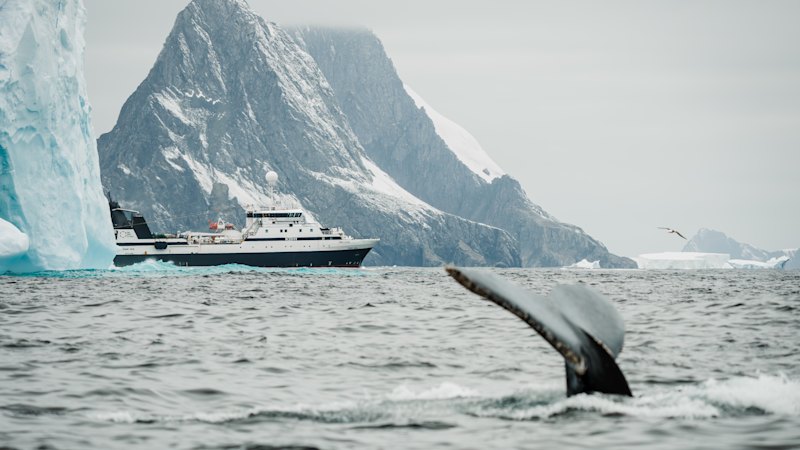
September 2, 2026 — 12:36pmColes and Woolworths have stopped selling nutritional supplements made from krill, a tiny crustacean that is the major food source for iconic Antarctic wildlife such as Emperor penguins and whales.The supermarket giants confirmed the decision in response to questions from this masthead. Krill supplements, taken as a source of Omega-3 fatty acids, are still sold in smaller retailers and most pharmacies.A humpback whale fluking in front of a krill super trawler last summer.Sea ShepherdThe withdrawal by Coles and Woolworths comes amid an international campaign by environmental groups to try to curb the burgeoning krill fishing industry because of fears about the pressure on the Antarctic ecosystem.Captain Peter Hammarstedt, director of campaigns at Sea Shepherd International, drew attention to the Coles move with a LinkedIn post, noting that international retailers UK-based Holland & Barrett and German retailers dm-drogerie markt and Dirk Rossmann GmbH had also withdrawn from the market.Antarctic krill is the keystone species of the Southern Ocean.Brett Wilks / AAPP“We have already seen market forces begin to shift decisively away from krill in the United Kingdom and Germany,” Hammarstedt said. “Now that change has reached Australian shores.”Holland & Barrett, a health food chain with more than 1000 stores in Britain, helped cofound the Antarctic Krill Pledge, which has since been signed by a number of smaller retailers.Krill-based nutritional supplements are currently worth an estimated $US110.1 million ($154.01 million) globally, according to Future Market Insights, and this is expected to grow to $US216.59 million by 2036 driven largely by demand in China and North America.The sustainability claims on a bottle of red krill supplements.Audrey RichardsonIn Australia, krill oil is the fastest-growing source segment within Australia’s Omega-3 supplements market, Complementary Medicines Australia said.Sea Shepherd International has spent the past few Antarctic summers documenting the krill fishing in Antarctica to raise public awareness and supporting scientists to study the ecological effects, but without trying to prevent operations since krill fishing is a legal activity under international agreements. Captain Paul Watson Foundation took a different approach and engaged in direct action to try to disrupt the krill harvest as much as possible.The rapid increase in the size of the krill fishing fleet over the past few years meant that last month the krill fishery closed early for the second year in a row. The fishery reached its catch limit of 620,000 tonnes and automatically closed on August 12, months ahead of schedule.Emperor penguins rely on sea ice for breeding and as a source of krill.LightRocket via Getty ImagesKrill fishing nations such as Norway are pushing to double the catch limit to 1.2 million tonnes, though they are unlikely to secure the international consensus needed to change the rules.Complementary Medicines Australia chief executive John O’Doherty told this masthead in March that the organisation supported informed consumer choice and science-based fisheries management.“Environmental sustainability is a priority for Australia’s complementary medicines industry,” O’Doherty said. “The complementary medicines industry has a strong interest in sustainable sourcing practices, as consumer trust depends on products that are both effective and responsibly produced.”Get to the heart of what’s happening with climate change and the environment. Sign up for our fortnightly Environment newsletter.From our partners
Coles and Woolworths drop krill supplements
Full Article
Original Source
Read the full article at Smh →KhanList aggregates and links to publicly available news content. We do not host full articles from third-party sources. Always verify important information with original sources.