
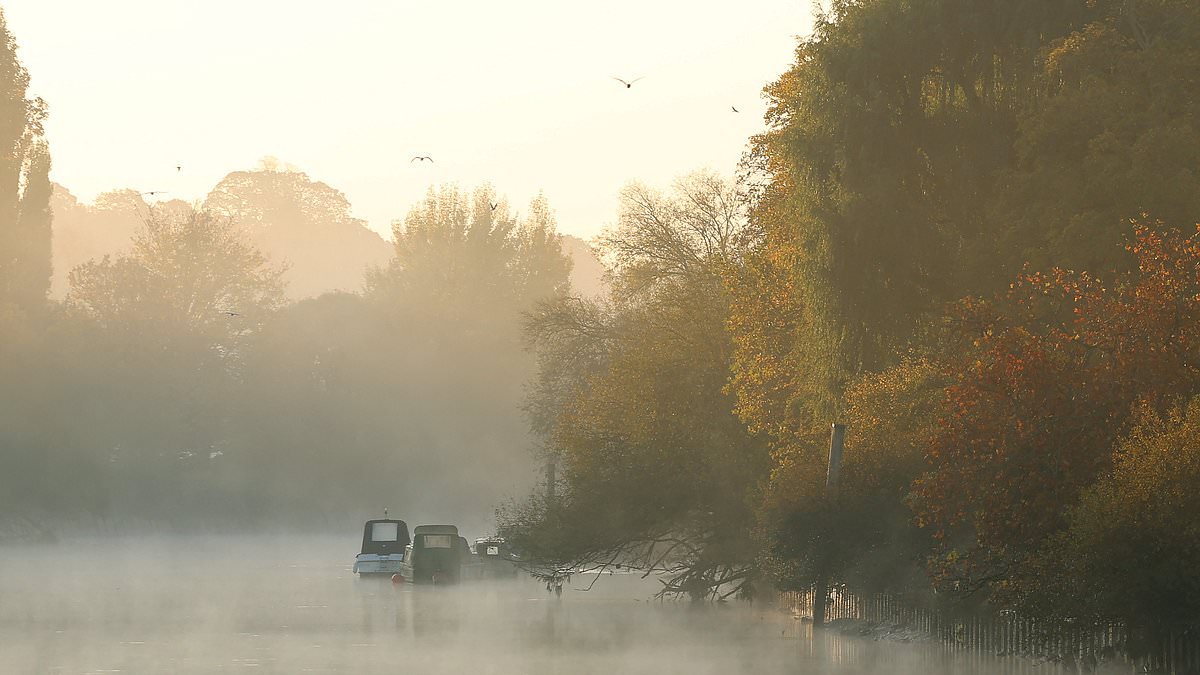
Britain was gripped by the first cold snap of autumn today as Government cold health alerts were activated ahead of temperatures plunging to -8C tonight.Harsh frost is expected in many places over the next few days while parts of Scotland could see some snow as Arctic air is swept across the UK from north to south.The UK Health Security Agency (UKHSA) issued a yellow cold health alert for North West England and the West Midlands from 9am this morning until noon on Saturday.The Met Office said temperatures in rural areas tonight will fall to -8C in Scotland, -7C in northern England, -3C in the South, -5C in Wales and -3C in Northern Ireland.Tomorrow night will be even chillier with -8C in southern England, the North and Wales both falling to -5C, Northern Ireland dropping to -6C and Scotland to -2C.Today was the fourth consecutive day of below-freezing temperatures somewhere in the UK with Cumbria plummeting to -4.6C and Perthshire to -4.3C early this morning.It followed autumn's coldest night so far when Tyndrum in Scotland fell to -6.2C early yesterday. Tuesday's low was -4.3C in Cumbria and Monday saw -2.6C in Wales.Met Office spokesman Stephen Dixon said drivers can expect to scrape their cars tomorrow morning as the first cold snap of the season takes hold. Boats moored along the River Thames on a misty autumn morning in Richmond, London, todayHe said: 'The UK is heading towards what will feel like the first cold spell in late autumn, with temperatures likely to drop down towards -6C overnight for some in the coming days and a fairly harsh frost likely for some.'Through the day-to-day, the main weather of note I suppose is the possibility of some snow over higher ground in northern Scotland.'This isn't massively unusual for this time of year but could see a couple of centimetres accumulating over the very highest ground in the north of Scotland.' Four days of sub-zero temperatures this week Monday: -2.6C; Capel Curig, WalesTuesday: -4.3C; Shap, CumbriaYesterday: -6.2C; Tyndrum, ScotlandToday: -4.6C; Bridgefoot, Cumbria Mr Dixon added that there will be some unsettled weather in the North-West of the UK, with rain expected across western parts of Scotland on Saturday.'As we get to Sunday, it's turning more widely unsettled with rain spreading across much of the country and some potentially fairly heavy showers at times through the day', he said.'Thirty millimetres of rain could fall fairly widely through the day, particularly in the west on Sunday.'Mr Dixon said there is a chance of snow in the far north of Scotland on Monday morning.Overnight temperatures in many towns and cities will fall below freezing over the coming days, with 50mph wind gusts expected in places.Britons are being urged to check on loved ones and neighbours amid the cold snap, with the UKHSA saying there may be a spike in the use of health and care services.Colder weather can also lead to an increased risk for over-65s and those with certain health issues, including heart and lung problems, health officials added. The UK Health Security Agency has issued yellow cold health alerts for two regions of EnglandUKHSA public health consultant Dr Anya Gopfert said: 'This is the first cold health alert of the winter, but we can expect more as we move further into the season.'Cold weather can have a serious impact on the health of some people, including those aged 65 and over and those with pre-existing health conditions, so it is vital to check in on friends, family and neighbours who are most vulnerable.'We're also reminding people to take simple steps to stay warm and look after their health as temperatures begin to fall. Keeping homes heated where possible and dressing warmly can help people stay safe and well during colder weather.'Temperatures will fall after much of the UK faced foggy conditions in the first part of the week, which led to a 'high' air pollution alert being issued in London.There are concerns that the Arctic blast will prove challenging for those with certain health issues, such as those suffering from respiratory problems.Nazir Hussain, clinical lead at the charity Asthma and Lung UK, said: 'The freezing conditions forecast for the next few days could be particularly dangerous for the 12million people in the UK living with a lung condition, with thousands rushed to hospital with respiratory illness every winter.'Cold air can cause the airways to narrow, making breathing more difficult. It can also irritate the lungs and worsen symptoms of lung conditions like asthma and chronic obstructive pulmonary disease. Respiratory infections are also more common during winter and can trigger flare-ups of lung conditions.' People walk amongst autumn colours on trees in Richmond, south-west London, this morning The sun rises over Bamburgh Castle in Northumberland this morning A red sky at dawn over the Oxfordshire countryside at Dunsden Green this morning A view of the City of London financial district skyline on an overcast morning todayThis cold blast comes after the Met Office warned Britons could be hit by colder temperatures later this month as a weakening polar vortex threatens to bring Arctic air.The polar vortex is a ring of powerful winds that helps keep freezing air near the North Pole.If it weakens, it could allow colder Arctic air to sweep south towards Britain, increasing the risk of wintry weather.But Met Office forecaster Honor Criswick said: 'We can't link what's happening to the polar vortex now to what is currently happening in the weather.'Because the polar vortex takes place so high up in the stratosphere, it would take a few weeks for any of those impacts to then possibly be seen in the UK, because it's not guaranteed.'She added: 'In time we could have a look and see if what's happening now with the polar vortex and in a few weeks see what happens to see if that has an impact on our UK weather.'However, it does look like it's a slight blip before things generally turn to more average for this point of the year - so a chance it could have an impact on UK weather, but very much not guaranteed.'Cold health alerts are usually issued by the UKHSA between November and March each year. The last cold health alert ended on February 20 this year.
Cold weather health alerts come into force as Arctic blast sweeps into Britain with temperatures set to plunge to -8C
Full Article
Original Source
Read the full article at Dailymail →KhanList aggregates and links to publicly available news content. We do not host full articles from third-party sources. Always verify important information with original sources.