
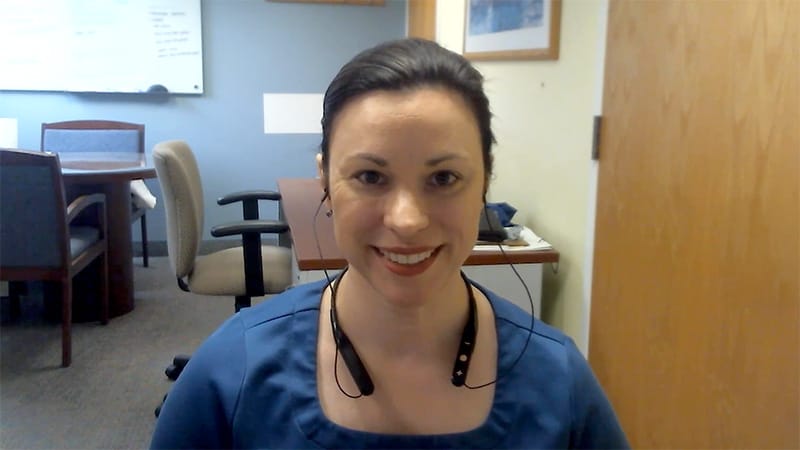
This transcript has been edited for clarity. Hi. My name is Beth Gromisch, and I’m a research neuropsychologist at the Mandell Center for Multiple Sclerosis at Mount Sinai Rehabilitation Hospital in Hartford, Connecticut. Today, I’d like to talk to you about digital cognitive screenings in multiple sclerosis (MS). We’re going to talk about three major points when it comes to digital cognitive screenings. Number one, what’s the role of digital cognitive screenings in comprehensive MS care? Two, how can clinicians fit this into part of their clinical practice? And number three, what [types of tools] do we currently have on the market, and what’s coming down the pipeline? Why Cognitive Screening Matters in MS Care So, first, why should we be doing cognitive screenings? We know that cognitive impairment is quite common in MS. Up to about 65% of people with MS have some form of cognitive difficulties. We typically see mild-to-moderate difficulties, but because MS starts during early adulthood, we see that cognitive difficulties can have a significant impact on their daily lives.In 2018, the National MS Society issued recommendations indicating that every adult with MS should have a baseline cognitive screening with annual reassessment. While this is recommended practice, not everybody is doing cognitive screenings. My colleagues and I did a study back in 2020 and found that over 53% of MS providers state that they are aware of the signs of cognitive impairment, but they don’t have formal screening practices. That can be a problem because if we’re not using objective clinical tools to identify cognitive impairment, people may not be getting the services and support that they need. So, why don’t [clinicians] do cognitive screenings? Well, there are a lot of reasons that can come into play. Maybe they don’t have time to do them. Maybe they don’t have the training to do paper and pencil testing or have access to the tests. That’s where digital cognitive screenings can come into play because now, we’re using technology to make it easier to do these kinds of screenings. So rather than carrying a bunch of manuals or testing supplies, tests are usually condensed onto a single screen, such as a tablet or a desktop computer. A lot of these digital tools offer additional support to clinicians, such as automated administration or scoring that can make it easier. Digital Cognitive Screening in Clinical Practice That brings me to my second point. How can clinicians integrate these digital cognitive screenings into their everyday practices? First, clinicians need to figure out how they’re going to implement this into their practice. Is this going to be something that a medical assistant or a nurse is going to give? Is this something they’re going to give? Or are they going to be using a [digital] tool that can be used in the waiting room? There was a study in 2024 that showed that the Processing Speed Test, which is one of the digital tools we’ll talk about a little more later, can be taken in a busy waiting room. It’s also one of the few tests available that doesn’t require a technician, so the iPad can be handed to the patient, and they can fill it out while they’re waiting. Another benefit that comes with digital cognitive tools is that some of them have built-in electronic health record integration. That can make it easier for clinicians to upload the test results into their medical records and document things. So really, the points that clinicians need to think about are, first, as I mentioned, who’s going to be administering the test? Second, where does this fit into the timeline of the appointment?[This is important,] because not only do you want to make sure you have enough time to administer these cognitive screenings, but you also want enough time to be able to talk to patients about why you’re doing this, what the results are, and what’s going to happen next. Patients should always be aware of why we’re doing this kind of testing, especially if this is something that we’re going to be doing on a regular basis, or at least on an annual basis.That brings me to my third point. If you’re interested in doing digital cognitive screenings, what tools are out there? My colleagues and I did a scoping review [last year] that looked at what kind of tools are out there, both in terms of commercially available products and investigational tools. We focused on digital cognitive screening tools that could be delivered on a smartphone or on a tablet-based computer that are [either commercially available] or still under investigation. What we found is that when it comes to commercially available [screening tools], there are several out there, but only a few that really have been developed for people with MS. [The types of tools recommended by organizations like the Consortium of Multiple Sclerosis Centers include MS-specific processing speed screeners — like the Processing Speed Test — while a more comprehensive multidomain option is the NIH Toolbox Cognition Battery. Each has different use cases.] The Processing Speed Test can be given by anybody who works with people with MS, while the NIH Toolbox Cognition Battery requires someone to have a C-level qualification to access and supervise the test. So that is somebody like a psychologist or a neuropsychologist. Now, there are some limitations to the tools that are out there. The majority of cognitive screening tools that are available for MS just focus on processing speed. While that is a hallmark domain that we want to assess in MS, not everybody has impairments in processing speed. And the risk when we only assess one cognitive domain is that we may not identify everybody who has cognitive impairments. So that’s where some of these investigational tools are important, and that’s where we’re going to see more advances in the field.My own team is developing a new tool called MSCogScreen, which assesses six different cognitive domains and takes about the same time as the Brief International Cognitive Assessment for MS. What’s different about this tool is that we’ve co-developed it with people who have MS, therefore it reflects their needs, and it’s also accessible to them. We recently completed a pilot evaluation that showed it has very good psychometric properties. So, we’re hoping that in a few years, the tool will be available to clinicians to use in their practice. As we see technology advancing, we’re going to have more opportunities to make digital cognitive screeners more useful for our clinicians. For example, there are many tools out there that require the examiner to enter in [patients’ verbal] responses, and that can add more time to clinicians’ busy schedules. But as we’re seeing advancements in automated speech recognition technology, it’s going to become easier for these tools to recognize what patients are saying during these cognitive tests and add their responses right into the testing entries and score it automatically.Thank you for joining me today to talk about cognitive screening tools, and I hope that you start implementing them in your clinical practice.Editor’s Note: This article was created using several editorial tools, including generative AI models, as part of the process. Human review and editing of this content were performed prior to publication.
Cognitive Screening in MS: The Digital Advantage
Full Article
Original Source
Read the full article at Medscape →KhanList aggregates and links to publicly available news content. We do not host full articles from third-party sources. Always verify important information with original sources.