
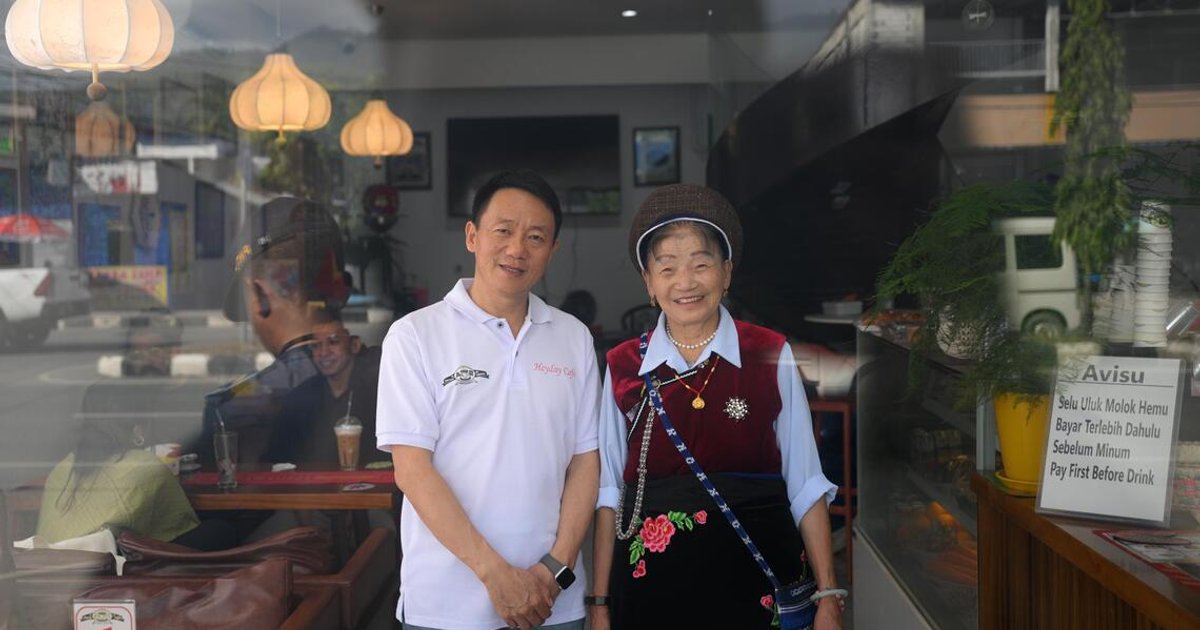
DILI – Chen’s work illustrates a broader challenge for Timor-Leste as it seeks an economic future beyond the Bayu-Undan oil and gas field, which ceased production in June 2025, by diversifying its economy from oil to areas such as commercial agriculture, including coffee production, tourism and manufacturing.In that search, China is beginning to play an important role, as exemplified by Chen and the growing number of Chinese who have come to live and work in this young nation, bringing with them their skills, business acumen and capital.Timor-Leste, a former Portuguese colony, has long relied on support from a wide range of foreign partners, including neighbouring Australia and Indonesia. The latter occupied it from 1975 to 1999.Aircraft belonging to Timor-Leste’s national carrier, Aero Dili, at Presidente Nicolau Lobato International Airport in Dili, with the Cristo Rei (Christ the King) statue in the background. A former Portuguese colony, Timor-Leste has a predominantly Catholic population. ST PHOTO: MARK CHEONGBut China has a distinctive place: It was the first country to establish diplomatic relations with Timor-Leste after it gained independence in 2002, and bilateral ties have broadened from aid and infrastructure-building to trade, investment, education and defence.Beijing has funded prominent government structures, including the presidential palace and the foreign and defence ministries’ buildings. Chinese state-owned construction companies have also built major infrastructure, including Timor-Leste’s main port, the Suai expressway and the national power grid.The two countries’ relationship was elevated to a Comprehensive Strategic Partnership in 2023, while Chinese Defence Minister Dong Jun’s visit in August marked its latest high-level milestone.The question is whether Timor-Leste can capitalise on what China and other regional countries, including those in ASEAN – of which Timor-Leste is the newest member, having joined the regional grouping in October 2025 – can offer.This includes a huge combined market of 2.1 billion for its exports as well as skills and capital that local businesses need to grow. The country would need to create demand for its coffee and other consumer products in these markets and attract investors from there.A direct flight from China’s Xiamen to Dili brings businessmen, tourists and relatives visiting family once a week. An estimated 20,000 people have migrated from China to Timor-Leste since 2002. ST PHOTO: MARK CHEONGIt will be an uphill task, going by its experience with China.In 2023, the Asian giant was Timor-Leste’s largest export market, accounting for 46.6% of its exports, worth US$76.2 million (S$97.2 million), and its second-largest source of imports, worth US$128.6 million, according to World Trade Organization data.But the trade relationship was overwhelmingly shaped by oil: Product-level data shows that crude petroleum accounted for 99.2% of Timor-Leste’s exports to China that year, while coffee made up just 0.3%, or about US$260,000. Timor-Leste ran a trade deficit with China of US$52.4 million.By 2025, that trade gap had widened as oil exports to China dried up. According to government data published in July, Timor-Leste exported only US$16.5 million in goods to China and imported US$156.8 million from the Asian economic powerhouse.The picture is not much different in its trade relations with neighbouring countries. The same year, Timor-Leste bought US$323.9 million worth of goods from Indonesia, its largest source of imports, and US$39.7 million from Australia, while exporting US$9.9 million and US$5.6 million to its two closest neighbours, respectively.The imbalance is less pronounced with Thailand, its current biggest export market, which imported US$25.3 million of goods from Timor-Leste and exported US$23.1 million to it in 2025.Container ships arrive at Timor Port in Dili laden with imported goods from Indonesia, China and Singapore, but about 95% of containers leave empty. ST PHOTO: MARK CHEONGHigh cost of exportsThis struggle to put locally produced goods into export markets is visible about 12km west of Dili, at Timor Port in Tibar Bay. Port executives say container ships arrive laden with imported goods from Indonesia, China and Singapore, but they estimate that about 95% of containers would leave empty.“The country is importing everything that is consumed locally and exporting almost nothing,” said Laurent Palayer, chief executive of Timor Port. The two main challenges, he said, are developing local industries to produce and process goods, and increasing exports.By the numbers, the imbalance is significant. Timor-Leste’s merchandise imports were about US$960 million in 2025, compared with US$41 million in non-oil exports, according to data in a World Bank report released in April.This imbalance raises costs for Timor-Leste, Palayer said, because shipping lines must move empty containers to hubs such as Singapore. “If tomorrow exports increase, it will have a direct consequence – it will reduce the cost of freight,” he said in an interview.Timor Port chief executive Laurent Palayer at the company’s headquarters. He says the country’s main challenges are developing local industries to produce and process goods, and increasing exports. ST PHOTO: MARK CHEONGBefore the port at Tibar Bay opened in September 2022, container and general-cargo ships used Dili’s old port, which had limited berth capacity and could force vessels to wait offshore, according to Palayer.Timor Port, operated by a company within Swiss-headquartered MSC Group’s Africa Global Logistics, has eased a significant infrastructure constraint.Coffee beans drying in the sun in Dili. Coffee in Timor-Leste is grown by smallholder farmers in highland areas, including Ermera and Aileu, inland from the capital Dili. ST PHOTO: MARK CHEONGStarting with coffeeTimor-Leste’s size, however, works against it in its efforts to scale up exports.As the country has a population of less than 1.5 million, its domestic market can be saturated quickly, said David Freedman, the World Bank’s representative in the country. Companies producing tradable goods may therefore need to export from the outset if they are to reach the scale needed to adopt technology and become more efficient.But it is far from easy to do so.“There is substantial evidence that it is difficult to move immediately from no production to becoming a competitive exporter. Timor-Leste needs to develop domestic productive capacity while also finding ways to connect with and participate in value chains – getting a foot on the export ladder, so to speak,” Freedman told ST in an interview.Timor-Leste’s agricultural products, for example, are unlikely to compete on volume with much larger producers, which means the country needs more domestic processing, differentiation and higher-value products before export, Freedman said.Coffee is historically Timor-Leste’s leading non-oil merchandise export, and about one-quarter of households derive some income from growing it, World Bank representative David Freedman said.Yet, low output and volatile production have historically constrained the sector’s potential.“The aim should not be competition on volume alone. The challenge is to develop an industry that is profitable, sustainable and delivers value to all participants, beginning with farmers,” Freedman said.In the 12 months to February 2024, Brazil exported 41.4 million 60kg bags of coffee, while major Asian producers Vietnam and Indonesia shipped 28.6 million and 6.2 million bags, respectively. Timor-Leste exported just 91,862 bags, according to the International Coffee Organization.Introduced by Portuguese colonists in the early 19th century, coffee is now grown across eight of Timor-Leste’s 12 municipalities. The Timor-Leste Coffee Association says the country produces a hybrid of arabica and robusta varieties, with beans that can yield fuller-bodied, cacao-and-nut flavours or lighter, fruitier cups.Chen, for one, has been trying to turn that quality into a more viable export business. He works regularly with more than 300 farming households, teaching growers to pick ripe red coffee cherries, manage their plots and process the crop quickly enough to preserve quality.Chen Lisong (second from left) buys coffee from local farmers and works with them to improve quality, teaching them to pick ripe coffee cherries, manage their plots and process the harvest promptly. PHOTO: TIMOR HEYDAY AR COFFEE/FACEBOOKFor the Chinese entrepreneur, coffee is also a bridge back to China. He plans to attend the China International Import Expo in Shanghai in November, hoping to show his home country’s consumers and buyers that Timor-Leste produces organic, high-quality coffee.China’s population of about 1.4 billion and its fast-growing coffee market offer one potential opening: Its coffee consumption, estimated at more than 240,000 tonnes of beans a year, is projected to grow 15% annually.Timor-Leste’s coffee industry received a boost from the Chinese government recently. On Sept 8, the Chinese embassy donated 100,000 yuan (S$19,100) to the Timor-Leste Coffee Association for training, exchanges, product promotion and market development, according to an embassy post on Facebook.But a major limitation to the industry has been that large buyers seeking container-sized orders often want volumes beyond what local farmers can supply reliably, Chen said.Red couplets and lanterns adorning Chinese-owned shops and restaurants in Dili, where these businesses’ growing presence has expanded consumer choice but also raised concerns about competition for local businesses. ST PHOTO: MARK CHEONGChinese dominance of the high streetApart from coffee, there are precious few products that Timor-Leste exports: small volumes of other agricultural products such vanilla, candlenut and coconut, and manufactured goods such as electrical parts and textiles. It also has a fledgling tourism industry.Timorese independent policy analyst Gute Neves argued that his country had failed to turn its petroleum wealth into a diversified economy capable of generating broad-based jobs and exports.“We are experiencing the result of our failure to transform revenues from non-renewable resources into a more sustainable and diversified economy,” he said. Oil-funded spending had become entrenched, he noted, adding: “When you are accustomed to high spending, it becomes very hard to cut.”As the Greater Sunrise gas field, discovered in 1974, inches towards production, Neves’ warning of the need to use the country’s revenues from fossil fuel resources to diversify the economy has become more pressing. The project has been delayed, with Petroleum and Mineral Resources Minister Francisco da Costa Monteiro saying on Sept 14 that its earliest possible production date had slipped by two years, to 2034 or 2035.And while some parts of Dili have become more bustling with the rapid growth of Chinese-owned food outlets, including noodle restaurants, retailers and small businesses, Neves wonders if this is at the expense of the local economy.A Guizhou beef noodle shop in Dili, part of a growing Chinese-owned food and retail scene that has expanded consumer choice while raising concerns about whether local businesses can compete. ST PHOTO: MARK CHEONGA Chinese supermarket and an Oppo mobile phone sign at a mall in central Dili reflect the presence of Chinese businesses and brands in Timor-Leste’s retail market. ST PHOTO: MARK CHEONGSpeaking to ST at one of the Chinese restaurants, which serves dim sum and noodles alongside local coffee, he said that when foreign-owned outlets dominate small-scale retail, profits can flow out of the country rather than circulate in the domestic economy.Although these shops have expanded consumer choice and helped keep prices low, their growing presence has raised concerns among Timorese over whether they have pushed out local businesses that are unable to compete.Kathleen Goncalves, president of the Timorese Chinese Chamber of Commerce, noted that the number and visibility of migrant Chinese has sparked unease, prompting calls for more small-business opportunities to be reserved for local residents.According to Timor-Leste’s most recent census, conducted in 2022, about 10,500 residents were born overseas. Indonesians were the largest group, accounting for 73.6% of foreign-born residents, while people born in China were a distant second, at 7.5%, or 800 residents.Goncalves, a third-generation ethnic-Chinese Timorese whose grandfather emigrated from Guangdong province, believes the Chinese population is much higher, estimating that about 20,000 people have migrated from China to Timor-Leste since independence in 2002 to seek work and start businesses.Timorese Chinese Chamber of Commerce president Kathleen Goncalves at the chamber’s headquarters. She says Chinese investment and technology could help Timor-Leste develop its economy, but acknowledges local concerns about competition from Chinese-owned small businesses. ST PHOTO: MARK CHEONGBut while voicing Timorese worries over the growing number of recent Chinese arrivals in the country, she also argued that closer engagement with China was unavoidable for Timor-Leste’s development. “For economic development, we have to work with China,” she said. “Today, everyone recognises the importance of trade with China.”Chinese investment, technology and construction capacity could help Timor-Leste develop infrastructure, digital connectivity and employment opportunities as the young country seeks to catch up with regional peers after joining ASEAN, said Goncalves, who also serves as vice-president of Timor-Leste’s Chamber of Commerce and Industry.Yet, the benefits that business leaders see in closer ties with China sit alongside strategic concerns elsewhere in the region.Boats off the coast of Timor-Leste’s capital, Dili. The country’s location at the eastern end of the Indonesian archipelago, across the Timor Sea from Australia, adds to regional sensitivities over China’s growing presence. ST PHOTO: MARK CHEONGRegional anxietiesChina’s growing engagement with Timor-Leste has sharpened regional anxieties because of the smaller country’s location north-west of Australia and close to the eastern end of the Indonesian archipelago, wrote Jackson Huang of the S. Rajaratnam School of International Studies. He noted that the 2023 China-Timor-Leste strategic partnership, which included provisions for military exchanges, training and equipment-technology cooperation, heightened concerns in Australia and New Zealand about Beijing’s influence.During Dong’s official visit in August, the Chinese Defence Minister and President Jose Ramos-Horta discussed plans “to take military-to-military relations to a new level”. Existing defence ties include training for Timorese military personnel, the purchase of Chinese patrol vessels and Chinese support for military infrastructure.But other analysts caution against casting Dili’s engagement with Beijing as a simple geopolitical choice.Julia Lau, a principal fellow at the ISEAS – Yusof Ishak Institute, told ST that while Timor-Leste’s leaders are “certainly positively disposed to Chinese help and trade”, this reflected the country’s pragmatic economic needs rather than “capitulation or blind adherence to any political ideology”.Max Lane, an ISEAS visiting senior fellow, similarly described Timor-Leste’s dealings with China, Indonesia and other powers as “1,000% pragmatic”. For a small and relatively poor state, he said, accepting trade, aid and investment from a wide range of partners is a practical necessity, and the challenge is to ensure that commercial ties do not generate hostility, particularly with Indonesia and Australia.China’s aid and financing footprint in Timor-Leste is modest compared with its multibillion-dollar commitments elsewhere in South-east Asia. AidData records US$60.8 billion in Chinese financial commitments to Indonesia and US$22 billion to Laos from 2000 to 2023, compared with about US$116 million for Timor Leste.By comparison, Australia was Timor-Leste’s largest development partner, accounting for more than a quarter of the US$2.8 billion in official development finance received between 2015 and 2023, according to the Lowy Institute. Japan, the US and the Asian Development Bank formed a second tier of partners, each contributing around 10% of the total.Timor-Leste has South-east Asia’s youngest population, but a 2023 government report found that 31.2% of those aged 15 to 24 were not in employment, education or training. ST PHOTO: MARK CHEONGJobs for the youngBut the ultimate test of Timor-Leste’s expanding network of foreign partners is whether it can generate enough work for a young and growing population. A labour force survey by the government, with assistance from the International Labour Organisation, in 2021 showed that only 30.5% of Timor-Leste’s working-age population were employed or actively seeking employment. Of those who were employed, 70.5% worked in unregulated, informal jobs such as subsistence farming and roadside vendors.“The overriding priority is private-sector job creation,” the World Bank’s Freedman said. “The reason is clear in the data: Timor-Leste has a young population, and its working-age population is growing rapidly. While there are many encouraging signs of economic development and diversification, formal job creation has not kept pace.”With jobs scarce at home, going overseas to work is an option. During a visit to Dili in July, Singapore Prime Minister Lawrence Wong announced that companies in the Republic would be able to hire Timorese work permit holders from mid-2027 in sectors such as construction and marine shipyards.Timorese students lining the streets of Dili to welcome Singapore Prime Minister Lawrence Wong when he visited in July 2026. ST PHOTO: MARK CHEONGBut developing opportunities locally remains crucial. Freedman said creating jobs requires both domestic and foreign private investment, but also macroeconomic stability, an improved business environment and focused policy for sectors with genuine potential.For Timor-Leste, the figures point to a risk of squandering a rare demographic opportunity. A 2023 government report said that 31.2% of people aged 15 to 24 were not in employment, education or training, one of the highest rates in the Asia-Pacific region. Yet, Timor-Leste has South-east Asia’s youngest population, with a median age of 20.9 in 2023.Across Asia, only Afghanistan and Pakistan had populations with lower median ages.Still, the growing numbers of foreign and domestic companies are hiring local workers and training them for their new roles.Back at Timor Port, Palayer said the company was helping to create jobs for Timorese. More than 97% of its roughly 200 employees are local, including its chief operating officer Nelida Alves. Many had begun with no experience of ships or port cranes, but had learnt quickly through training, Palayer said.At the foot of the Aileu Mountains on the outskirts of Dili, Timorese brothers Antonio and Nelson Lay began producing bottled water at their Aqua Fresca factory in 2019, which they started with capital injection from Chinese construction company Hunan Yasheng He Fu and technical assistance from an Australian partner. The business now employs about 165 people, more than 90% of them Timorese, and claims more than half of the domestic bottled-water market.Timorese brothers Antonio (left) and Nelson Lay at their Aqua Fresca bottled-water factory on the outskirts of Dili. They are looking at expanding their business. ST PHOTO: MARK CHEONGThe brothers are now looking overseas. Aqua Fresca in August sent a consignment to Darwin as part of a TradeInvest Timor-Leste product showcase, in the hope of reaching food distributors, restaurants and hotels in Australia’s Northern Territory. “We are ready for it,” older brother Antonio said of the export push.While freight and recycling charges pose obstacles, Antonio said the company believed its mountain-spring water could command a far higher price in Australia than in Timor-Leste.A HeyDay AR Coffee employee spreading coffee beans across drying trays in Dili. Distributing them in an even layer helps them dry uniformly before further processing. PHOTO: TIMOR HEYDAY AR COFFEE/FACEBOOKGrowing new wingsBack at HeyDay AR Coffee in July, Chen Guoxiang was seeing her son Lisong’s new life up close for the first time in two decades. The 70-year-old had travelled in mid-2026 from Dali city, in China’s south-western Yunnan province, to Dili for what was meant to be a short visit.Instead, she stayed on to cook for her son while his wife remained in China with their two young children. Wearing a Bai ethnic headdress and vest, Chen stood out behind the counter among the cafe’s red-uniformed Timorese staff. The Bai are an ethnic minority concentrated in and around Dali.Next to her, the cafe’s 18-year-old barista, Sara Baros, was making an espresso, one of the skills she had picked up working at HeyDay. She could also practise her Mandarin with her Chinese customers, a language that she had learnt through courses in Dili’s Confucius Classroom, a Chinese government-sponsored language school that provides free lessons.Baros is now in Beijing, after moving there in September on a Chinese government scholarship. She will spend a year studying Chinese before beginning a four-year international-trade degree course at the University of International Business and Economics.Entrepreneur Chen Lisong with his mother, Chen Guoxiang, at his cafe, HeyDay AR Coffee, in Dili. She travelled from Yunnan to visit him in mid-2026 and stayed on to cook for him. ST PHOTO: MARK CHEONGBarista Sara Baros behind the counter at HeyDay AR Coffee in Dili, where she learnt to make coffee and practised speaking Mandarin with Chinese customers. ST PHOTO: MARK CHEONGShe is clear about the direction she hopes to take with what she learns. Chinese businesses, she said, have helped create work in Timor-Leste, from small enterprises to larger companies.“I want to learn about business from Chinese people, because I think it will be very useful for my future,” she said. “I want to learn from them and eventually apply what I learn in my own country.”While there are Timorese working and studying in nearby countries such as Australia and Indonesia, Baros is part of a new connection that Timor-Leste hopes to deepen. It would like to see Chinese businesses providing locals with work and exposure to new skills, and young Timorese travelling to China to deepen their education and commercial know-how, with the potential to bring those skills home and help businesses reach markets overseas.Additional credit for video: Chen LisongProduced by: Chang May Choon, Goh Sui Noi, Adele Ong
Coffee beans, patrol boats and Mandarin: China’s evolving role in Timor-Leste
Full Article
Original Source
Read the full article at Straitstimes →KhanList aggregates and links to publicly available news content. We do not host full articles from third-party sources. Always verify important information with original sources.