
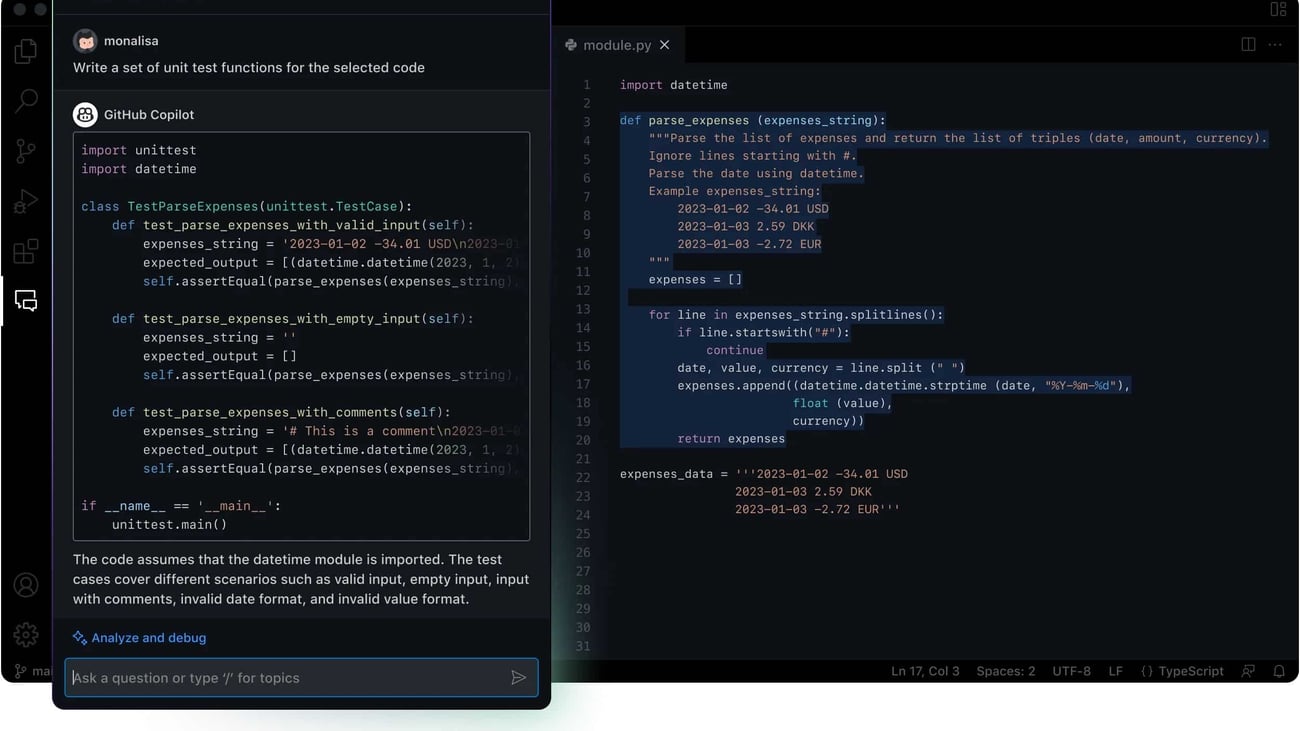
An appellate panel rejected claims brought under the Digital Millennium Copyright Act, but left open the possibility for programmers to pursue "run-of-the-mill" copyright claims.(CN) — The Ninth Circuit rebuffed copyright infringement claims Wednesday by a group of anonymous open-source software programmers who argue GitHub and OpenAI’s artificial intelligence tools to generate code reproduce their work without attribution.The appellate panel upheld the ruling by a trial judge in Oakland, California, that the programmers’ infringement claims brought under the Digital Millennium Copyright Act fail because the AI tools — Copilot and Codex — don’t remove or alter so-called copyright management information from a copy of an existing protected work, but instead create new works that never contained that information.The coders describe an AI tool that doesn’t look up and reproduce stored work, U.S. Circuit Judge Eric Miller determined, but rather creates new work. That new work, the Donald Trump appointee said, may or may not infringe plaintiffs’ copyrights in their code, but it cannot reasonably be described as a copy of that code from which the copyright management information has been removed or altered.The 1998 Digital Millennium Copyright Act, however, prohibits just that — creating a copy of a protected work and removing or altering the copyright management information, such as the name of the creator, owner or terms of use.“To be sure, Copilot’s output may in some cases be substantially similar to existing code,” Miller wrote in the unanimous opinion. “We express no view on whether that similarity would allow plaintiffs to assert a claim for copyright infringement. But we note that many copyright cases involve the creation of a work that is substantially similar to the plaintiff’s without attribution.”Nevertheless, that would be a different infringement claim than one brought under the Digital Millennium Copyright Act, which the judge said could subject defendants to potentially ruinous liability under the law’s enhanced statutory damages.“We decline plaintiffs’ invitation to transform run-of-the-mill copyright infringement claims into DMCA claims,” Miller concluded.The appellate court also found the plaintiffs had standing to pursue their claims.In their complaint, the panel said, the plaintiffs cite academic research that large language models will sometimes “emit the memorized training data verbatim” in support of their argument that they face a substantial risk of injury from Copilot reproducing their code without attribution.This line of argument is sufficient to overcome a motion to dismiss for lack of standing, but if the lawsuit were to proceed to summary judgment, the plaintiffs would need to present sufficient evidence to back up their claim.The other two judges on the panel were Senior U.S. Circuit Judge Sydney Thomas, a Bill Clinton appointee, and U.S. District Judge Stanley Blumenfeld Jr., a Donald Trump appointee from the Central District of California.An attorney for the software programmers and representatives for Microsoft’s GitHub and OpenAI didn’t immediately respond to requests for comment on the ruling.Copilot, which GitHub unveiled in 2021, is trained on public repositories of code scraped from the web. It uses artificial intelligence to absorb all of the code in GitHub, and some code has been published using licenses requiring anyone reusing the code to credit the creators.The coders sued Microsoft, GitHub and OpenAI in 2021, claiming the AI-powered coding assistant GitHub Copilot relies on “software piracy on an unprecedented scale.”Because the tool sometimes produces strings of licensed code without providing credit, the plaintiffs sought penalties in excess of $9 billion.The appeal before the Ninth Circuit only pertained to the open-source programmers copyright claims. Their breach-of-contract claims remain pending before the trial judge.Subscribe to our free newslettersOur weekly newsletter Closing Arguments offers the latest about ongoing trials, major litigation and rulings in courthouses around the U.S. and the world, while the monthly Under the Lights dishes the legal dirt from Hollywood, sports, Big Tech and the arts.Additional Reads
Coders lose appeal in copyright fight against AI tools
Full Article
Original Source
Read the full article at Courthousenews →KhanList aggregates and links to publicly available news content. We do not host full articles from third-party sources. Always verify important information with original sources.