
ActionSA’s success in the 4 November local government elections is about more than just the short-term balance of power and the influence it might have in future coalitions.It is also about the longer-term quest to build a multiracial and multi-class political coalition. ActionSA is the first post-apartheid party to explicitly champion such an alliance. While its political identity might be changing, it is still the most successful formation of its kind. Its future is about the possible success of more racially-inclusive politics (despite the fact it is right-wing).At the same time, as coalition negotiations unfold over the next fortnight, it is worth remembering that nothing is ever quite as it seems.The DA’s Johannesburg mayoral candidate, Helen Zille, interacts with ANC members at the results centre in Midrand on 5 November. (Photo: Felix Dlangamandla) ActionSA leader Herman Mashaba’s statement at the weekend that he will not allow Helen Zille or Cilliers Brink to become the mayors in Joburg or Tshwane may hold – or it could just be posturing, to ensure that when he does actually support them in those councils, he has extracted the maximum possible price from the DA.There’s even the possibility that Zille never planned to be Joburg mayor in the first place – that her candidacy was merely leverage to extract maximum concessions from ActionSA as the “price” for convincing her to step aside. (This is, admittedly, unlikely; nevertheless, it’s a theory worth floating.)Julius Malema’s threat to sue Zille for claiming that Mashaba gave Joburg tenders to Malema’s allies while Mashaba was the Joburg mayor may even be just an attempt to muddy the waters between the DA and ActionSA. Certainly, Malema has not threatened the authors of the book Malema: Money. Power. Patronage (in stock here) for providing evidence of far worse behaviour.Power or peakWhat happens next will affect ActionSA’s future course far more than it will the DA’s or the ANC’s. While both established parties are already locked into their trajectories ahead of the 2029 elections, ActionSA is at a far more critical juncture – younger, less established and significantly more vulnerable.If its leaders use this moment to win positions of influence, and use those positions to improve service delivery and the lives of residents in councils where they help govern, the party could be poised for even more explosive growth. As their ward victories demonstrate, there is a hunger for politicians who get things done. And ActionSA might be able to capitalise more effectively than the DA on voters’ frustrations with the ANC.However, being shut out of power by a DA-ANC-IFP alignment – mirroring the national coalition – could deal ActionSA a severe blow. It could even mean that this result, no matter how energetic the party might be in opposition, becomes its high-water mark.And there is a strong incentive for the ANC and the DA to keep ActionSA out of power. Because ActionSA siphoned votes from both parties, marginalising it serves their mutual interests.The ANC will feel stung by ActionSA’s success in Tshwane, which is probably related to the perceived success of its mayor there, Nasiphi Moya, who was only in the position through a deal with the ANC. Tshwane Executive Mayor Dr Nasiphi Moya. (Photo: Frennie Shivambu / Gallo Images) In addition, the ANC in Tshwane gave the impression it was hopelessly corrupt. Its leader, the former deputy mayor, Eugene Modise, benefited from a city contract with a security company that leased land from him for its operations. He was the previous owner of the security company. And when the council was eventually forced to act, all it did was dock his salary for two months (it is still unclear whether this was ever enforced).In eThekwini, MK’s slim odds of forming a coalition (to do so, it would have to work with the EFF, the IFP and a host of other small parties) open the door for an ANC-DA-IFP alignment. They could then replicate that model in the three Gauteng metros (and possibly even in Nelson Mandela Bay). Beyond MashabaThe other big risk to ActionSA comes from within.Like so many parties in our politics, it has never held a formal leadership election. By claiming that he would not allow Zille to be mayor of Joburg, Mashaba gives the overall impression that he, and he alone, makes the decisions in his party.The risk is that his ego, and his feelings towards Zille, outweigh the rational interests of the party’s members in going into government with the DA and the ANC.ActionSA’s Herman Mashaba at the election results centre in Midrand, Johannesburg on 5 November. (Photo: Felix Dlangamandla) If ActionSA’s members allow the ego of one person to override their interests, then it would be clear that ActionSA is really only about Mashaba. And, like Julius Malema’s EFF or Patricia de Lille’s Independent Democrats and Good Party, or Bantu Holomisa’s UDM, it would not be able to grow over the longer term.One of the great strengths of the ANC and the DA is their ability to change their leadership. As traumatic as this process can be, without it there can be no renewal – it forces leaders to act in the interests of the party’s membership. If ActionSA’s leader can act only in his own interest, then it will be consigned to the same fate as so many other parties.ActionSA has shown that it has the potential to be a lasting and powerful influence in our politics – but it has to prove that it exists to serve its voters and members, and not just one person. DM
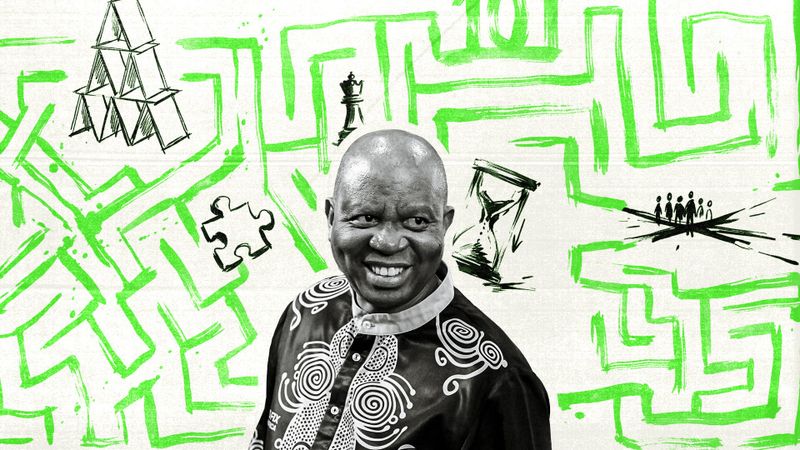
COALITION COUNTDOWN ANALYSIS: ActionSA at the crossroads — real governance or just another ego-driven party?
Full Article
Original Source
Read the full article at Dailymaverick →KhanList aggregates and links to publicly available news content. We do not host full articles from third-party sources. Always verify important information with original sources.