
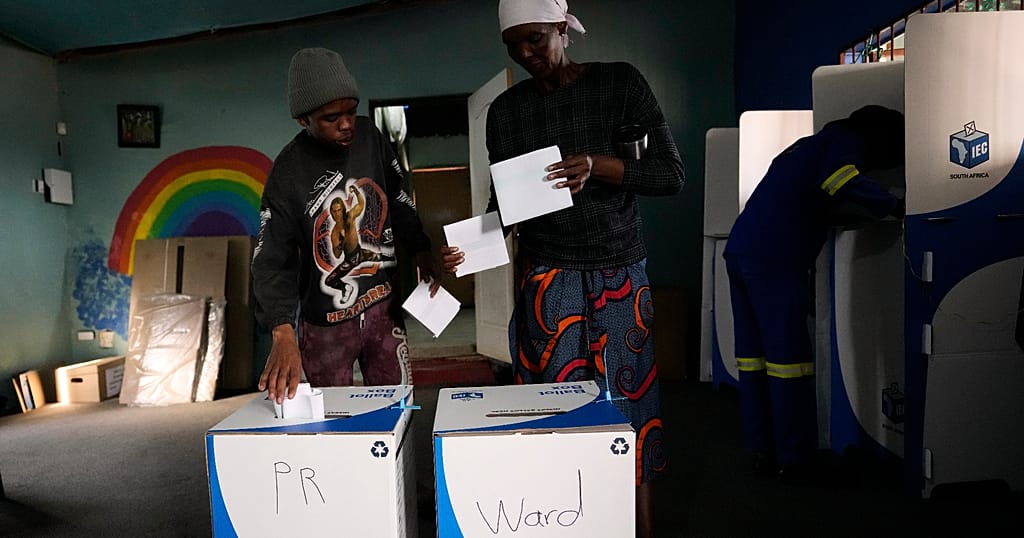
South Africa is entering a new political era following the local government elections held on November 4, 2026. The African National Congress (ANC), which has dominated the country's political landscape since the end of apartheid in 1994, is facing its worst electoral performance to date. Although it remains the country's largest political party with just over 30% of the vote, the ANC is losing ground as political parties begin negotiations to form governing coalitions in municipalities where no party has secured an outright majority. The election results point to a significant shift in South Africa's political landscape, with voters increasingly moving away from the traditional political establishment. According to the results published by the Independent Electoral Commission (IEC), the ANC secured approximately 30.8% of the vote, followed by the Democratic Alliance (DA), which obtained close to 24.6%. The uMkhonto weSizwe (MK) Party also emerged as an important political force, securing approximately 9.8% of the vote. These figures highlight the growing fragmentation of the country's political landscape and the challenges facing parties seeking to establish stable administrations at the local level. ANC's Declining Support After Three Decades in Power Since South Africa's first democratic elections in 1994, the ANC has remained the country's dominant political force. Its historical association with the liberation struggle and the leadership of Nelson Mandela helped establish its position as the leading party in the post-apartheid era. However, years of corruption scandals, economic difficulties, persistent unemployment and declining public services have significantly damaged its reputation. In many communities, residents continue to express frustration over water shortages, electricity disruptions, deteriorating infrastructure and poor municipal service delivery. The latest electoral setback reinforces a trend that became increasingly evident during the 2024 national elections, when the ANC lost its parliamentary majority for the first time since the end of apartheid. Although the party remains the largest political organisation in the country, its reduced electoral support means it can no longer rely on its traditional dominance to govern without negotiating with other political formations. 120 Municipal Councils Without a Clear Majority One of the most significant consequences of the November 4 elections is the large number of municipalities in which no political party has secured an outright majority. Political parties have therefore begun negotiations to establish coalition governments and ensure that municipal administrations can function effectively. Initial reports indicate that discussions are taking place in approximately 120 hung municipal councils, where parties must work together to secure enough seats to govern. The negotiations will determine the distribution of key municipal positions, including mayoral offices, council leadership positions and responsibilities within municipal administrations. The process is taking place under considerable time pressure, with political parties facing a legally prescribed 14-day period to establish functioning local administrations. Reaching agreements within such a short timeframe could prove difficult, particularly given the ideological differences and political rivalries between the country's major parties. Coalition Governments Raise Concerns Over Political Stability The growing importance of coalition politics presents both opportunities and challenges for South Africa's democracy. On the one hand, coalition governments create opportunities for smaller political parties to participate in governance and challenge the dominance of larger organisations. On the other hand, they can also produce unstable administrations when coalition partners fail to agree on common priorities. Political analyst Xolelwa Kashe-Katiya has warned that rushing complex negotiations could result in municipalities governed by inherently fragile coalitions. Such instability could have serious consequences for local communities. Municipal councils are responsible for delivering essential services, maintaining infrastructure and implementing development programmes. When coalition partners disagree, the consequences can include delayed budgets, stalled infrastructure projects, leadership changes and difficulties in implementing municipal policies. South Africa has already experienced several examples of unstable coalition administrations in previous years, highlighting the importance of building partnerships based on clear agreements and shared governance priorities. Democratic Alliance and Smaller Parties Gain Political Influence With approximately 24.6% of the vote, the Democratic Alliance has strengthened its position as the country's second-largest political party. The results give the DA greater negotiating power and potentially open the door to increased participation in municipal administrations. However, the political landscape is no longer defined solely by competition between the ANC and the DA. The emergence of the MK Party, alongside established opposition formations such as the Economic Freedom Fighters (EFF) and ActionSA, has made coalition negotiations increasingly complicated. In several municipalities, smaller parties could hold the balance of power and determine which political formations ultimately control local administrations. The challenge for these parties will be to negotiate agreements that allow them to influence governance without compromising their political identities and electoral commitments. A Turning Point for South African Democracy Beyond the immediate electoral results, the November 2026 local government elections represent another important turning point in South Africa's democratic development. The weakening of the ANC's electoral dominance reflects a changing relationship between voters and political institutions. Increasingly, citizens appear willing to punish governing parties when they fail to deliver on essential services, economic opportunities and accountable leadership. However, the success of this political transition will ultimately depend on whether the new coalition arrangements can deliver stable and effective local government. The coming days will therefore be crucial. Agreements reached between political parties will shape the leadership of municipalities, influence local development priorities and determine how effectively public services are delivered. For the ANC, the challenge is to rebuild public confidence and redefine its political strategy after decades of dominance. For opposition parties, the responsibility is equally significant: they must demonstrate that electoral gains can translate into effective governance and tangible improvements in people's lives. One thing is clear: the era in which the ANC could govern South Africa's municipalities with overwhelming political dominance is increasingly becoming a thing of the past. The 2026 elections have ushered in a new political reality in which power will depend less on historical dominance and more on negotiation, cooperation and the ability to deliver results for ordinary South Africans.
Coalition building begins as ANC suffers major blow in South Africa local elections
Full Article
Original Source
Read the full article at Africanews →KhanList aggregates and links to publicly available news content. We do not host full articles from third-party sources. Always verify important information with original sources.