
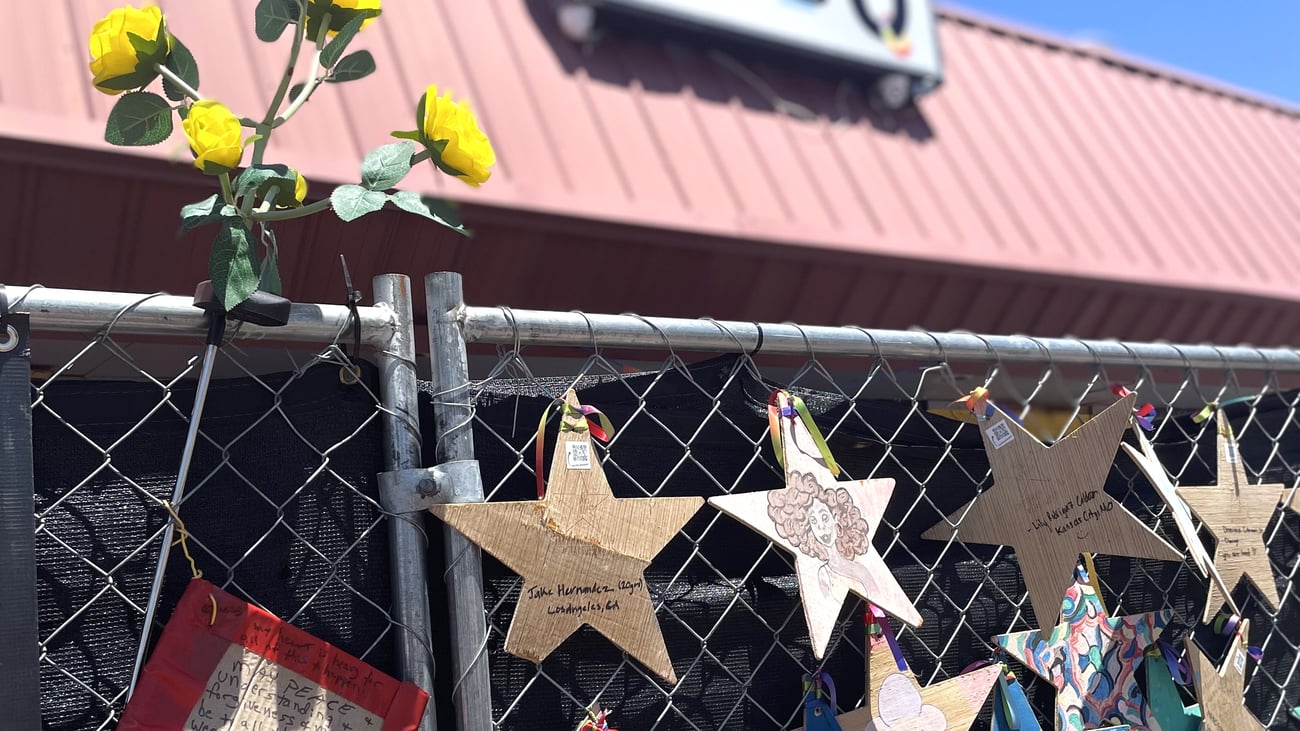
Colorado state law preempts plaintiffs from bringing claims against a landowner for injury on their property outside of the Colorado Premise Liability Act.(CN) — The 10th Circuit reversed a lower court’s order that had allowed victims of a mass shooting at a gay night club in Colorado Springs, Colorado, to sue the club for negligence and wrongful death, dismissing the last remaining claims in the federal lawsuit.In a Wednesday opinion, a three-judge panel upheld the denial of all other claims against the club and El Paso County, as well.“Today’s decision confirms what we have said from the beginning: Club Q was not responsible for this horrific, premeditated mass shooting. The shooter was,” Club Q’s attorney Michael Kuhn said. “The Tenth Circuit agreed, affirming dismissal of the premises-liability claims and holding that the remaining negligence and wrongful-death claims against Club Q should also be dismissed.”The plaintiffs, survivors of the 2022 Club Q shooting and families of the victims, sued in 2024 under the Colorado Premises Liability Act. They claimed the club’s lax security and lack of an evacuation protocol significantly contributed to their injuries.Under Colorado law, plaintiffs cannot bring claims arising from the same event under any other state or federal laws.“The CPLA provides the exclusive legal remedy for plaintiffs’ injuries, which arose from Club Q’s conditions,” U.S. Circuit Judge Gregory A. Phillips wrote in the 52-page opinion. “Because the CPLA precludes plaintiffs’ negligence and wrongful death claims, the district court should have dismissed those claims, too.”The 10th Circuit affirmed the lower court’s denial of the CPLA claim, because the unforeseeable shooting, rather than the club’s conditions, was the “predominant cause of injury.”After the 2016 Pulse Nightclub shooting in Orlando, Florida, Club Q responded by staffing four security guards, but relaxed its security efforts over the years, the plaintiffs say in the lawsuit. Despite multiple threatening phone calls leading up to the November shooting, Club Q staffed just one security guard who was “unlicensed, overworked, and lacked formal active-shooter training” and doubled as a barback and food runner, the plaintiffs say.The club had no metal detectors or pat-down protocol and had just one entrance and exit.The shooter, Anderson Lee Aldrich, visited the club multiple times that year and apparently asked the security guard about security and evacuation procedures. According to the complaint, Aldrich entered the club’s front door “without restriction.”Still, the 10th Circuit agreed that the shooting was unforeseeable, citing a Colorado Supreme Court ruling in Rocky Mountain Planned Parenthood vs. Wagner, arising from a mass shooting in 2015. In that case, the high court found Planned Parenthood not liable, because neither its actions or inactions led directly to the shooting.“Even accepting as true all of plaintiffs’ allegations, the Club Q defendants’ conduct … didn’t play a more substantial role in causing plaintiffs’ injuries than Planned Parenthood’s did in Wagner,” wrote Phillips, a Barack Obama appointee. “In both cases, the mass shooter’s actions were undoubtedly the predominant cause of the invitees’ injuries.”The panel also affirmed the denial of claims against the county and its sheriff’s office.The plaintiffs had argued actions taken by then-Sheriff Bill Elder directly enabled Aldrich to carry out the shooting.Colorado passed its Red Flag Law in 2019, giving local law enforcement authority to remove and restrict access to firearms from people deemed a danger to themselves or others. Elder vowed to restrict the county’s use of the law, citing Second Amendment concerns. The county board of commissioners issued a resolution to stand by Elder’s disavowal.A year before the attack, the county arrested and charged Aldrich with felony menacing and kidnapping after Aldrich promised to be the next mass killer and bragged about building an arsenal. The county confiscated the firearms, but Aldrich replaced them in 2022 without restriction after a judge dismissed the charges.Under a state-created-danger legal theory, a plaintiff must prove that state action led directly to the claimed injury. A refusal to abide by state law does meet that description, the panel found.“This conduct isn’t actionable because it’s not ‘affirmative,’” Phillips wrote. “Instead, it’s nothing more than ‘mere negligence or inaction.’”The plaintiffs argued in May that the county did take deliberate action by crafting a policy that prevented enforcement of the Red Flag Law.The panel agreed but found the connection between the policy and the eventual shooting too tenuous to create a causal link. The policy may have created “indefinite risk,” Phillips granted, but not “immediate harm.”Representatives for the plaintiffs did not immediately respond to a request for comment.Subscribe to our free newslettersOur weekly newsletter Closing Arguments offers the latest about ongoing trials, major litigation and rulings in courthouses around the U.S. and the world, while the monthly Under the Lights dishes the legal dirt from Hollywood, sports, Big Tech and the arts.Additional Reads
Club Q shooting victims can’t sue for wrongful death, 10th Circuit finds
Full Article
Original Source
Read the full article at Courthousenews →KhanList aggregates and links to publicly available news content. We do not host full articles from third-party sources. Always verify important information with original sources.