
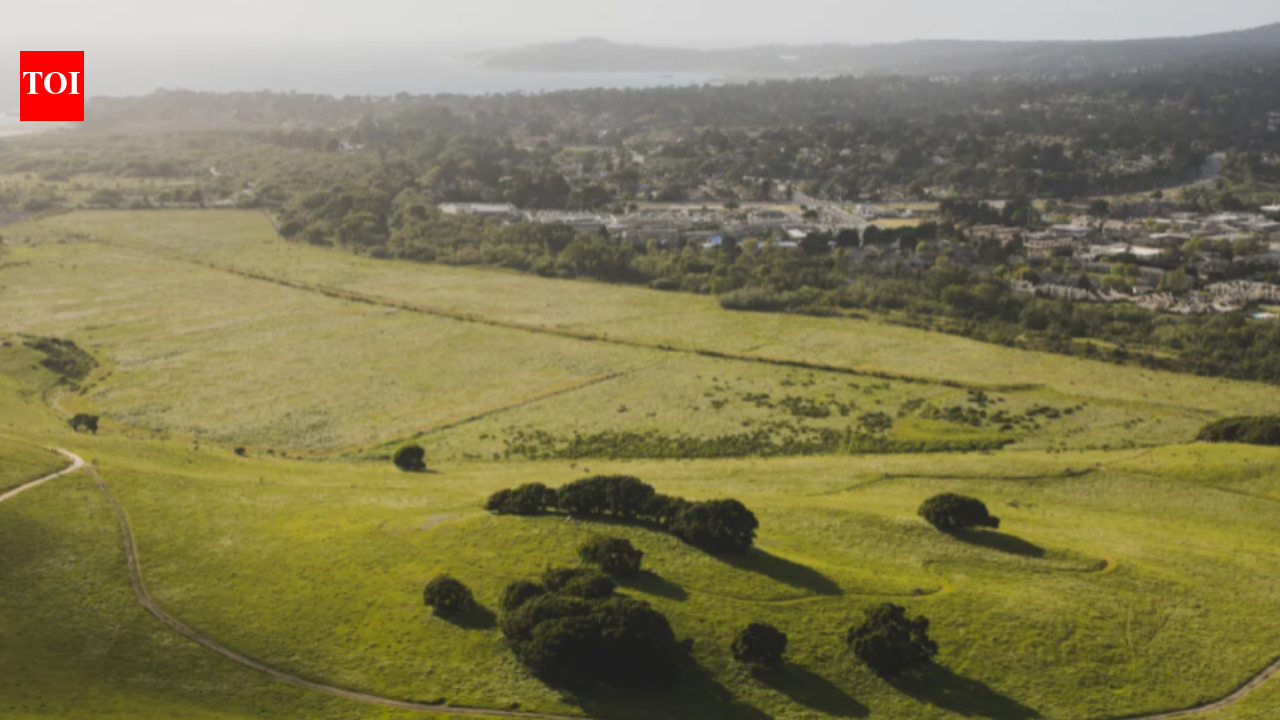
When actor Clint Eastwood bought a 134-acre former artichoke farm near California’s Carmel River in 1995, the property came with development potential, water rights and a history rooted in agriculture. Two years later, Eastwood and his then-wife Maggie announced plans to transfer the ranch to the Big Sur Land Trust. Nearly three decades on, part of that land is at the centre of an ambitious project designed not for houses, but for wetlands, wildlife and flood protection. The story was first reported by the Los Angeles Times in December 1997, when the newspaper reported that the Eastwoods were donating the $6-million Coast Ranch to the Big Sur Land Trust. The property, formerly known as the Odello Artichoke Fields, had been purchased by the Eastwoods in 1995.From an artichoke farm to protected open spaceThe Odello property sits near the mouth of the Carmel River, east of Highway 1 in Monterey County. Before Eastwood’s ownership, the land was known for growing artichokes. The 1997 Los Angeles Times report said the 134-acre property was valued at about $6 million and that 67 of 73 planned subdivision lots would be retained as open space. Eastwood said at the time that he was enthusiastic about working with the Big Sur Land Trust because of its conservation work in the community.The donation was not simply about preserving an attractive piece of California farmland. The property had significant development and water rights attached to it, making the decision to keep it from conventional development particularly consequential. Contemporary reporting noted that the Eastwoods had acquired a tentative map allowing a subdivision on the Odello property.The land changed hands in stagesThe eventual conservation story is more complicated than a single 134-acre donation in 1997. Big Sur Land Trust records say Margaret and Clint Eastwood donated 79 acres at Odello East in 2016, a major step toward assembling the land needed for what would become the Carmel River Floodplain Restoration and Environmental Enhancement Project, known as Carmel River FREE.Today, the Big Sur Land Trust describes the 128-acre project site at the former Odello East Fields as land donated by Clint and Margaret Eastwood. The trust is the largest landowner within the project area, while portions also extend into Palo Corona Regional Park and Carmel River State Beach.A ranch is now part of a flood-control planThe transformation of the former agricultural fields is at the heart of Carmel River FREE, a partnership led by the Big Sur Land Trust and Monterey County. Rather than relying only on conventional flood-control infrastructure, the project uses the floodplain itself as a form of natural protection. The restored area will give high river flows additional room to spread and move toward the Carmel River Lagoon, helping reduce flood risks for homes and businesses downstream.The project also aims to restore riparian and wetland habitat, benefiting wildlife while creating a more resilient river system. Earlier reporting described the 128-acre Odello East property as the key site where the river could regain another route to the sea during high flows.A $57-million project still moving toward constructionThe restoration is a major undertaking. Monterey County currently lists the remaining project cost at roughly $57.5 million, with about $27.1 million in pending CalOES/FEMA funding. Big Sur Land Trust says the project had about $25 million in grant funding and was awaiting the FEMA award to become fully funded for construction. The trust’s current project information says the project is in the final stages of design and pre-construction coordination. Once completed, the former artichoke fields will look very different from the subdivision that could have occupied them.Instead, the land is being reshaped as floodplain, habitat and open space, turning a property once associated with agriculture and development potential into part of a long-term effort to make the Carmel River community safer and its ecosystem healthier. The journey from Eastwood’s 1995 purchase to today’s restoration plan is a reminder that the most consequential legacy of a piece of land is sometimes not what gets built on it, but what is deliberately left open.
Clint Eastwood's ranch donation now forms 128-acre California restoration site
Full Article
Original Source
Read the full article at Timesofindia →KhanList aggregates and links to publicly available news content. We do not host full articles from third-party sources. Always verify important information with original sources.