
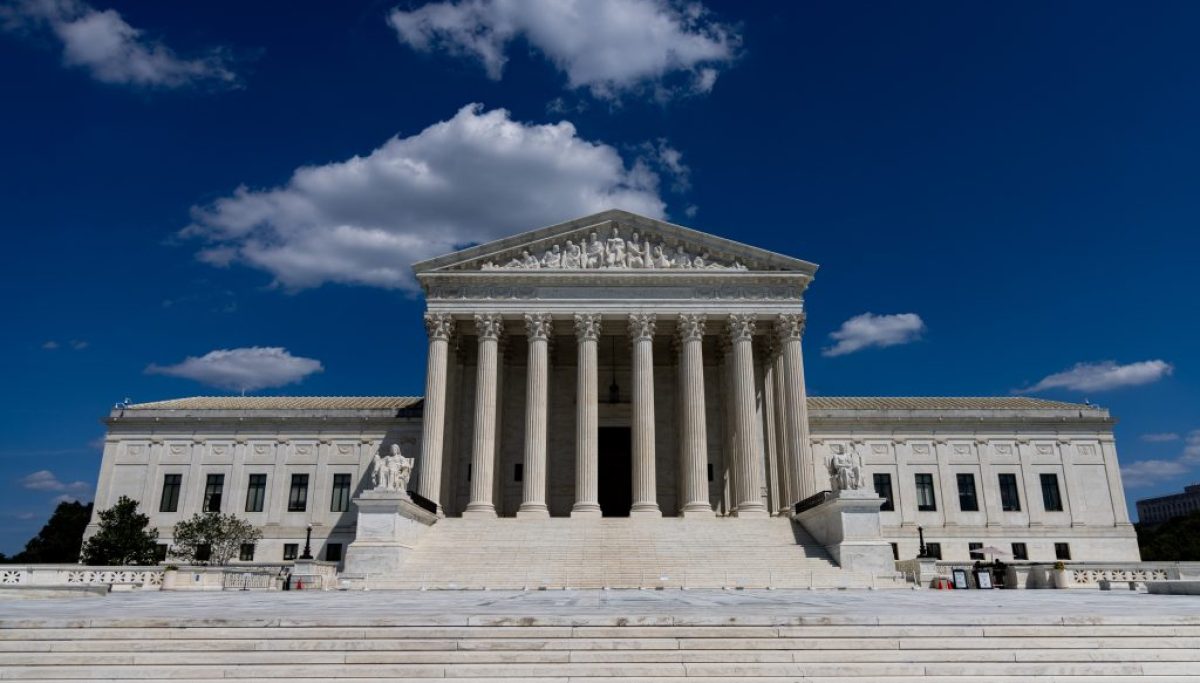
Do state courts have the power to regulate not just national industries but global ones, including conduct that took place entirely outside the state? That is the question facing the Supreme Court on Monday when it hears oral arguments in Suncor Energy v. Boulder County.On its face, Boulder County’s lawsuit against Exxon Mobil and Suncor Energy is absurd. The Colorado county is suing these two energy companies, and just these two energy companies, for costs borne by the county that were allegedly caused by climate change, including damage from wildfires and floods, deterioration of roads and bridges, and the expense of protecting residents from future disasters.But combined, these two energy companies accounted for approximately 1.5% of global greenhouse gas emissions in 2024. To hold these two companies, and just these two companies, responsible for the alleged harms of global warming defies all logic. Attributing particular disasters to climate change presents another challenge: The historical record is far less straightforward than activists suggest. Satellite data examined in a major Science study showed that the total area burned worldwide declined 24.3% from 1998 to 2015. Research co-written by Roger Pielke Jr. in the Bulletin of the American Meteorological Society found no statistically significant rise in the frequency or intensity of hurricanes striking the United States since 1900. And a 2023 study covering more than 3,000 monitoring stations over a century found that heavier rainfall has not produced a uniform increase in flooding: The trends are weaker and vary substantially by region. Even the U.N. Intergovernmental Panel on Climate Change expresses “low confidence” in a global trend in peak river flows.But none of this science or logic would matter in a courtroom run by a far-left Democratic judge before far-left Democratic jurors. If this case were to go to trial in a Colorado court, all that would matter would be that the energy companies were bad and must be punished for their supposed wrongdoing. Boulder County’s lawyer, David Bookbinder, even admitted as much during a panel discussion in which he said the end goal of the lawsuits was to create “an indirect carbon tax” that would bankrupt energy producers and allow local governments to take control of their assets.Fortunately, the Supreme Court can stop this attempt to allow activist judges to legislate from the bench. The strongest reason Boulder should lose is straightforward: Colorado does not get to set the rules for the rest of the country, much less the world.Boulder says it wants compensation, not emissions limits. But that distinction ignores what a damages award would do. Making companies pay for the consequences of worldwide fuel production would pressure them to change that production everywhere. Calling the payment damages rather than a carbon tax does not erase its reach beyond Colorado.That is why disputes over pollution crossing state lines have traditionally belonged to federal law. Texas has as much right as Colorado to make decisions within its borders. Allowing Colorado juries to impose liability for activities elsewhere would let one state override another’s choices. Multiply Boulder’s theory across dozens of jurisdictions, and companies would face competing rules for the same global activity.The Clean Air Act strengthens that argument. In American Electric Power v. Connecticut, the Supreme Court held that the statute displaced federal common-law lawsuits seeking limits on greenhouse gas emissions from power plants. That decision did not settle whether state-law claims survive. But it established that Congress had assigned those regulatory decisions to the Environmental Protection Agency. Boulder should not be allowed to circumvent that arrangement by targeting fuel producers through state nuisance law.SANCTUARY DEMOCRATS ARE PUTTING AMERICANS LASTThe international implications are serious. Liability tied to foreign fuel production would let a Colorado court influence energy development abroad, interfering with American diplomacy and trade. The Constitution entrusts foreign affairs to the federal government, not states, and definitely not state judges.Justice Samuel Alito, who owns stock in other oil and gas companies, has chosen to recuse himself from this case. That takes one likely vote against Boulder off the table. But five other conservative justices remain to hear the case. Given how preposterous it would be to empower courts in all 50 states to set conflicting global energy policies, Suncor should get the votes of at least one or two justices appointed by Democratic presidents as well.
Climate policy belongs to Congress, not Colorado
Full Article
Original Source
Read the full article at Washingtonexaminer →KhanList aggregates and links to publicly available news content. We do not host full articles from third-party sources. Always verify important information with original sources.