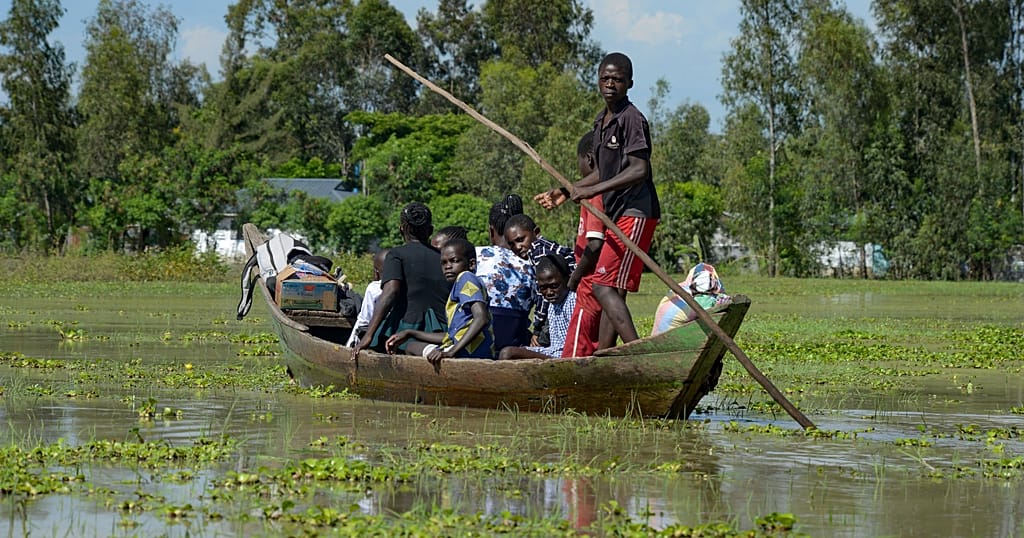
A family uses a canoe after fleeing floodwaters that wreaked havoc in Ombaka Village, Kisumu, Kenya, 17 April 2024. - Copyright © africanews Copyright 2023 The Associated Press. All rights reserved Last updated: 19 minutes ago El Niño Climate experts warn that an impending “super” El Niño will have a negative impact on African economies and trigger mass migration from hard-hit areas. African Development bank specialists told Reuters news agency that it is likely to inflict a combined $10 billion to $20 billion hit on affected countries. Its director for climate change and green growth, Anthony Nyong, said it will reduce the GDP of heavily impacted countries by one to two per cent on average. He did not provide a country-by-country breakdown of the estimate, but warned it was unlikely to be a once-off either, with the effects potentially lasting for years. Forecasters warn that the naturally occurring weather pattern could turn into one of the strongest ever seen if current Pacific Ocean warming trends continue. A super El Niño is defined by sea surface temperatures more than two degrees Celsius above normal in the central Pacific. The weather pattern typically brings drought to Southern Africa and heavy rains and flooding in East Africa. In the 2023 to 2024 El Niño event, this led to widespread crop failures, surging food prices, and record-breaking sea-level spikes along the continent’s coastlines. The bank estimates that African farmers are already facing nearly $330 million in lost income this year, amid high energy prices and fertilizer disruptions due to the war in the Middle East. It said the fishing industries could be hard hit due to rising sea temperatures and storms. Conflicts, debt pressures, and cuts in international aid are also contributing to a weaker capacity in many countries to respond to external shocks. The AfDB identified Sudan, South Sudan, Democratic Republic of Congo, Somalia, Mali, Burundi and even Nigeria as countries that could face particularly severe impacts. You may also like
Climate experts say super El Niño will negatively impact African economies
Full Article
Original Source
Read the full article at Africanews →KhanList aggregates and links to publicly available news content. We do not host full articles from third-party sources. Always verify important information with original sources.