
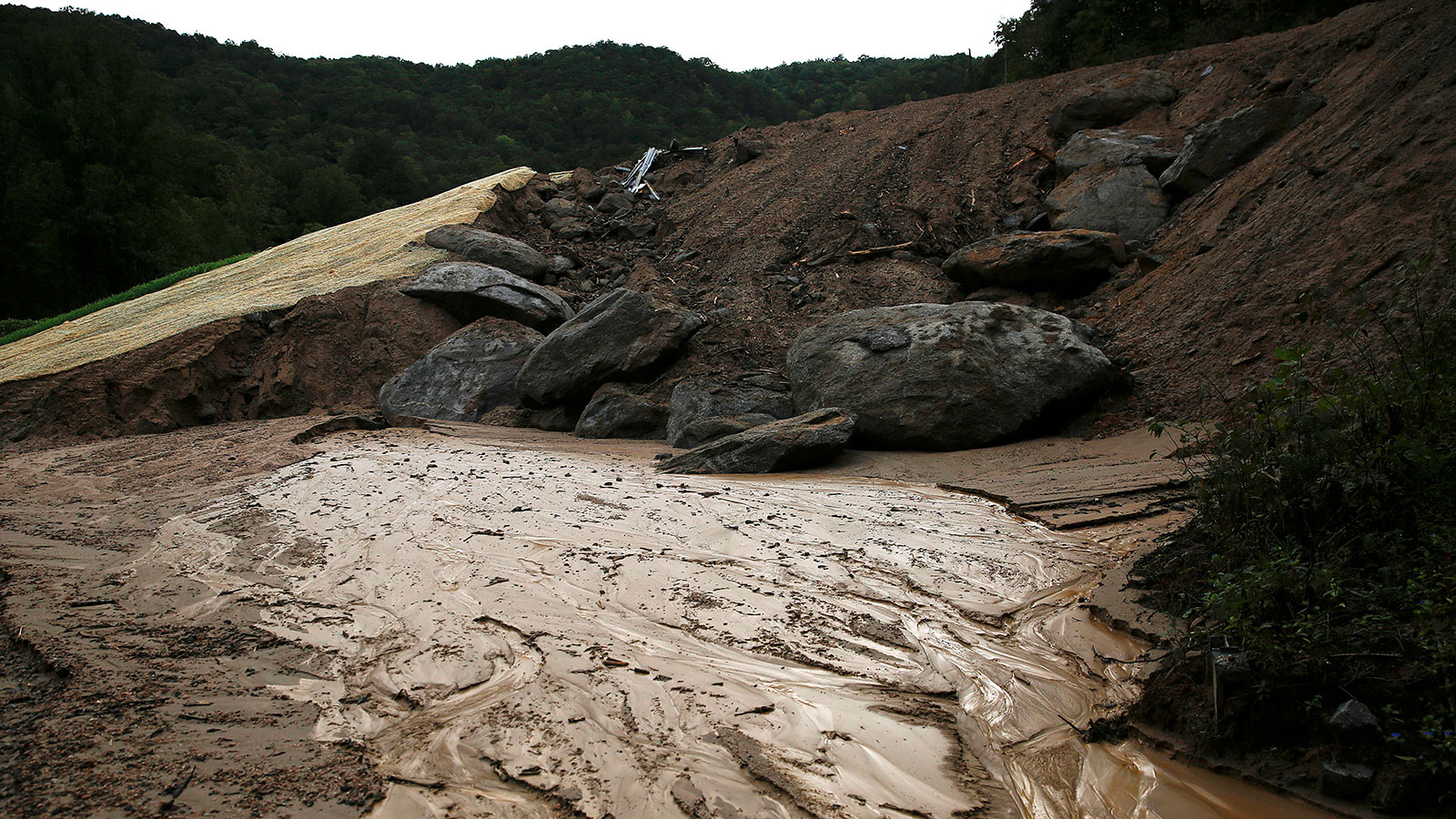
Skip to content (Image credit: AP Photo / Brynn Anderson) Transcript: Two years ago, the torrential rains of Hurricane Helene triggered catastrophic landslides in Southern Appalachia – including one that killed 11 members of a single family. Karin Rogers is director of the National Environmental Mapping and Applications Center at the University of North Carolina Asheville. Rogers: “There has been a history of landslides in this part of North Carolina. … It’s a known phenomenon. … But after Helene, it was devastating.” She says the region’s steep mountain slopes are prone to landslides, especially along paths where they’ve occurred in the past, and in areas where the soil is already saturated. Rogers: “With Helene, we had had a precipitation event … two days before, that I think was about a seven-inch rainfall in some parts of the region. It was pretty significant. And so it saturated the soils significantly before even Helene arrived.” And as climate change causes more extreme storms, the risk of landslides is growing. So Rogers’ team is partnering with the North Carolina Geological Survey to develop an early warning system. She says it will overlay storm forecasts with maps of past landslides and soil moisture data. The goal is to pinpoint the areas most at risk so people can get out of harm’s way. Reporting credit: Sarah Kennedy / ChavoBart Digital Media
Climate change is boosting landslide risks in southern Appalachia
Full Article
Original Source
Read the full article at Yaleclimateconnections →KhanList aggregates and links to publicly available news content. We do not host full articles from third-party sources. Always verify important information with original sources.