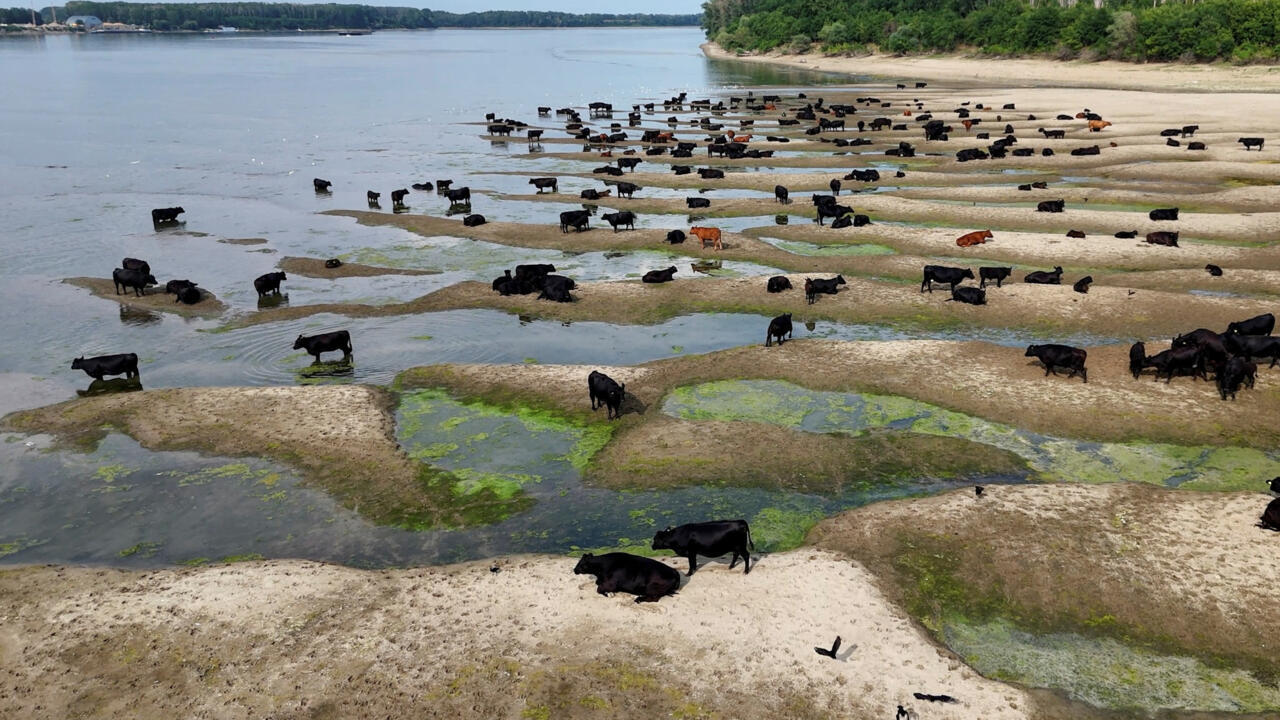
Climate change is exacerbating drought in Europe as extreme heat evaporates water supplies, scientists said in a study published this week, with low water levels disrupting shipping, farming and industry in countries including Romania and Greece. Issued on: 25/07/2026 - 10:58 1 min Reading time Numerous European countries are suffering drought conditions this summer. France fears it may have its smallest maize crop in 50 years, while Romania has restricted farmers' access to water for irrigation, the Netherlands declared a water shortage last week and seven Greek islands have declared drought emergencies to preserve water. Climate change was not the cause of the lack of rain in April to June this year, according to analysis by the World Weather Attribution. Rather, climate change's role in the ongoing drought is that it has directly contributed to the extreme heat which is accelerating how much water evaporates out of soils. Evaporation-potential conditions were 80 times more likely in western Europe and 40 times more likely in eastern Europe in January to June compared with pre-industrial times before humans started burning fossil fuels on an industrial scale, the WWA said. Drought classification maps of Europe, categorised according to the US Drought Monitor (USDM) system, for the first half of 2026. © World Weather Attribution Latest heatwaves, droughts, floods could cost Europe €126 billion by 2029 "Extreme heat is taking over as the primary driver of drought on our continent," said Sarah Kew, a climate scientist at the Royal Netherlands Meteorological Service. "We are seeing water supplies evaporate out of our soils and rivers faster than we would have in a world without climate change, turning what would have been manageable dry spells into severe droughts," she said. Agricultural soil droughts are now five times more likely in western Europe because of climate change, and 11 times more likely in eastern Europe, according to the WWA analysis. (with newswires)
Climate change 'exacerbating' drought across Europe, scientists say
Full Article
Original Source
Read the full article at Rfi →KhanList aggregates and links to publicly available news content. We do not host full articles from third-party sources. Always verify important information with original sources.