
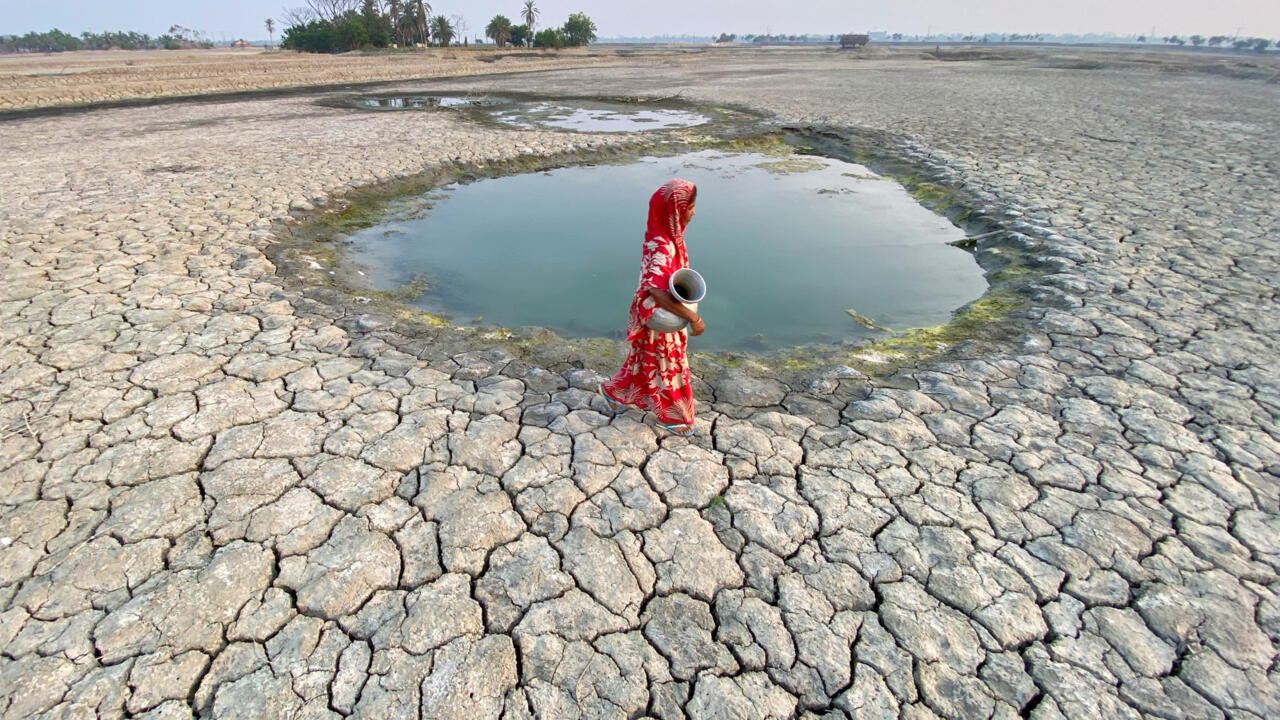
The Plan International charity said Monday that global warming has increased the risk of child marriages, teenage pregnancies and violence against girls. Its report coincides with talks in the South Pacific nations of Fiji and Tuvalu, where climate change is affecting all aspects of daily life. Issued on: 05/10/2026 - 17:36 2 min Reading time Climate disasters such as floods, droughts, cyclones, and extreme heat are destroying the health and education services girls depend on while also forcing families to marry off young daughters as a "survival strategy", Plan International said. The charity's report (Change Her Forecast, the State of the World's Girls 2026) was based on interviews with 5,000 girls and young women aged between 15 and 24 in Bangladesh, Kenya, Peru, Senegal and Zimbabwe. It said one in 10 girls reported an unintended pregnancy "following a climate-related event" and 33 percent reported an increase in unintended pregnancies in their community. Over a billion children exposed to multiple climate hazards, UN report shows "Nine in 10 girls said climate-related events were placing serious pressure on their family's survival, health, and stability," according to the report, released ahead of the international day of the girl child on 11 October. Some 28 percent said they had witnessed an increase in violence against women following climate related events. The figure rose to 60 percent in Zimbabwe, which has been severely hit by rising temperatures blamed on human activity. "Slow-onset drought destroys the household economies that keep girls out of marriage," said Plan International. "Across 52 countries and three decades, prolonged drought emerged as the hazard most consistently associated with rising rates of child marriage and early unions, as families lose harvests, livestock, and income over months and years until marrying a daughter becomes a survival strategy." Plan International said countries had to allocate "a defined share of climate adaptation finance to adolescent girls' health, including sexual and reproductive health services." Heatwaves, rising seas The United Nations climate chief on Monday also pointed to health problems linked to climate change, notably extreme heat. Highlighting the need for urgent action, Simon Stiell cited a new survey showing more than two-thirds of health professionals across five continents had seen complications caused by intense heat in the past five years. "Climate-driven extreme heat during pregnancy is increasingly linked to premature birth, stillbirth, low birth weight, and maternal complications," he told delegates at the UN "pre-Cop" gathering, which kicked off in the Fijian city of Nadi. The talks are a precursor to Cop31, the larger UN global climate summit, to be held next month in Turkey. World powers gather in Pacific to chart climate battle Fiji urged developed nations to back a just transition to renewable energy and support those most vulnerable to climate change. The South Pacific is among the most vulnerable regions in the world to global warming – from rising sea waters jeopardising homes to increasing temperatures causing coral bleaching. Fiji's climate minister Lynda Tabuya called for commitments from developing nations to a "just transition", with support for "countries in the world that suffer the most". A UN report released in August found developing countries needed $310 billion-$365 billion to adapt, yet had only $26 billion in adaptation finance available in 2023. Up to 1.2 billion people could be displaced by 2050, with Pacific island countries experiencing sea level rise at twice the global average, according to the report. "We rely on and we appeal to countries to commit to climate finance," Tabuya said. (with AFP)
Climate change driving child marriages, teen pregnancies: report
Full Article
Original Source
Read the full article at Rfi →KhanList aggregates and links to publicly available news content. We do not host full articles from third-party sources. Always verify important information with original sources.