
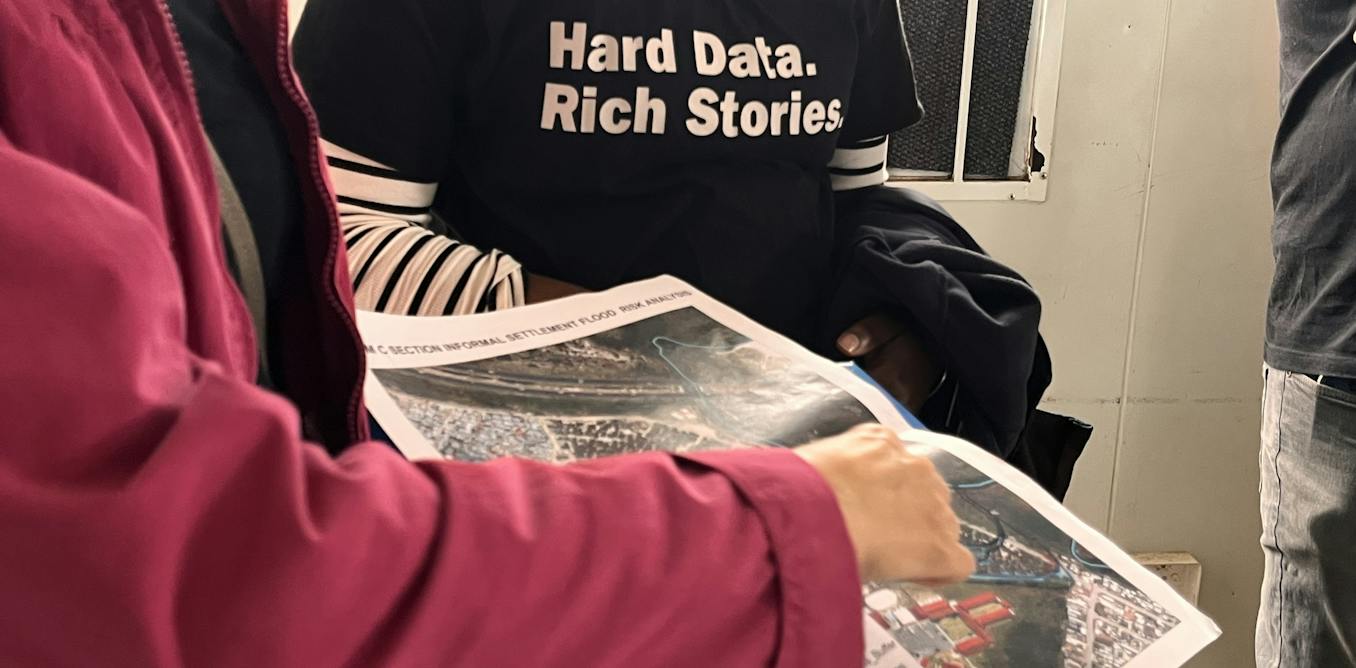
Internationally, climate adaptation strategies have multiplied steadily since the 2000s. South Africa, for example, has a National Climate Change Adaptation Strategy and its Western Cape province has its own Climate Change Response Strategy. These are a way of understanding coming climate risks, such as floods or heatwaves, setting out how to adapt to them and guiding interventions to reduce vulnerability and strengthen resilience. What has not multiplied at the same rate are successful interventions to make sure that risk is reduced for those most affected by climate events (such as flooded homes or failed crops, for example). Read more: Adapting to climate change is limited by people’s behaviour: how social innovation can help Too often, these climate change interventions skip the first step: understanding the problem, who it affects and whether the proposed solution will work locally. We are climate adaptation researchers who wanted to test a new way of designing solutions to the problems that climate impacts are causing in South Africa. We brought together four teams from across the country, each facing a real climate challenge. Each team combined municipal staff, people from NGOs and the private sector and academic researchers and, in one case, residents living with the problem directly. Read more: Cities must listen to people to find solutions for climate impacts: stories from Cape Town They worked through a design thinking process – a method that begins with understanding and observing people’s experiences, before defining the problem, generating ideas and building a prototype. Our research found that the co-design workshop helped teams narrow broad challenges down to specific problems people faced. They were then able to start designing possible solutions. We found that the teams became more confident trying new ideas and working with people from other sectors. It led to a better understanding of how different parts of a problem were connected. Read more: South Africa needs R250 billion just to meet basic climate adaptation needs over the next decade Finance for climate adaptation finance does not yet flow to this kind of work. Yet giving people from different parts of society the time and space to work together on defining climate problems that communities face can help them develop solutions that are locally relevant and more likely to last. Teams also need support after the facilitated engagements end. Mentoring and small grants can help test ideas, see what works and put promising solutions into practice. What we expected, and what we got The four teams worked on a range of problems, including: a coal-dependent municipality facing a just transition to green energy a peri-urban settlement trying to grow vegetables and support livelihoods an informal (shack) settlement exposed to flooding a non-profit foundation working on sustainability in the fisheries sector. We expected the groups to come up with prototypes: early-stage climate solutions to be refined, costed and pitched. The teams did produce them. For example, one team designed a board game to help schoolchildren and their families in fishing communities to understand sustainability. The teams at work. Courtesy Gina Ziervogel. But we found that the teams also built valuable skills in other areas. The first was personal. People realised they could be creative and were able to think differently and explore challenges. Asked afterwards what skill she had built, one team member said she had never thought of herself as having a creative mind before. Others wrote of learning to manage frustration, or realising their own ideas had value in a room full of experts. Read more: Indigenous futures thinking: 4 approaches to imagining a better world The second was relational. We used exercises that helped create a space for collaboration and learning. Through these, the people in the workshops learned to build trust and make room for others’ expertise. The third was systemic. Participants saw connections they had previously missed. One described suddenly grasping how climate change linked to food security and the local economy. When people gain the confidence to share ideas, learn to work together and see how problems are connected, they are better able to design climate solutions that fit local needs. There is evidence from many contexts that this reduces the risk of those solutions failing later on. Three lessons for supporting climate innovation Community activists who work on setting up a solid waste hub. Courtesy Gina Ziervogel. Climate was hard to keep in focus. The teams worked with climate adaptation design specialists and started with the problems local people wanted to solve. Most came up with ideas that addressed broader environmental or social needs, such as securing income from their farming. Only one team focused on a specific climate hazard directly, namely flooding. Those broader ideas could still help communities become stronger and better able to cope with climate shocks. The difficulty is deciding when a solution to a local problem also counts as climate adaptation. Bringing different points of view together is difficult. Climate adaptation planning by experts often pushes local knowledge aside. In this co-design workshop, people’s experiences were brought in. For example, some people lived in communities that had been flooded when rivers burst their banks. City officials also set out what they believed needed to be done for communities to adapt. However, this kind of work can’t be completed in one or two meetings. Read more: South African study finds 4 low-income communities can’t cope with global warming: what needs to change Moving from ideas to innovative solutions takes time and ideas need somewhere to go next. The programme was designed with a third stage: an incubator that would take prototypes and turn them into reality. For various reasons, it was not implemented. This meant that the teams left energised and connected, but enthusiasm dwindled as people returned to busy schedules and their projects never got off the ground. This showed a common problem: short, intensive processes can produce promising ideas, but teams need ongoing support to develop them and make them work in practice. Why this matters for adaptation finance Our findings suggest that an approach known as social innovation, that focuses on solving societal problems, is well suited to climate adaptation. It brings people together to develop solutions based on what communities need. It is a natural fit for developing interventions suited to local context. But our research pilot project also exposed a gap between what funders want and what communities have the support to develop. Climate adaptation funders increasingly ask for interventions that are ready to get started as soon as the funds are available. We found that few exist, especially those grounded in local realities rather than designed by enthusiastic entrepreneurs. Read more: Green energy doesn’t benefit everyone: ubuntu ideas can help include more people Our findings suggest that too little support goes into bringing the right people together, understanding the problem and testing ideas before choosing a solution.
Climate adaptation: South African teams show why better solutions start with understanding local problems
Full Article
Original Source
Read the full article at Theconversation →KhanList aggregates and links to publicly available news content. We do not host full articles from third-party sources. Always verify important information with original sources.