
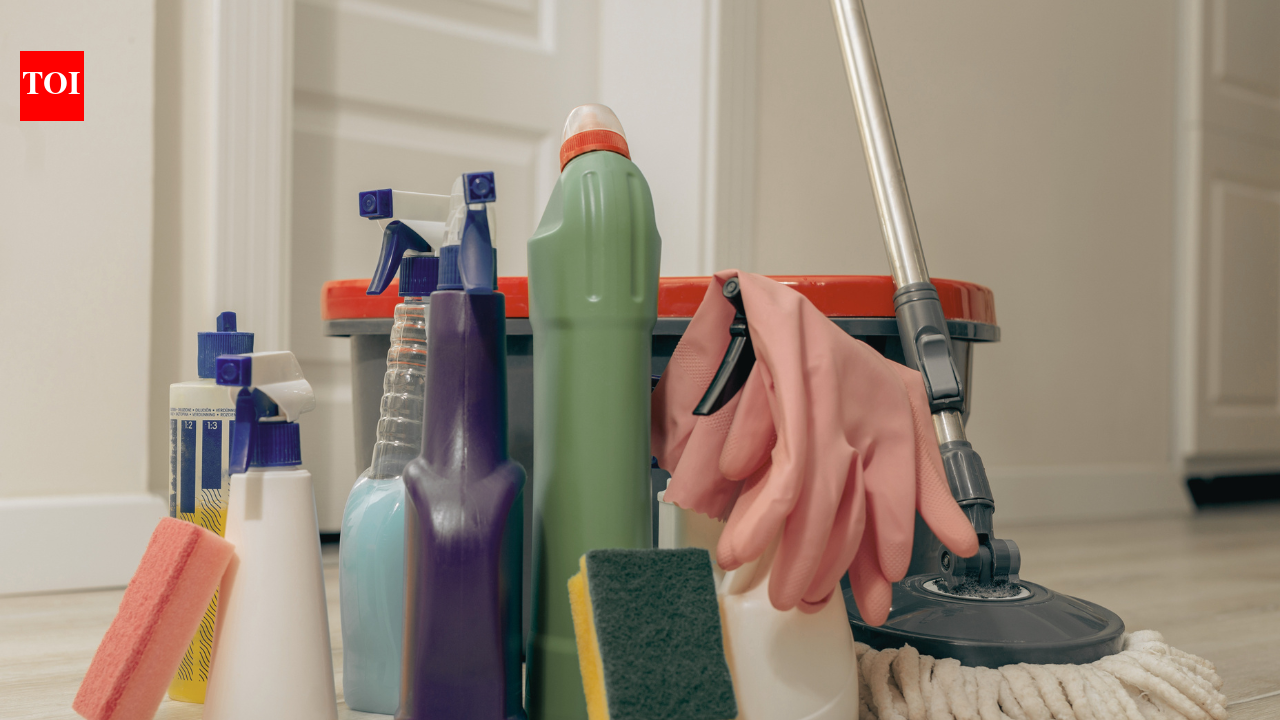
That lemony, piney or floral smell after cleaning is usually associated with freshness. But new research suggests that the chemistry behind some scented cleaning products can also create an invisible form of indoor air pollution. Research presented by Purdue University scientists at the American Chemical Society’s Fall 2026 meeting found that fragrance compounds released during cleaning can react with ozone indoors, rapidly producing extremely small airborne particles. The findings add to earlier research showing that terpene-rich household products can undergo chemical reactions with ozone and generate secondary pollutants indoors.The chemistry starts with familiar fragrancesMany scented cleaning products contain compounds known as terpenes and terpenoids. Ingredients such as limonene, commonly associated with citrus scents, and pinene, found in pine fragrances, can evaporate into indoor air during and after cleaning.These chemicals are not necessarily harmful simply because they are present in a cleaning product. The concern arises when they encounter oxidants such as ozone. That reaction can produce entirely new compounds, including secondary organic aerosol and ultrafine particles.Scientists have been studying this indoor chemistry for years. Earlier experiments found that using terpene-containing cleaning products in the presence of ozone could produce fine particles and other secondary pollutants, while more recent research has continued to examine how different product formulations affect particle formation.Millions of particles can appear very quicklyThe Purdue team investigated real cleaning activities in controlled indoor environments, including a small model home designed to replicate conditions found in ordinary houses.During cleaning, concentrations of fragrance compounds rose rapidly. When these compounds reacted with indoor oxidants, the researchers observed intense nanoparticle formation. The reported particle concentrations reached around 10⁵ to 10⁸ particles per cubic centimetre, with some measuring only a few nanometres across.At those concentrations, the total number of particles in an indoor space can reach the billions or even trillions. Importantly, this is not the same as saying that every cleaning session in every home will produce those numbers. The amount depends on the product, ventilation, room conditions and availability of ozone.Why particle size mattersNanoparticles are far smaller than the particles typically picked up by household air-quality monitors. That means a room can look perfectly clean and have no visible haze while particle concentrations are changing rapidly.Their size also affects where they can travel after being inhaled. The Purdue researchers reported that particles formed during the experiments could grow into sizes capable of depositing throughout the respiratory system, contributing to an inhaled particle dose comparable to or greater than that estimated from some traffic-related exposures. That comparison refers to estimated particle dose, not identical pollution or identical health effects. The researchers have not established that cleaning with scented products carries the same health risks as traffic pollution.Ozone makes the reaction more importantIndoor ozone is generally lower than outdoor levels, but it can enter through ventilation and open doors and windows. Certain indoor devices can also generate ozone. The Purdue experiments found that when ozone levels increased alongside high concentrations of fragrance compounds, nanoparticle formation became more intense. In experiments involving far-UV-C lamps, ozone levels reached roughly 20 to 40 parts per billion, further encouraging the reactions.Previous studies have similarly shown that ozone reacting with cleaning-product terpenes can produce secondary organic aerosol and other pollutants, with some effects persisting after the cleaning itself has ended.Does this mean you should stop using scented cleaners?Not necessarily. Cleaning remains important for removing dirt and microorganisms. The findings instead point towards reducing unnecessary exposure to the chemicals created during the process.Using fragrance-free or lower-fragrance products, opening windows where practical and running exhaust fans can improve ventilation while cleaning. It is also sensible to avoid combining scented cleaning products with ozone-generating devices. The larger message is that indoor air chemistry is more complicated than it appears. A room does not necessarily have cleaner air simply because it smells clean. Sometimes, that pleasant scent is evidence that chemicals are still active in the air.
Cleaners react with ozone, filling homes with lung-deep nanoparticles
Full Article
Original Source
Read the full article at Timesofindia →KhanList aggregates and links to publicly available news content. We do not host full articles from third-party sources. Always verify important information with original sources.