
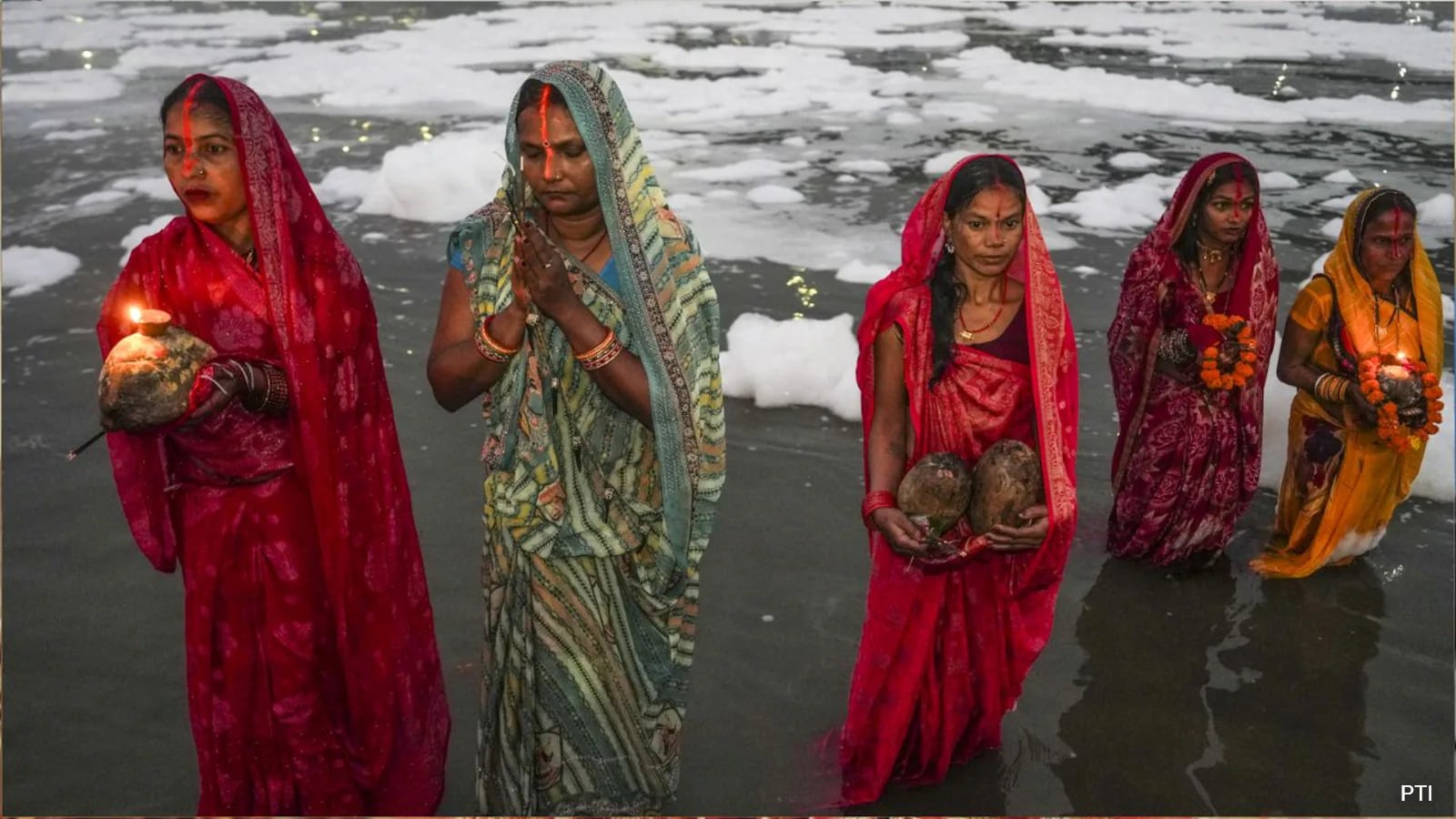
New Delhi: Delhi's first recreational electric cruise service on Yamuna was launched last Tuesday, with the government promising more boats, a bigger riverfront and an evening light-and-sound show. With Chhath festivities underway across various Delhi ghats, a Delhi Pollution Control Committee, or DPCC, report has flagged that pollution levels at several points along the Yamuna's Delhi stretch worsened in September compared to August.The Yamuna - which originates in the Yamunotri glacier in the Himalayas and flows through Uttarakhand, Himachal Pradesh, Haryana, Delhi and Uttar Pradesh before joining the Ganga - holds religious significance for people from Purvanchal (residents of eastern Uttar Pradesh and Bihar), who constitute a significant voter base in Delhi. Many observe Chhath Puja, a celebration of sun god, that involves fasting and making offerings while standing in water.READ | Chhath Puja: No Ghat In Delhi Is Fit For Bathing, But 3 Come CloseTourism Minister Kapil Mishra has claimed that 60 per cent of the work to clean the Yamuna had been completed. The remaining 40 per cent, he said, would take another two to two-and-a-half years."Delhi residents have never seen such a clean and clear Yamuna before. This is the picture of a changing Delhi," Mishra said at the cruise inauguration last week.यमुना का ये दृश्य देखिए जी हाँ ये दिल्ली की यमुना है छठ पूजा के लिए तैयार my interaction with @manogyaloiwal this morning from Namo Yamuna River Safari in Delhi https://t.co/cJGHczv5ot— Kapil Mishra (@KapilMishra_IND) November 15, 2026Delhi Water Minister Parvesh Verma said around half of the 52-kilometre stretch passing through the capital had been cleaned in the past 18 to 19 months. He claimed that smaller drains entering the Yamuna between Palla and Wazirabad had been tapped and cleaned, while the next phase would focus on Wazirabad to Kalindi Kunj.READ | Yamuna Cruise To Launch Before Chhath, But Data Shows River Still PollutedAmid these assertions, a video on social media showing a large number of dead fish floating in the Yamuna near Delhi's Sonia Vihar has triggered concerns over water pollution, even as the exact cause of the deaths remains unconfirmed.The Delhi government, however, alleged that the Aam Aadmi Party (AAP) threw dead fish in the river to defame it."First of all, the Delhi government lied by claiming that it had cleaned the Yamuna. Anyone who knows about the Yamuna is aware that the stretch from Palla, where it enters Delhi, up to Wazirabad, including Sonia Vihar, has always been relatively clean," senior AAP leader Saurabh Bharadwaj told reporters."Fish in the river have died, and videos of them have been uploaded on Facebook by several people. Why did these fish die? Did they die because of pollution, or was some harmful chemical released into the water, contaminating it?" the AAP leader asked.Locals alleged that polluted water discharged from a leather tannery was responsible for the fish deaths, claiming that the problem recurs every year when water is released into the river from a spot near the Hathnikund Barrage.Radhey Shyam Sharma, head of environmental studies at Delhi University, said that sudden mass deaths of fish could indicate a sharp increase in contaminants in the water or a toxic discharge.The incident comes less than a month after hundreds of dead fish were found along the Yamuna riverbank in north Delhi's Burari.On Monday morning, the AAP accused the Rekha Gupta-led government of spending crores in PR in the name of cleaning Yamuna.रेखा गुप्ता सरकार यमुना सफाई के नाम पर नौटंकी और PR पर करोड़ों खर्च करती रही, लेकिन छठ व्रतियों को जहरीली यमुना में पूजा करनी पड़ी। छठी मैया बीजेपी को इस पाप के लिए कभी माफ नहीं करेंगी! https://t.co/kYKodyBj0w— AAP (@AamAadmiParty) November 16, 2026"The Rekha Gupta government has spent crores on theatrics and PR in the name of cleaning the Yamuna, but Chhath devotees had to perform their rituals in the toxic Yamuna. Chhathi Maiya will never forgive the BJP for this sin!" the AAP posted on X, along with pictures showing the river blanketed with a toxic foam of industrial waste and sewage.A man navigates a motorboat through layers of toxic foam floating on the Yamuna River near Kalindi KunjPhoto Credit: PTIThe September data from monitoring stations - Palla, Wazirabad, ISBT Bridge, ITO Bridge, Nizamudin Bridge, Okhla Barrage and Yamuna river at Asgarpur (Kidwali, Haryana) - shows that the Yamuna continues to struggle with high pollution and bacterial contamination, raising questions about the river's health even as efforts are made every year to clean it.Three of the locations showed further deterioration, two locations showed slight improvement, while two more locations showed no change from the August data.One of the key indicators of river health is biochemical oxygen demand (BOD), which measures the amount of oxygen needed to break down organic waste in water. Higher BOD levels generally mean higher pollution.At Palla, where the Yamuna enters Delhi, the BOD level stands at 2 mg/l, comfortably within the safe limit. But as the river flows through the capital, pollution levels rise sharply.The BOD level jumps to 30 mg/l at the Inter-State Bus Terminal Bridge, before remaining elevated at downstream locations such as ITO Bridge, Nizamuddin Bridge, Okhla Barrage and Asgarpur.The pattern suggests that a significant share of pollution is added within Delhi itself, turning a relatively cleaner river at the entry point into a far more polluted one by the time it leaves the city.The pollution story is not limited to BOD alone. Another key water-quality indicator, faecal coliform, measures contamination from human and animal waste. The desirable range is 500 to 2,500 most probable number (MPN) per 100 ml. The MPN gives the statistical estimate of the concentration of viable microorganisms in a sample.While Palla and Wazirabad record relatively lower counts of 1,100 and 1,300, levels surge dramatically at other monitoring stations, showing the same pattern: a cleaner river at the entry point that becomes polluted along the way.The count reaches 35,000 at the Inter-State Bus Terminal Bridge, 17,000 at ITO Bridge, 15,000 at Nizamuddin Bridge, 21,000 at Okhla Barrage and 38,000 at Asgarpur. These figures are many times higher than the recommended range and point to persistent bacterial contamination along the river's course through Delhi.The DPCC's September data release also included wastewater figures from Delhi's major drains, which separately showed high BOD and Total Suspended Solids (TSS) levels, reinforcing that untreated or inadequately treated sewage discharge remains a significant, ongoing contributor to the river's pollution load rather than an isolated event.
Clean At Entry, Polluted At Exit: The Data Behind Delhi's Yamuna Debate
Full Article
Original Source
Read the full article at Ndtv →KhanList aggregates and links to publicly available news content. We do not host full articles from third-party sources. Always verify important information with original sources.