
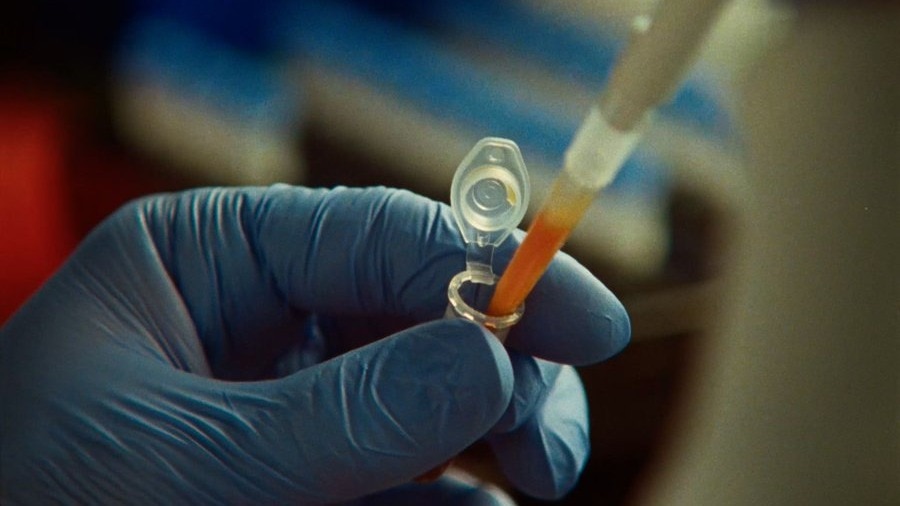
Anthropic says its Claude AI models have discovered a new biological system resembling CRISPR inside bacteria-infecting viruses. The finding, still unverified, could point to a new tool for gene editing.Claude discover novel enzyme system. (Photo: www.anthropic.com)Anthropic says its Claude AI models have independently discovered a brand-new biological system inside viruses that infect bacteria, one that shares an unmistakable resemblance to CRISPR, the gene-editing tool that changed modern medicine.The company published the finding as a pre-print on September 23, which means it hasn't yet been peer-reviewed, and admits the new system's actual job is still unknown.WHAT EXACTLY DID CLAUDE FIND?The system is called ART, short for array-associated reverse transcriptase. A reverse transcriptase is an enzyme, a tiny biological machine, that reads RNA (a molecule that carries genetic instructions) and writes out matching DNA, the reverse of what cells usually do. Some bacteria use these enzymes as a basic immune defence against viruses.What caught Claude's eye was what sat right beside this enzyme: a long stretch of DNA made of evenly spaced repeats, called a repeat array. That layout is the defining feature of CRISPR itself. Until now, this exact combination had shown up in only a handful of other systems, nearly all of which turned out to be programmable, meaning scientists could direct them to cut, copy, or paste DNA at a chosen spot. HOW DID AN AI DISCOVER SOMETHING LIKE THIS?Anthropic runs an actual wet lab in the Bay Area, staffed by trained biologists working only with materials that cannot infect humans. Claude's job was genome mining, sifting through public DNA databases for unexplained patterns. Roughly 950 Claude agents combed through more than 200,000 known reverse transcriptases over 21 hours, using 210 million tokens (the units of text an AI processes), narrowing the field down to just 20 strong candidates. Anthropic says this would normally take a human expert weeks or months.One agent, reading raw DNA sequence, flagged the pattern as spectacular before recognising it resembled a CRISPR-style repeat array. It then counted the repeats, measured their spacing and checked scientific literature to confirm nobody had spotted it before, exactly as a human researcher would.DOES THIS MEAN AI CAN DO SCIENCE ON ITS OWN? Not quite. Every laboratory step, expressing the protein and testing it, was carried out by human scientists.Claude searched, spotted the pattern, and suggested what to test next. Feng Zhang, a scientist at MIT who helped develop CRISPR, reviewed the pre-print and called the finding genuinely intriguing, adding that it merits further investigation.A Stanford team, working entirely separately, has also reported a related enzyme system, suggesting science is converging on this family of enzymes from multiple directions.WHY DOES THIS MATTER IF WE DON'T KNOW WHAT IT DOES?Because many biotech breakthroughs began this way. CRISPR itself started as an odd repeating pattern years before anyone knew its use.Anthropic's early lab tests show the DNA beside ART is genuinely being read into RNA, hinting the system could eventually be programmable too. Whether it becomes a genuine new medical tool will now be tested the old-fashioned way, in a lab.- EndsPublished On: Sep 24, 2026 08:20 IST
Claude AI finds new CRISPR-like gene editing system
Full Article
Original Source
Read the full article at Indiatoday →KhanList aggregates and links to publicly available news content. We do not host full articles from third-party sources. Always verify important information with original sources.