
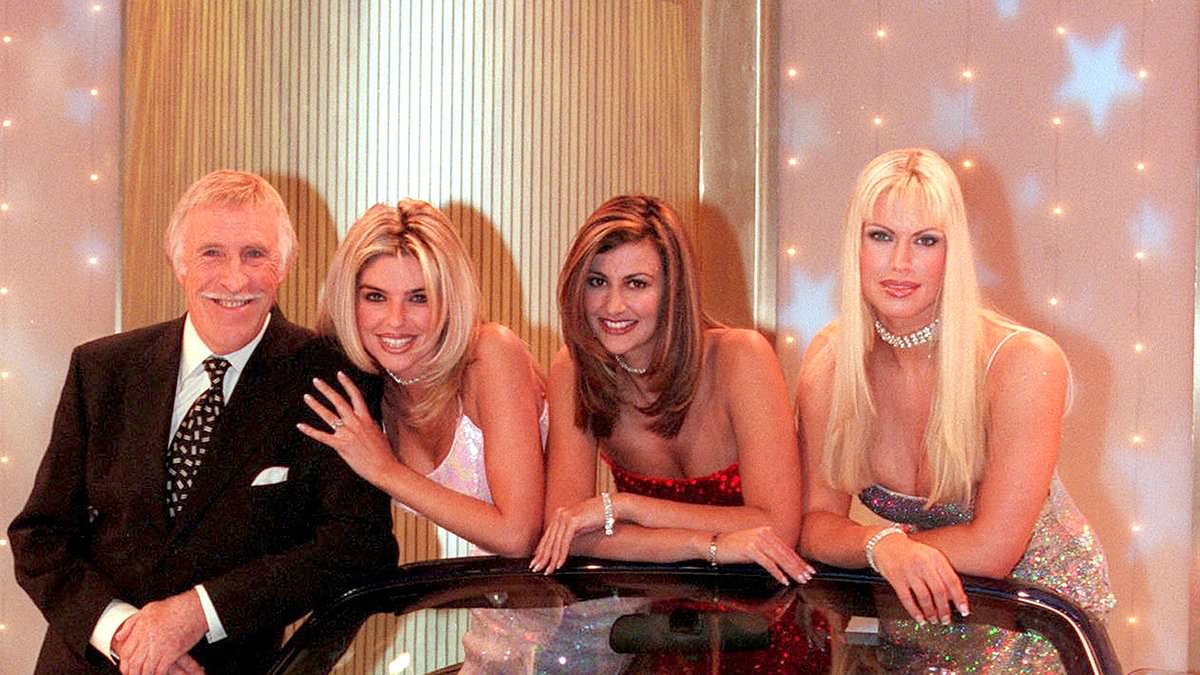
Back when Netflix was just a twinkle in television's eye, weekend viewing would see millions of families gather around the TV to watch some of the most popular quiz shows.With no streaming services or other devices to distract, primetime quiz shows on terrestrial television could command enviable audiences. By the 1980s, when most families had one or two colour televisions, viewing figures could dwarf those seen today for similar shows, with often nearly 19 million people regularly tuning in to peak-time shows. The charismatic presenters of the biggest quiz shows through the decades became huge household names with handsome salaries, with each episode laced with the humour of the time.Would the same shows be put in front of modern television audiences now? Almost certainly not, with many of the jokes that were considered hilarious in different times now rightly with no place in front of any audience, let alone families. Outdated: Bruce Forsyth was a darling of the BBC gameshow in the 70s, 80s and 90s - and later on Stricty Come Dancing - but his role as a charming compere fawned over by glamorous women wouldn't wash in TV today Evolve or go off air: University Challenge, which first aired in 1962, faced early criticism for its often all male, all white contestants Even shows that aired – and were much loved – in the 90s would be left on the cutting room floor thanks to jokes and banter that feels woefully outdated 30 years on. Some favourites have managed to keep up with the times and evolve to appeal to modern audiences. BBC 2 academic quiz University Challenge, for example, which is mid-way through its latest series with Amol Rajan at the helm, was once derided for featuring a disproportionately high number of male contestants in the years after it first aired in 1962.Here, the Daily Mail looks at some of the shows from the 60s to the 90s that would be cancelled before they'd even reached screens if they were pitched to TV executives in 2026... MR AND MRS (1965 to 1999) Derek Batey hosted the UK edition of Mr and Mrs which launched here in the mid 1960sWhile the format used in Mr and Mrs, which first aired in the UK in 1965 after arriving from Canada, is a game that's still played on hen and stag dos today. The basic premise is that one of half of each couple who appeared on the show would answer questions about their husband or wife, and then the British host, Derek Batey, would ask the same set of questions to the spouse. Those who got all the questions right would win the programme's jackpot prize. Reflecting societal norms at the time, the programme relied heavily on mid-20th-century gender roles, with the couples – all heterosexual – often consisting of a man as the main breadwinner and a wife who stayed at home. Diversity was rare with very few ethnic couples appearing.Three-2-1 (1978 to 1988) 3-2-1 was one of the biggest gameshow hits of the late 70s and 80s, with Ted Rogers at the helm - along with the show's mascot Dusty Bin Ted Rodgers in 1978 surrounded by the 3-2-1 girls who appeared on the showRunning for a decade and aired by Yorkshire Television on ITV, 3-2-1 saw host Ted Rogers shoot to fame, along with his sidekick Dusty Bin. Inspired by a Spanish show called Un, dos, tres... responda otra vez, the programme aired on a Sunday evening, ending the weekend for many UK families. Those who loved it in the 80s though might now wince at the overt sexism that was commonplace. Rogers was surrounded by '3-2-1 girls', who were dressed in revealing outfits that often co-ordinated with the prizes on offer. The 3-2-1 girls barely spoke, with Rogers very much centre stage – and frequently delivering jokes of the time, that majored on old-fashioned, sexist tropes that would be outlawed by modern viewers.THE GENERATION GAME (1971 to 2002) The Generation Game enjoyed its first outing in the late 1970s and was later hosted by controversial UK comic Jim Davison, leftBruce Forsyth and Larry Grayson both took on the role of gameshow host for respective series of The Generation Game, which enjoyed the most wanted spot on TV – Saturday night on BBC One. Contestants competed in a variety of challenges to win time on the show's famous conveyor belt. A variety of prizes would roll past them and if they could remember what they saw afterwards, they'd take the haul home with them. Forsyth's famous catchphrases included the lines: 'Didn't he/she/they do well?'However, the original run was rife with casual sexism and gender stereotyping. 'Glamorous assistants' included Anthea Redfearn and Rosemarie Ford, who would play second fiddle to Forsyth's main event; the women were asked to model prizes, read out scores and assist with demonstrations. Later, the show would get a new host... stand-up comic Jim Davidson, who was already well known for his outspoken and often controversial comments. Davidson eventually left the show in 2002, after seven years of hosting it – he claimed afterwards that the broadcaster hadn't liked his right-leaning political views and traditional values. BULLSEYE (1981 to 1995) Darts quiz show Bullseye was an 80s favourite but its host, stand-up Jim Bowen, woudn't pass modern compliance with his often sexist humour Contestant Jane Groves from Hampton, Middlesex, appearing on the show in 1988 - after detailing her sponsored slim, Bullseye host Jim Bowen asked: 'How much do you owe?' Groves looked immediately disheartened by Bowen's remark - as the audience erupted into laughter The Sunday night darts show has been given a makeover in recent years, with ex cricketer Andrew Flintoff taking the helm, with guest appearance by Britain's teen darts genius Luke Littler. Jim Bowen is the host that the show is most famous for though, with the late stand-up comic presenting through the programme's most successful years, when it would regularly chalk up 15 to 20 million viewers on a Sunday evening. Ex-teacher Bowen, known for his catchphrases, 'super, smashing, great' and 'you can't beat a bit of bully' guided three pairs of contestantis through the darts and questions-based show. However, many of the jokes Bowen cracked came at the expense of the contestants – and were so sexist, the show would never see the light of day now. In one body shaming exchange, he asks Jane Groves from Hampton, about her weight loss journey after she reveals she's done a sponsored slim. Bowen says: 'How much do you owe?' and when the audience has stopped laughing, adds: 'That's very unkind of me'. THE PRICE IS RIGHT (1984 to 1988) The Price is Right on ITV on a Saturday night was, at the height of its success in the 1980s, a must-watch for family audiences...but the gender stereotypes it played up to would see it have to be drastically remodelled today Many of the gameshow's formats put a male host in the presenting role, with women often scantily clad and employed just to pose with prizes (Bruce Forsyth, left, on The Price is Right alongside Emma Noble, Kimberley Cowell and Lea Kristensen The Price is Rights' 'Host's Hostesses' would drape themselves across prizes contestants could potentially winFor anyone who grew up in the 1980s, this US export – it had first aired in America via NBC in 1956, was a Saturday night staple. It aired on ITV around 7pm, with Leslie Crowther as the host. Crowther already had a deeply controversial presenting job behind him, he had hosted the The Black and White Minstrel Show.With its catchphrase 'Come on down, the Price is Right', Crowther would welcome contestants to compete from the audience, who would then have to guess the cost of various items. Alongside Crowther were the 'Host's Hostesses' – later called the Glavenous Girls. Usually fashion models, the women barely uttered a word. Objectified, their role was to smile and look glamorous as they draped across cars or other prizes on offer to those competing. BLANKETY BLANK (1979 to 1990) Les Dawson made Blankety Blank a long-running hit...but his attempts to embrace and often kiss female contestants would see the late funnyman firmly cancelled now The show started in the late 70s...and saw a host of celebrities of the time take their seats behind the show's famous desks to try and guess the blanksThe latest version of this long-running BBC show, hosted by Bradley Walsh, was cancelled in July 2026 as part of the broadcasting corporation's latest cost-cutting. The Blankety Blank of yesteryear, presented by Les Dawson, would have been cut much sooner. Manchester-born comic Dawson, known for his grumpy persona and deadpan quips, was also much too fond of a sexist joke, filling the quiz show with offensive remarks about his mother-in-law and wife. His predecessor, Larry Grayson, famous for his catchphrase 'shut that door', played up to the camp image he was known for – reinforcing the idea that the only gay men who could be broadcast on primetime were effeminate caricature figures.BLIND DATE (1985 to 2003) Heteronormative: At its height Blind Date only ever featured straight dates Women were often assumed to be financially dependent - with male dates always tasked with paying for the dateThe rebooted version of Blind Date, the dating show that saw three potential suitors try and win a date from behind a screen, addressed the shortcomings of the original but if you were tuning into the ITV show in the 1980s, you would find stereotypes aplenty and heteronormative assumptions. No gay contestants featured in the original run of the ITV show, presented by much-loved former 60s pop star Cilla Black. And casual misogyny was front and centre, with male daters expected to pay with the women who appeared on the Saturday night show often assumed to be financially dependent. Viewed as harmless comedy by many, it's unlikely this version of the show would pass modern compliance. THEY THINK IT'S ALL OVER (1995 to 2006) Jo Brand with ex cricketer David Gower and right, Gabby Logan, pictured on They Think it's All Over in 1989. The sporting quiz show was described as having a sexist 'locker-room' energy Bullied: Ex-Manchester United footballer Luke Chadwick was frequently a target for 'banter' on the BBC One show, with Gary Lineker and ex host Nick Hancock later apologising to the former footballer for targeting his physical appearanceProducers who worked on the hugely popular 90s sporting panel quiz show admitted after They Think It's All Over wrapped up for the last time 20 years ago that the all-male panel often 'behaved like teenagers' whenever a female guest was booked in. Originally hosted by Nick Hancock, the show saw the two regular captains – including David Gower, Gary Lineker, Phil Tufnell, Ian Wright, and David Seaman, joined by comedians and ex and current stars of the sporting world.A core of testosterone ran through the show with the energy on set often described as 'locker room' and hyper-masculine, with insults regularly traded under the guise of 'banter'. Ex Manchester United footballer Luke Chadwick received a public apology from Hancock and Gary Lineker over the frequent comments made about Chadwick's looks, including his teeth and acne. One of the jokes included the line: 'Iron Maiden's biggest hit is Number of the Beast - and if you want to know the number of the beast, Luke Chadwick wears number 36.'Another was: 'This photo of Luke Chadwick was ruined... when Luke Chadwick turned up.'Chadwick said the comments shattered his confidence and affected his mental health. He told the BBC in 2020: 'I became a picture of fun, and that was probably the hardest thing. A popular TV show - [the attention] was magnified, so that's what I was seen as by everyone off the back of that.'I used to dread it coming on the telly. I wouldn't watch it but then I'd get a text off someone saying 'oh you've been on that show again' as if it was a joke.'Obviously people were finding it funny, but it was eating away at me a bit inside while that was happening.'MAN O MAN(1996 to 1999) A 90s beauty pageant format for men: Man O Man saw 125 women voting on the physical appearance of male contestants Two years before Chris Tarrant's most successful presenting job on Who Wants to be a Millionaire, he signed up to host Man O Man. Effectively a beauty pageant for men, the format saw ten males compete in front of an all-female audience – wearing just swimwear for one part of the show. They would perform chat up lines and be asked to show their muscles off – before 125 women voted for them via an electronic pad. A female contestant would then, if she wasn't impressed, push the contestant into a swimming pool as the audience jeered. While some described the show as tongue-in-cheek, others suggested it was degrading and was simply an inverted version of the already outdated pageant format.
Classic British gameshows that would never be aired now! How beloved shows like The Generation Game to They Think it's All Over would quickly be cancelled
Full Article
Original Source
Read the full article at Dailymail →KhanList aggregates and links to publicly available news content. We do not host full articles from third-party sources. Always verify important information with original sources.