
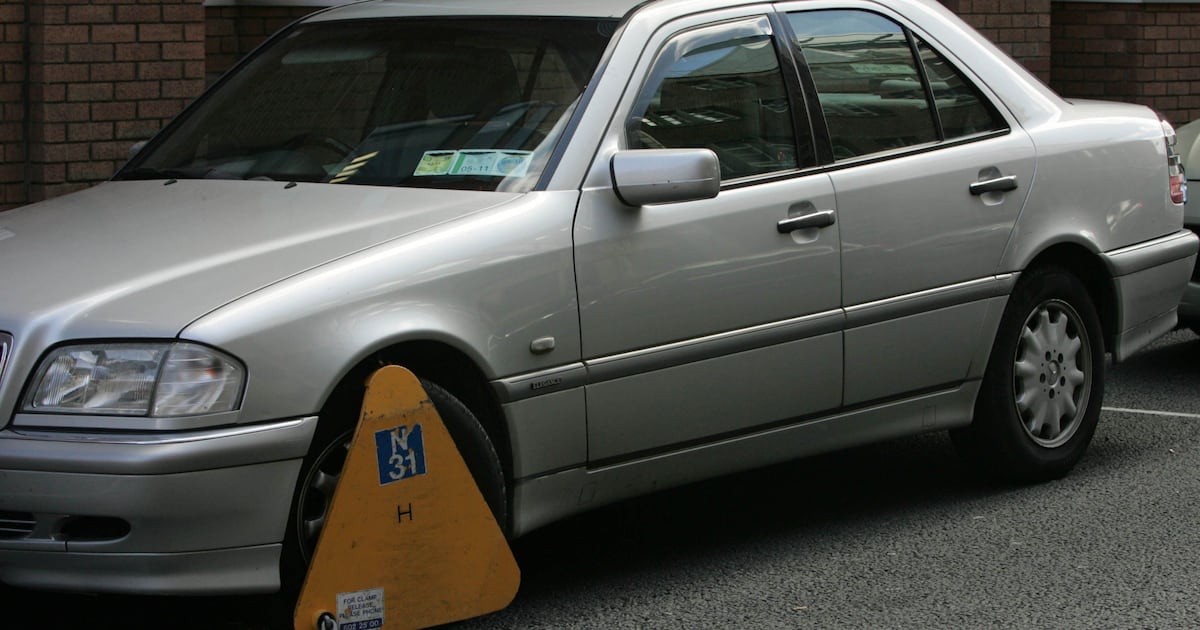
Clamping vans will all but disappear from Dublin city centre, and reports from members of the public about illegal parkers will be prioritised, under a radical overhaul of the city’s parking enforcement services.In the biggest change to parking controls since clamping was introduced almost 30 years ago, Dublin City Council is implementing a new enforcement model concentrating more on towing and fining illegal parkers and less on applying clamps.The council has ended its association with Dublin Street Parking Services (DSPS), which has been clamping cars in the city since 2004, and has awarded a new five-year €51 million enforcement contract to rivals Apcoa Parking Ireland.IRISH TIMES GRAPHICS Although clamping will remain part of the enforcement armoury, controls and penalties will be more geographically defined, with the punishments for motorists dependent on the zone as well as the offence committed.READ MOREThe city will be split into six “patrol zones” with a “permanent patrol presence” in each zone during peak hours, the council said, providing a tailored response for the area.The first four zones encompass the primarily residential suburbs surrounding the city. In these areas, enforcement will concentrate on a rapid response to public complaints of illegal parking and obstructions. “The new contract will make public requests a priority,” the council said.Closer to the city, in the area within the canals but excluding the central business district, the focus will be on “the movement of traffic and achieving vehicle removals and relocations” by towing vehicles motorists have illegally parked, blocking bus lanes or other traffic.In the city centre, patrols using clamping vans are no longer seen as effective, and a system akin to traditional traffic wardens issuing fines is expected to be implemented. “From our research, we found that high traffic volumes restrict the mobility of vehicular crews. In this zone, parking enforcement operatives will patrol on foot,” the council said.Green Party councillor and member of the council’s mobility committee Feljin Jose welcomed the emphasis on keeping the city moving. “I do want to see greater levels of towing and relocating. If a car’s parked in a bus lane, clamping it in place isn’t going to make things better. Removing it is what needs to be done. The priority should be on keeping bus lanes, cycle lanes and footpaths clear.” With over 56,000 cars clamped in the capital last year we look at the top ten blackspots and breakdown the statistics. DSPS had been the city’s parking enforcer since 2004 when it took over from Control Plus, which won the council’s first clamping contract in 1998.Apoca had been due to take over the contract last month, but a legal challenge was mounted by DSPS owner Q-Park. “The challenge has now been withdrawn,” the council said, and Apoca’s contract will start on November 1st. DSPS will continue clamping until then.
Clamping vans to exit Dublin city after almost 30 years
Full Article
Original Source
Read the full article at Irishtimes →KhanList aggregates and links to publicly available news content. We do not host full articles from third-party sources. Always verify important information with original sources.