
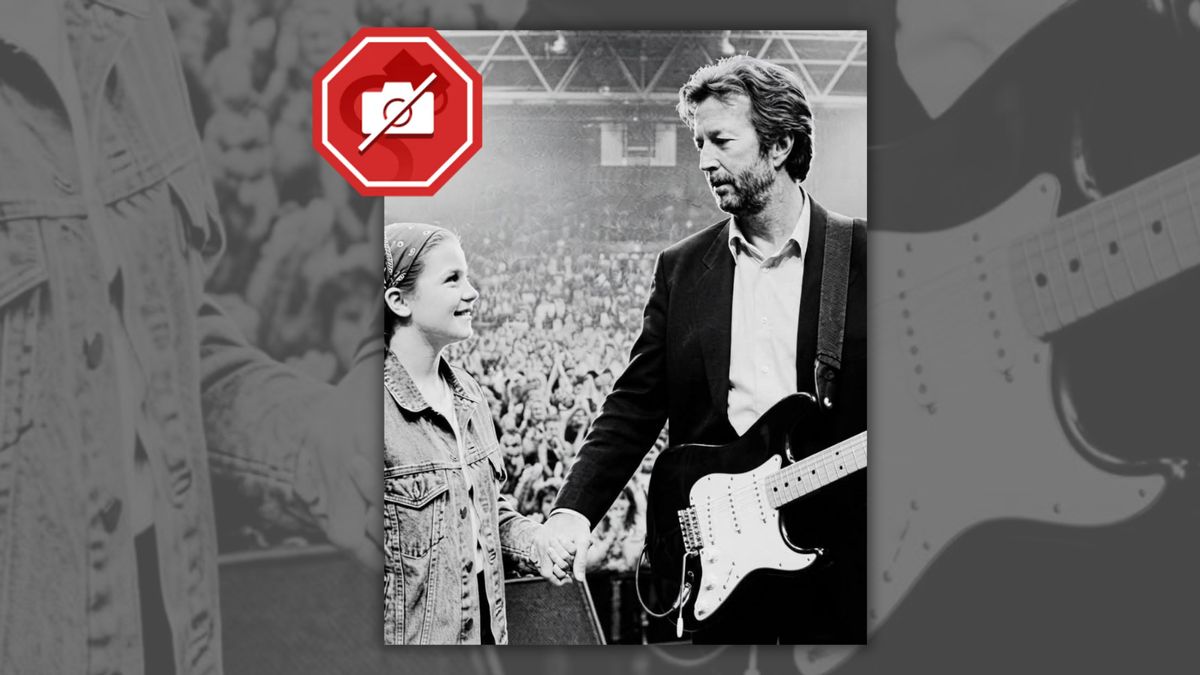
Claim: In September 1992, musician Eric Clapton invited 16-year-old Sarah Mitchell, who was deaf, onstage at a concert in Birmingham, England, and performed for her. Rating: In September 2026, social media users recirculated a story alleging that musician Eric Clapton once interrupted a concert for a deaf teenage fan. One Facebook post with the story read, "Eric Clapton was lost inside a guitar solo when something in the crowd pulled him out of the music," directing readers to an article that started: Eric Clapton Stopped Mid-Song for a Deaf Girl Who Could Feel His Music Eric Clapton was lost inside a guitar solo when something in the crowd pulled him out of the music. Twelve thousand people filled the National Exhibition Centre in Birmingham. They were standing, shouting, clapping, moving as one body under the lights. The noise was overwhelming. The energy was electric. And in the middle of it all, one teenage girl sat completely still. It was September 23, 1992. Clapton was deep into his Journeyman tour, riding the momentum of sold-out arenas and roaring applause. He had already played through fan favorites, the band locked in, the night unfolding exactly as expected. Except for her. Third row. Center section. A young girl who wasn't clapping. Wasn't swaying. Wasn't reacting at all. Her name was Sarah Mitchell. She was sixteen years old. And she was profoundly deaf. Born without hearing, Sarah had never experienced music the way most people did. She had never heard a guitar string vibrate through air. Never heard applause. Never heard her own voice. (Facebook user Youness ER) The article further claimed that during a show in Birmingham, England, on Sept. 23, 1992, Clapton stopped midsong and brought a "profoundly deaf" 16-year-old named Sarah Mitchell onto the stage. Clapton supposedly positioned an amplifier behind her chair so she could feel the music's vibrations and then played a song for her as the arena fell silent. Over the months, the story spread on numerous social media platforms, including X, LinkedIn and YouTube. Some posts featured links leading to articles on advertisement-filled websites. Snopes readers also searched our website for information about whether the claim was true. However, the story about Clapton amounted to fiction. Searches of Bing, DuckDuckGo, and Yahoo found no credible media outlets reporting about such an event, and several key details in the story conflicted with well-documented information about Clapton's tours and Birmingham performances in 1992. The fabricated story resembled glurge, which Dictionary.com defines as "stories, often sent by email, that are supposed to be true and uplifting, but which are often fabricated and sentimental." It was one of hundreds of similarly fake stories about celebrities on Facebook that aim to generate views and advertising revenue via websites linked in posts. Timeline doesn't match tour records The story placed the alleged moment on Sept. 23, 1992, at the National Exhibition Centre in Birmingham. However, Clapton's official timeline shows the Journeyman World Tour opened at the NEC on Jan. 14, 1990 — not September 1992 — and ran for three consecutive nights. Fan-compiled tour listings corroborated the dates and location. Moreover, the posts framed the alleged moment as part of Clapton's Journeyman tour, which ended in March 1991 and did not extend into September 1992. Clapton did play in Birmingham in early February 1992, but those shows were at the National Indoor Arena, not the NEC. He later returned to the NEC for a series of benefit concerts in October 1992 — dates that don't match the rumored Sept. 23 appearance. The story also isn't mentioned in "Eric Clapton: The Autobiography," first published in the United Kingdom in 2007. Because the book covers key moments from Clapton's career and touring life, the encounter described in the social media posts would likely have been included if it had actually happened. AI-generated content helped spread story The claim frequently circulated alongside an image showing Clapton with a teenage girl that appeared to have been generated using artificial intelligence. Hive Moderation, an online AI detector, determined that the image was highly likely to be AI-generated. (Facebook user Dena Wells) In August 2026, a nearly-identical image spread with the story, but this time with a black-and-white filter and a "Curiously Unusual Wonders" watermark: (Facebook user Amila K Madige) Similarly, most of the accompanying text was likely AI-generated, according to the AI detector ZeroGPT. (Research shows AI-detection software is imperfect. Readers should consider the tools' results with skepticism.) (ZeroGPT) The text's tone, structure and emotional language further pointed to AI authorship. Finally, the story appears to have originated from a YouTube channel presenting itself as a source of "true stories About Eric Clapton that will restore your faith in humanity," but the video provided no verifiable evidence of the event. The channel's other content follows the same clickbait pattern, with sensational, vague titles and attention-grabbing thumbnails designed to generate clicks. Many of the thumbnails also appear to be AI-generated or heavily manipulated, which is consistent with a channel producing content that's primarily focused on generating views: (YouTube channel @EricClaptonTheUntoldLegacy) The false rumor about Clapton fits a familiar pattern of shareable, feel-good celebrity stories that spread quickly online because they appeal to emotion and usually rely on little more than reposts. We have debunked similar claims before, including posts alleging U.S. President Donald Trump and first lady Melania Trump spent New Year's Day 2026 at a Pennsylvania orphanage and that Stephen Colbert launched a multimillion-dollar "Evergreen Sanctuary" for abused dogs.
Claim
Full Article
Original Source
Read the full article at Snopes →KhanList aggregates and links to publicly available news content. We do not host full articles from third-party sources. Always verify important information with original sources.