
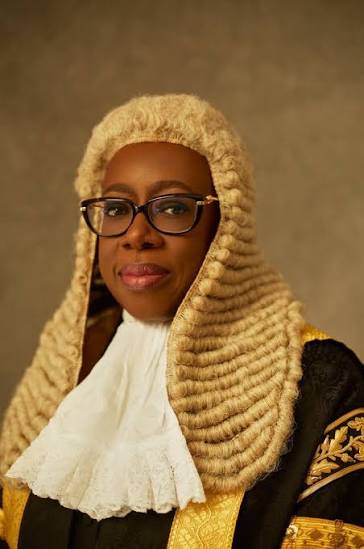
The warning by the Chief Justice of Nigeria, Justice Kudirat Kekere-Ekun, that judges appointed to election tribunals would be closely scrutinised could not have come at a better time than now when the Independent National Electoral Commission is making efforts to ensure that the 2027 elections are free, fair and credible, Davidson Iriekpen writes Ahead of the 2027 general election, the Chief Justice of Nigeria (CJN), Justice Kudirat Kekere-Ekun, last Wednesday warned that judges appointed to election tribunals would be closely monitored. Speaking during the flag-off ceremony of the 2026/2027 legal year of the National Industrial Court of Nigeria (NICN), the CJN, who noted that some judges of the court could be called upon to serve as members of election petition tribunals, noted that the nature of such an assignment demanded a great degree of impartiality and restraint. The CJN maintained that the courts must remain intellectually prepared to meet modern-day challenges, while ensuring that their decisions remained firmly anchored in the constitution, applicable legislation, binding precedent and established principles of judicial reasoning. She added that judges must ensure that nothing in their associations, public engagements or other conduct creates a reasonable perception of political alignment or predisposition. Kekere-Ekun also cautioned lawyers against duplicating court actions in different jurisdictions in a manner that could result in conflicting judgments, undermine public confidence and expose the judiciary to disrepute. She further called for restraint in public commentary on judicial proceedings, saying criticism of judgments should not degenerate into personal attacks on judges, deliberate misrepresentation of proceedings or attempts to pressure the courts through public opinion. The CJN urged judges to uphold absolute neutrality, restraint, and detachment ahead of the 2027 general elections. She warned that judicial conduct will be monitored closely, and any public engagements, associations, or actions suggesting political alignment must be avoided. She said: “As we approach another electoral season, these responsibilities assume even greater importance. Some of Your Lordships may, in accordance with the applicable constitutional and legal framework, be called upon to serve as members of Election Petition Tribunals. In that capacity, Your Lordships will be called upon to decide politically sensitive disputes, which attract considerable public attention. “The nature of such assignments therefore demands an even greater degree of impartiality, restraint and detachment. Whether sitting in this court or performing a Tribunal assignment, you must remain conscious that your conduct will be closely scrutinised. “You must ensure that nothing in your associations, public engagements or other conduct creates a reasonable perception of political alignment or predisposition. “The Bar must never become an instrument through which the judicial process is manipulated for partisan or strategic purposes. The proper forum is determined by law, not by the perceived likelihood of success before a particular judge or court. “There is also a need for restraint in public commentary. The right to criticise a judgment or judicial process does not extend to personal attacks on judges, deliberate misrepresentation of proceedings or attempts to bring pressure to bear on the court through public opinion.” It is no longer news that INEC has fixed January next year for presidential and federal legislative elections, while those of the governorship and state legislatures are slated for February. For many, the warning by the CJN could not have come at a better time than now when INEC is frantically making efforts to ensure that the 2027 elections are free, fair and credible. On many occasions, the Chairman of the commission, Professor Joash Amupitan (SAN), has been assuring Nigerians that he would do everything possible to deliver elections that would satisfy Nigerians. Even last Thursday, while delivering the keynote address at the 10th Annual Conference of the Guild of Corporate Online Publishers (GOCOP), themed “2027 Elections: Trust, Transparency and Shared Responsibilities,” Amupitan assured Nigerians that his commission was fully prepared to conduct credible 2027 general elections and would remain neutral with no preferred candidate or party. By the time INEC is done with the elections, its own side of the electoral process would have been completed. The next stage would be for the tribunals to takeover should there be those who are aggrieved with the process. For instance, since the inception of the current democratic dispensation, all presidential elections have ended in court except that of 2015, where then incumbent President Goodluck Jonathan, after losing the election, refused to go to court. There is no doubt that no matter how satisfactory the election would be, candidates who lost at the polls would approach the tribunals to try and reclaim their “stolen” mandates. Previous experiences of attempting to seek redress in courts had often ended in disappointment and controversies, making the citizens lose faith and confidence in the judiciary. For instance, some of the judges at the tribunals and Courts of Appeal who allegedly performed very badly in Plateau and Kano states were never investigated or sanctioned for their alleged poor judgments by the National Judicial Council (NJC). The judiciary plays a vital role in upholding democratic principles, protecting fundamental rights, and ensuring the rule of law. But in recent times, it has faced criticisms regarding controversial and incongruous judgments and perceived inconsistencies, particularly in political and electoral matters. This has led to concerns about the judiciary’s independence, impartiality and integrity, and its role in upholding democratic principles. Judicial recklessness and the growing interference of the judiciary in political matters are undermining Nigeria’s democratic principles. Furthermore, it has allowed itself to be hijacked and weaponised by politicians for their selfish interests and to the detriment of the country. Once regarded as the last hope of the common man, the judiciary is now seen by many as a nightmare, reduced to serving the whims and caprices of politicians through a string of shambolic judgments. If it is not accused of issuing conflicting orders and decisions, it is accused of reversing previous rulings and creating confusion. Some argue that these inconsistencies undermine public trust and confidence in the third arm of government. There are many Nigerians who are wondering if some judges who recently benefitted from the federal and state governments’ lavish mansions do not risk creating conflicts of interest or psychological obligations, potentially undermining impartial rulings against the facilitators of such gestures. Since there is always the impression that the season of election petition adjudication is the best time some judges make huge money from politicians, the President of the Court of Appeal should ensure that judges selected to hear petitions arising from the elections are people of high integrity. Their past judgments should be used as part of a criteria for their selections in order to avoid vague and controversial judgments based on ‘cash and carry’. Instead of delivering judgments that would restore public confidence in the judiciary and strengthen Nigeria’s electoral process, some judges, influenced through manipulation, external pressure, or compromised integrity, issue incoherent and contradictory verdicts. Furthermore, they need to avoid technicalities in their judgments and ensure substantive justice that will satisfy all parties in the petitions. A strong, independent, and responsible judiciary is vital to the delivery of justice. As the most crucial arm of government in Nigeria, it must protect all who seek justice and lead in ensuring access to it. Without this, the judiciary further risks losing both its relevance and the public’s trust.
CJN’s Warning to Judges As a Stitch in Time
Full Article
Original Source
Read the full article at Thisdaylive →KhanList aggregates and links to publicly available news content. We do not host full articles from third-party sources. Always verify important information with original sources.