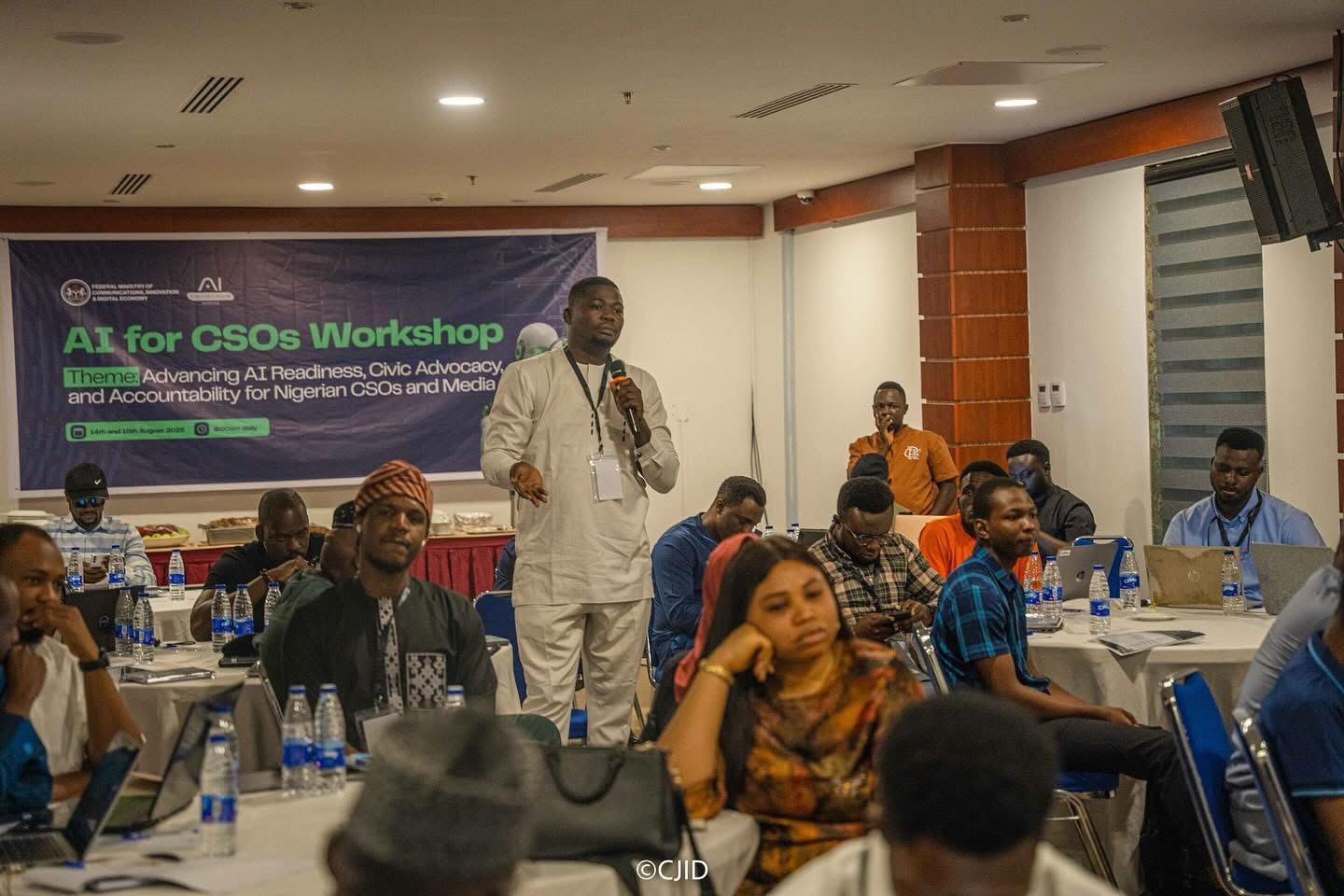
The Centre for Journalism Innovation and Development (CJID) has selected seven civil society organisations for a new round of AI advocacy grants under the Nigeria AI Collective, reaffirming its commitment to building an inclusive, responsible, and citizen-centred AI ecosystem in Nigeria. The selected organisations are TechHer, Cedar Foundation for Disability, Akin Fadeyi Foundation, Nest Africa AI Innovation Lab, Webfala Digital Skill for All Initiative, African Centre for Media and Information Literacy (AFRICMIL), and Dataphyte Foundation. Over the coming weeks, each organisation will implement advocacy projects designed around its institutional expertise, target communities, and priority areas within Nigeria’s emerging AI ecosystem. The organisation-based advocacy projects form the next phase of the AI Collective Community of Practice engagement, a multi-stakeholder initiative that brings together over 600 members to strengthen AI literacy, foster cross-sector collaboration, support innovation, and advance responsible AI governance across Nigeria. Members of the Community of Practice are organised into dedicated tracks of civil society organisations, media and journalism professionals, researchers and academics, technology professionals and developers, students and emerging professionals. Through these tracks, participants engage in sector-specific learning, collaborative engagement, research, advocacy, and cross-sector knowledge exchange. The new grants build directly on an earlier phase of group-based CSO advocacy engagement, during which participating civil society organisations worked collectively to develop and implement joint advocacy initiatives around shared AI priorities. The group-based projects created opportunities for participating organisations to combine their expertise, engage diverse communities, and translate the knowledge gained through the Community of Practice into coordinated advocacy action. This organisation-based phase, therefore, extends this work by enabling selected organisations to independently develop and implement advocacy projects that respond to the needs of their own areas of focus. While the earlier engagement emphasised collective action, the current phase provides organisations with the resources and flexibility to pursue focused interventions while remaining connected to the wider Community of Practice. The projects are expected to contribute to public understanding of AI, responsible technology adoption, digital inclusion, citizen engagement, information integrity, policy awareness, and greater accountability in the development and deployment of AI systems. Participating organisations will also document lessons from implementation and share their experiences with the wider Community of Practice to support continued learning and replication. This phased model reflects the AI Collective’s broader approach to ecosystem development: bringing stakeholders together through a Community, supporting collaborative engagement and subsequently enabling individuals and organisations to translate shared learning into institution-led interventions. According to Akintunde Babatunde, Executive Director, “At CJID, we see artificial intelligence as one of the defining public-interest issues of our time. Building an inclusive AI ecosystem requires more than technological innovation; it requires informed citizens, capable civil society organisations, evidence-based policy engagement, and sustained collaboration across sectors. Through the Nigeria AI Collective, we are investing in organisations that can translate these principles into practical action within their communities, helping ensure that AI development in Nigeria is innovative, accountable, and serves the public interest” Meaningful AI governance requires civil society organisations to move beyond participation in conversations and become key contributors to public education, accountability, and policy development. “Artificial intelligence is reshaping public life, but the direction of that transformation should not be determined by technology companies and governments alone. Civil society organisations have an important role to play in helping communities understand these technologies, identifying their implications, and ensuring that AI systems serve the public interest. Through the Community of Practice, we have supported organisations to learn together and undertake collective advocacy. This next phase enables them to build on that experience by designing interventions that reflect their own expertise and the needs of the communities they serve.” READ ALSO: CJID condemns police abduction of journalist Stanley Ugabe, demands unconditional release About the AI Collective Community of Practice The AI Collective Community of Practice is a multi-stakeholder initiative designed to strengthen AI literacy, collaboration, research, innovation, and responsible AI engagement in Nigeria. The Community is organised into sector-specific tracks, including civil society organisations, media and journalism professionals, researchers and academics, technology professionals and developers, and students and emerging professionals. The Centre for Journalism Innovation and Development (CJID) leads the Civil Society Organisations Community of Practice, supporting organisations to build AI knowledge, strengthen advocacy, foster collaboration, and advance inclusive and accountable AI governance. Through this platform, participating organisations engage in peer learning, collaborative initiatives, and institution-led advocacy that contributes to the responsible development and deployment of AI in Nigeria. Discover more from Premium Times Nigeria Subscribe to get the latest posts sent to your email.
CJID awards AI advocacy grants to 7 CSOs to strengthen responsible AI governance in Nigeria
Full Article
Original Source
Read the full article at Premiumtimesng →KhanList aggregates and links to publicly available news content. We do not host full articles from third-party sources. Always verify important information with original sources.