
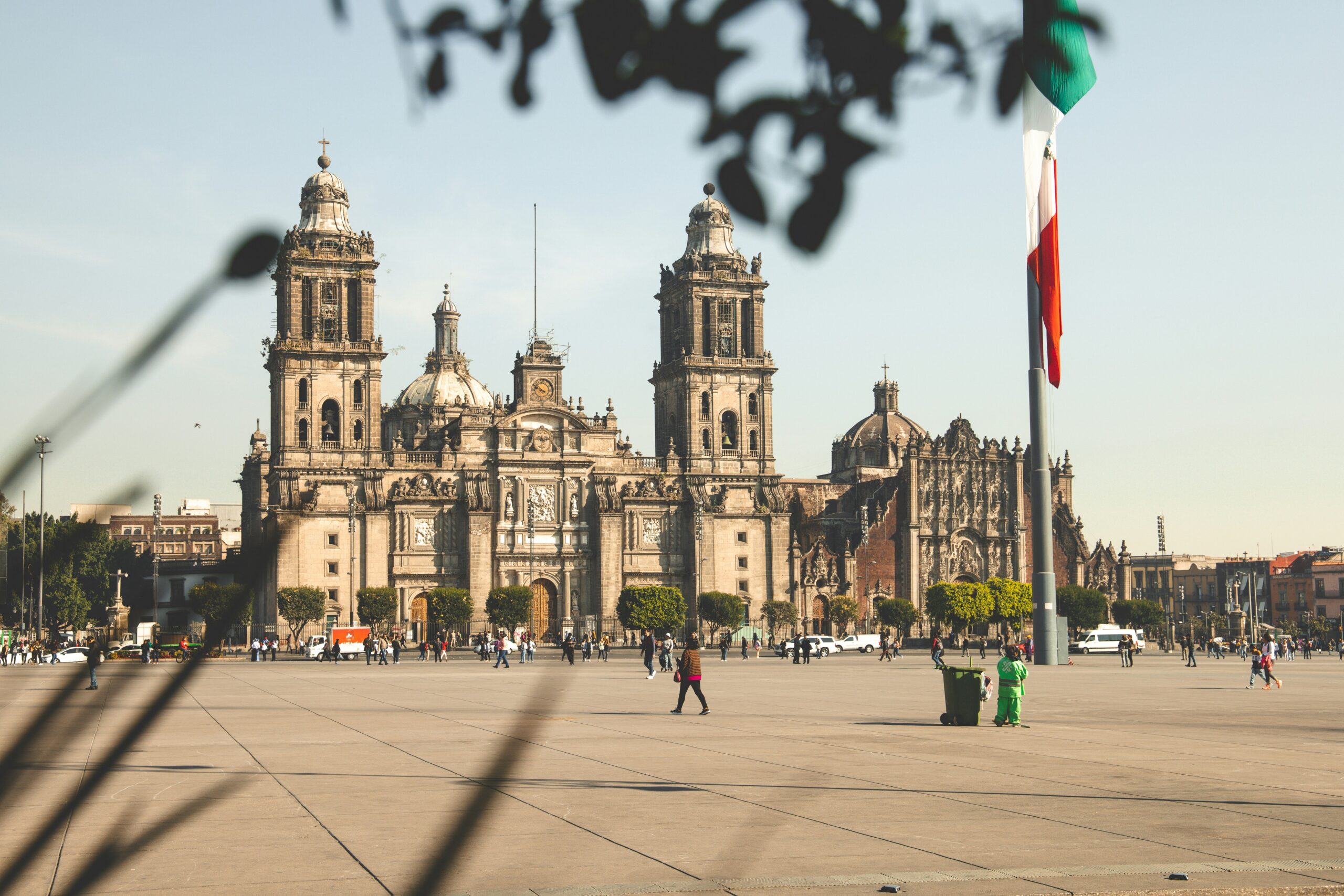
From Mexico to Indonesia, satellite data reveals where sinking ground threatens cities.(CN) — Parts of Mexico City are sinking by more than 8 inches a year, according to researchers that tracked land movement in hundreds of cities worldwide and found some of the most severe sinking in Asia and Mexico.In their study published Monday in Nature Cities, researchers examined 465 cities across 107 countries using satellite observations collected between 2014 and 2023. They found that sinking ground could threaten buildings, roads and drainage systems while increasing flood risks.The process, known as land subsidence, happens when the ground slowly settles or sinks. It can occur naturally as soil and sediment compact, but human activities, particularly pumping groundwater, can also contribute.“Given the potentially large threat land subsidence poses to urban socio-natural systems, it is imperative to implement effective mitigation and adaptation strategies to minimize its detrimental impacts,” researchers wrote in the study. “Achieving this goal requires a comprehensive understanding of the spatial patterns and evolutionary trends of global urban subsidence.”Researchers Shengli Tao and Xie Hu of Peking University in China and their colleagues used satellite radar data to measure land movement across cities with populations exceeding 1 million.They say Mexico City recorded some of the most extreme localized sinking, with certain areas dropping approximately 217 millimeters, or 8.5 inches, per year. Across the city as a whole, however, the typical sinking rate was much lower, at about 8 millimeters annually.Sinking does not happen evenly. One neighborhood may experience substantial ground movement while another remains relatively stable.Several Asian cities also stood out. Medan, Indonesia, had the highest citywide median sinking rate, at approximately 33 millimeters, or 1.3 inches, per year. Bandung, another Indonesian city, followed at about 22 millimeters annually, while Isfahan, Iran, recorded approximately 11 millimeters.Torreón, Mexico, also experienced significant sinking, averaging about 17 millimeters per year.Researchers say not every major city showed the same pattern. Boston, New York City, London, Beijing, Tokyo, Seoul, Sydney, Montevideo and Naples experienced relatively little annual ground movement, with estimated rates ranging from 0.1 to 1.9 millimeters.They cautioned that such small measurements should be interpreted carefully because they are close to the limits of what the observations can reliably distinguish.In parts of Southeast and East Asia, sinking slowed during the study period, although other areas in those regions continued to sink faster.Researchers noted that groundwater regulations and efforts to replenish underground water supplies have helped reduce sinking in some areas.“These contrasting trends may reflect the region’s rapid economic development, factoring in accelerating subsidence and the implementation of extensive mitigation measures that have effectively curbed or reversed subsidence in certain areas,” they wrote.Previous studies often examined only a handful of cities or used different methods and time periods, making global comparisons difficult.The new research provides a more consistent picture of where land is sinking and how those patterns are changing. It also includes cities in parts of South America, Africa and Russia that have received relatively little attention in earlier research.Their study focused on large cities, so researchers acknowledged possibly missing sinking in areas beyond city boundaries. Researchers also noted that measurements were less certain in places with fewer ground-based monitoring stations.They said continued satellite monitoring could help determine whether the observed trends persist and identify areas where action may be needed to protect infrastructure and communities, “thus better assisting policymakers in evaluating the effectiveness of interventions, informing targeted mitigation and adaptation strategies and identifying early warning signs of emerging threats,” they write.Subscribe to our free newslettersOur weekly newsletter Closing Arguments offers the latest about ongoing trials, major litigation and rulings in courthouses around the U.S. and the world, while the monthly Under the Lights dishes the legal dirt from Hollywood, sports, Big Tech and the arts.Additional Reads
Cities worldwide are sinking
Full Article
Original Source
Read the full article at Courthousenews →KhanList aggregates and links to publicly available news content. We do not host full articles from third-party sources. Always verify important information with original sources.