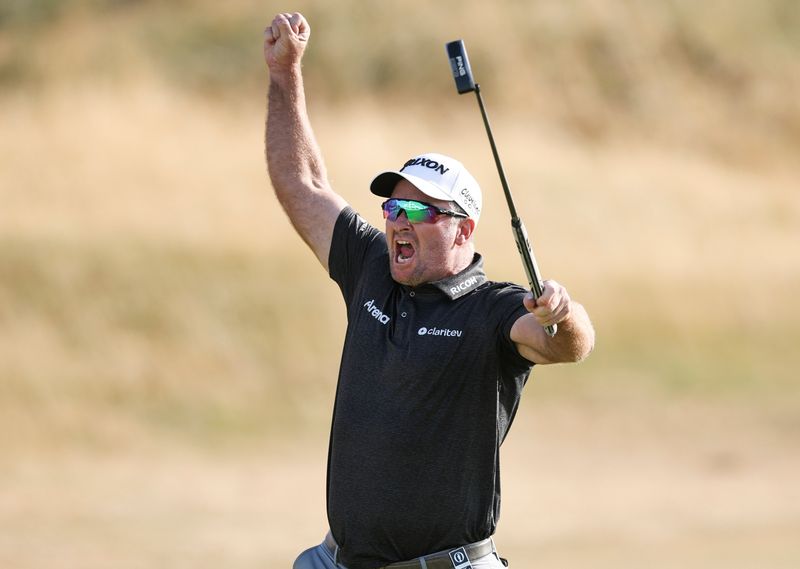
When Sidny Lopes Cabral struck a curling shot around a wall of Argentine defenders into the far top-right corner to level the game, once again, in extra time, Cape Verde almost caused the biggest upset of the Fifa World Cup. The Blue Sharks eventually lost 3-2 to Argentina in the knockout match, but theirs is a story no one will forget. The past few months have been defined by the underdog story. While the heavyweights often dominate headlines, it is the Cinderella stories, the teams and individuals who defy expectations, that captivate people the most. There is something deeply human about rooting for the underdog. We are naturally drawn to those who face adversity, work against the odds and find ways to succeed despite limited resources. Part of the appeal lies in their unfamiliarity. A month earlier, most people could not have named the underdogs who captured our imagination this year, or found Cape Verde on a map. Then they come out of nowhere, emerging as the embodiment of grit and possibility. That is at least what Cape Verde, Ryan Fox, Maja Chwalińska and Arthur Fery did. The world has watched their stories unfold in the last few weeks; a reminder why underdog stories endure. ‘On the map’ Spectators become captivated by the moments in which the underdogs outdo themselves, in which they bring the fight despite being, on paper, completely outclassed. That is why Cape Verde were undeniably the story of the World Cup. The debutants arrived at the tournament ranked 67th in the world, but achieved major success when they reached the round of 32 after draws against Uruguay, Saudi Arabia and the now world champions, Spain – the only team Spain did not beat at the World Cup.“We’ve put ourselves on the map,” said Roberto “Pico” Lopes. “We’re a small nation but with big hearts and we showed what is possible – and if you believe, you can achieve.” Vozinha of Cape Verde carries their flag with pride after an historic 0-0 draw against Spain in their first group match of the Fifa World Cup. (Photo: Buda Mendes / Getty Images) It is wanting to know what it is like on the pitch, behind the scenes and in the dressing room because underdogs often feel closer to the people than the superstars do. Lopes himself embodies that idea. The Dublin-born defender was recruited via LinkedIn. Thinking the Portuguese message was spam he ignored it for nine months until an English version popped into his inbox, presenting an opportunity impossible to ignore. Moreover, goalkeeper Vozinha became one of the breakout stars of the tournament, making eight saves against Argentina and 18 overall. After his belligerent performance, the 40-year-old saw his Instagram following surge from 50,000 to more than 29 million. To think he was without a club after his contract with the second-division Portuguese club Chaves had expired. Now, a newly discovered species of sea slug is named after him. The late bloomer These stories are enthralling precisely because they’re so unexpected. Ryan Fox walked into Royal Birkdale for the Open Championship ranked 56th in the world, with 200-1 pre-tournament odds. Four days later, he was holding the Claret Jug. He claimed his first Major with a birdie on the final hole to finish 10 under par on 19 July. After the first two rounds Fox sat tied for 52nd in level par, but his weekend charge produced the largest 36-hole comeback by position ever to win a men’s Major. Before this, the 39-year-old had never cracked the top 10 of a Major but has bucked the pattern in golf by succeeding as a later bloomer. “I was a rookie on the DP World [European] Tour at 30. I was a rookie on the PGA tour at 37 and now a Major champion at 39. I’m definitely not following the trend at the moment,” he said. Growing up in New Zealand, Fox was raised in a family of athletes. His father, Grant Fox, was a rugby star and played for the All Blacks side that won the inaugural Rugby World Cup in 1987. His grandfather, Merv Wallace, was a legendary cricket player who played 13 Tests for the national side, later taking on roles as captain and coach. “I grew up in a sporting household,” said Fox on the Fried Egg Golf Podcast in 2024. “Always wanted to play sports. Always had a ball of some description… I would’ve said cricket was one, rugby was two and tennis was three for me growing up.” With the trio of sports occupying his interest as a kid, Fox did not start playing golf seriously until much later in life. It was only in his mid-twenties that he turned professional. “I’d always wanted to be a professional sportsman,” said Fox. “It just took a fair while to figure out what sport it was going to be.” Tennis wildcards As with Fox, in some Cinderella stories the glass slipper fits. In others, midnight eventually arrives, and the carriage turns back into a pumpkin. But for a brief period, the magic was real. At Wimbledon, world number 114 Arthur Fery became the lowest-rated player to reach a Grand Slam semi-final since… well, since Chwalińska the Polish qualifier, also ranked 114th, made a similarly astonishing run at the French Open in early June. Arthur Fery of Great Britain during his Wimbeldon semifinal against Germany’s Alexander Zverev on 10 July in London, England. (Photo: Matthias Hangst / Getty Images) Chwalińska took it a step further when she beat Diana Shnaider to secure a spot in the final, becoming only the second qualifier in the Open era, man or woman, to do so. Prior to 2025, Fery had never qualified for an ATP 1000 tournament, let alone won a Grand Slam match. Throughout the tournament in Paris, Chwalińska wore unadorned and mismatched outfits because she lacked sponsors. A Polish company even stepped in to help cover her hotel expenses, after her Roland Garros run went well beyond what anyone had anticipated. So often the underdog is buoyed by the strength of their own narrative, but for Chwalińska it wasn’t always like that. As a junior, Chwalińska played doubles alongside six-time Grand Slam champion Iga Świątek. After reaching the 2017 Australian Open girls’ doubles final together, their careers diverged. Struggling with depression and low self-esteem, Chwalińska stepped away from tennis for a period of time. “I was incredibly proud of Iga,” she said of her childhood friend’s sporting success. “But I felt even worse about myself then, because we were the same age and she was winning tournaments. Where was I?” Maja Chwalińska of Poland with her runner-up silver platter after defeat to Mirra Andreeva in the French Open final on 6 June. Chwalińksa become only the second qualifier in the Open era, man or woman, to reach a Grand Slam singles final. (Photo: Matthew Stockman / Getty Images) Yet, in 2026 her remarkable run in Paris earned her a Wimbledon wildcard, although an injury brought that tournament to an early end with a first-round exit. The gap between sporting giants and underdogs is usually vast and often impossible to bridge. Yet that is precisely why these stories matter. For a few fleeting days or weeks, they allow us to believe that rankings and reputations and resources are not destiny. And every so often, they are right. DM
CINDERELLA STORIES: 2026 has become the year of the underdog in sports
Full Article
Original Source
Read the full article at Dailymaverick →KhanList aggregates and links to publicly available news content. We do not host full articles from third-party sources. Always verify important information with original sources.