
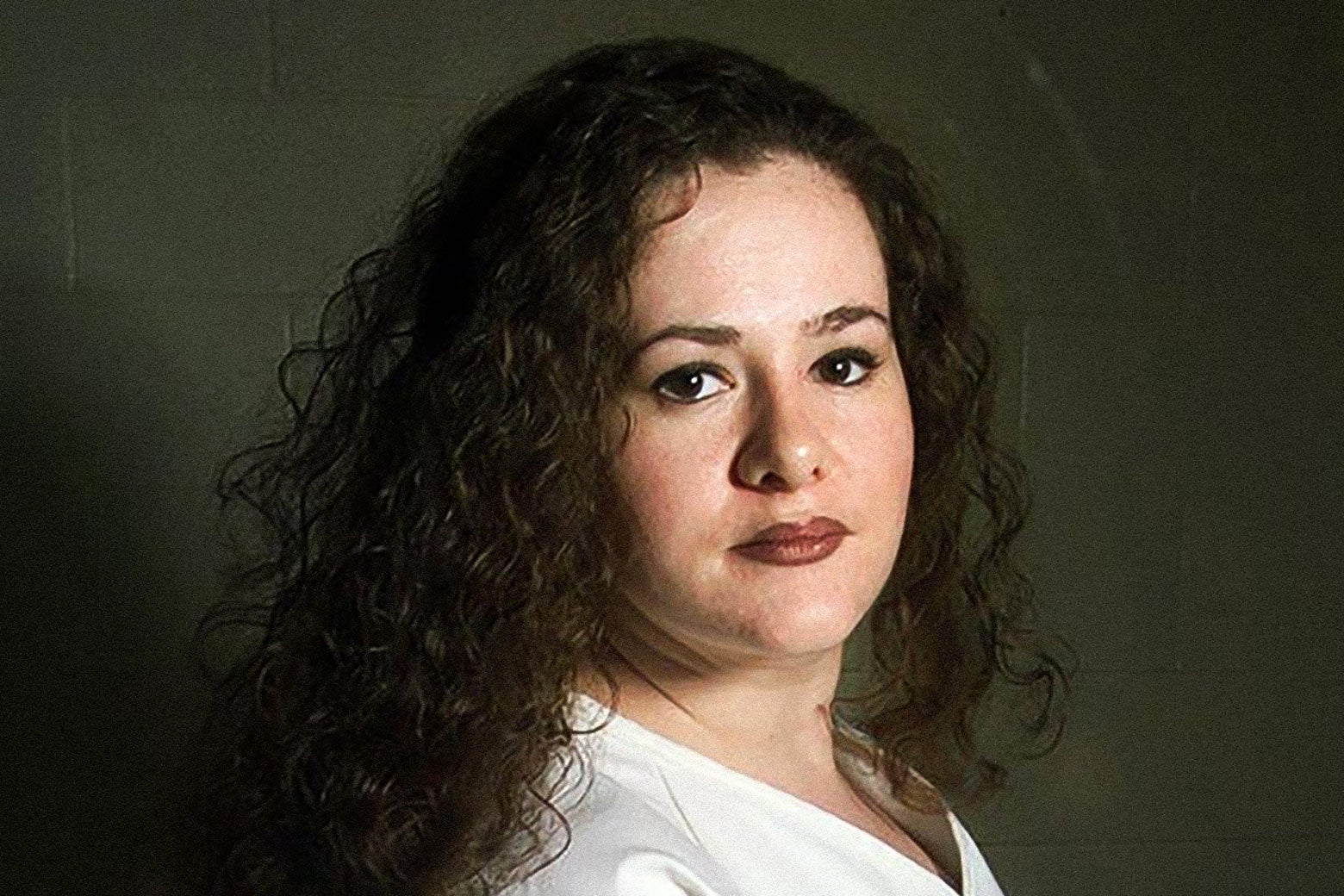
Jurisprudence By Enter your email to receive alerts for this author. Sign in or create an account to better manage your email preferences. Unsubscribe from email alerts Are you sure you want to unsubscribe from email alerts for Dahlia Lithwick? Oct 06, 20263:57 PM USA Today Network via Reuters Connect Sign up for Executive Dysfunction, a weekly newsletter that highlights one under-the-radar story about how Trump is changing the law—or how the law is pushing back—and keeps you posted on the latest from Slate’s Jurisprudence team. Last week, six members of the United States Supreme Court blessed a cruel and unusual horror show at Riverbend Maximum Security Institution in Nashville, Tennessee. In lifting a stay and greenlighting the state of Tennessee to execute Christa Pike by lethal injection, SCOTUS set in train a series of grotesque but predictable events. Not only did Tennessee fail to kill Christa Pike, but they then had to rush her to a hospital for life-saving care. Pike’s legal team had warned that this method of execution would be “difficult and perhaps cruel” due to a blood condition and small veins. Pike is currently in critical condition on a ventilator, with burned and blistered arms, according to her lawyers. On this week’s Amicus podcast, Dahlia Lithwick spoke with legal scholar Corinna Barrett Lain, author of Secrets of the Killing State: The Untold Story of Lethal Injection, about the many ways Pike’s botched execution ripped the mask off America’s preferred method of medicalized capital punishment. Their conversation has been edited and condensed for clarity. Dahlia Lithwick: In a country that historically did beheadings, hangings, all sorts of objectively gross executions, the decision was made somewhere along the line to medicalize executions, to make it look like dental surgery. I think you’ve likened it to putting down a dog. It has been sanitized, making it easier to believe we’re not actually torturing a person. Can you talk about that impulse to make it look medical, and all the obfuscation that comes along with it, and how this attempted execution really blew that up? Corinna Barrett Lain: So when you think of the obfuscation, you know, you might want to ask yourself: Why are they on a gurney? Why do they have white sheets over them? Why are the people inserting the catheter wearing white coats? They’re not doctors. Why are they wearing white coats? Why do we swab the arm with alcohol before injecting the drugs to kill them? It’s ridiculous. It’s all stagecraft. It’s all for us. And when it goes wrong, as it did in Christa Pike’s attempted execution, they lower the blinds. It’s a statement that they lowered the blinds twice, and then they told the media to leave. The media could still hear her back there. So the media knew she was still alive, struggling, in the midst of her execution, and yet they made the media leave. With medicalization, we assume care, we assume competence, we certainly assume humanity. What my research has shown is that lethal injection, from the start, wasn’t so much about a humane execution as a humane-looking execution. I think an important data point is that a federal court at the time had recognized a First Amendment right to televise executions. It wasn’t to last, but nobody could have guessed that. So you had legislators in Texas that talked about that ruling and said, “We can’t have an electrocution in someone’s living room.” Others said, “It can’t look like an execution room. It can’t look like a prison. I can think of a way that this would have a very humane vibe if it was more of a medical setting.” They were very much talking about how lethal injection looked. I have come to think that lethal injection has done a tremendous amount of work in maintaining the death penalty because it’s violence, but it’s all under a chemical veneer—there’s nothing to see here, move along, out of sight, out of mind. The idea was for the public not to be thinking about state violence, not to be thinking we’re actually killing people on purpose, indeed not to be thinking about the death penalty at all. That did blow up with Christa Pike. One of the most humiliating moments for the state of Tennessee—and we’ve never seen this in the modern era—is for them not only to fail (there’ve been other executions that are so botched that the person survives their own execution), but here, not only did they fail, but then they had to bring her to the hospital for life-saving care. The very person that you were trying to kill. It’s just an epic disaster on so many fronts. We don’t actually know why she survived her own execution. The state of Tennessee knows. We don’t know. That’s a problem in itself. I have some pretty good educated guesses about what happened. One possibility, a huge possibility, is that the catheter became dislodged from her vein and then was spilling the drugs into the surrounding tissue. That happens. That’s actually not uncommon, because the people who are pushing those drugs, who are actually pushing the syringes, you think they’re doctors? They’re not. They are nonmedical prison guards, and they are doing it from a separate room. They’re doing it from this little antechamber through 7 feet of tubing. And so when they’ve been asked, “How do you know how fast to push the plunger?” They’re like, “Well, we do it by feel.” There is no feel, not through 7 feet of tubing. So that’s one possibility, and it’s very consistent with what she said. She had complained of pain in the area of the injection, and she said, “It feels like my arm is about to burst.” That is exactly what I would expect if the drugs were infiltrating and going into her tissue, particularly pentobarbital, which is known to burn. Then there’s other possibilities that also go to our lack of knowledge. It could have been substandard drugs. This is all under the table. There’s no prescriptions. Compounding pharmacies are pharmacies, you can’t get a drug without a prescription, certainly not a sterile injectable drug. So what kinds of pharmacies are willing to completely disregard the pharmaceutical professional organizations which have all said to stay away from this? Who’s willing to do that for an under-the-table cash buy for drugs? And we know that those drugs have a 30 percent failure rate. We also know that Tennessee has a history of storing its drugs improperly. Compounded drugs have to be stored at negative 10 to negative 25 degrees celsius. According to a 2022 inspection report, when the drugstore was asked, “How are you storing these?” because they’re not in the logs, he said, “It’s supposed to be a little bit freezing.” That’s what they said. It all goes back to secrecy. We don’t know what went wrong because we don’t know where the drugs came from. We don’t know how they were stored. We don’t know who was pushing the plungers. We don’t know her medical condition. All of this seems like a problem, particularly when the state is at its most powerful moment. And to be clear, her attorneys warned this could happen. It’s not as though this couldn’t be anticipated, given what was known about her medical condition. Still, one might think that when the state botches an execution to this degree, there’s no talk of re-executing them. But tragically, the Supreme Court has weighed in on this issue, and the doctrine is really clear. So even if Pike wakes up from the critical condition in which she finds herself as a result of the state—as you say, in secret, without appropriate medical supervision—trying to kill her, they can just go back and try to kill her again. That is what the doctrine provides. Yes, states can try again. I suppose the only thing that would keep Tennessee from trying again is that there is a competency requirement for execution. It’s minimal, but you have to understand that the state is trying to kill you and what they’re trying to kill you for. So if she has severe brain damage, if she’s brain-dead, then that would raise competency questions. But just as far as, “Oh, we completely tortured and brutalized her before, let’s do it again,” the Supreme Court has blessed that. Our pro-life court. I think most Americans understand what the Eighth Amendment means, and that understanding has evolved over time. But you’re saying that the jurisprudence itself, the technologies, the sanitization of execution, every part of how we practice capital punishment has gone in the opposite direction. In other words, those things have been working very hard to make it OK to not think about this in terms of cruel and unusual punishment. Help me understand how the two pull in opposite directions. I think in some ways, this botched execution is emblematic of how everybody understands now what happens in that room, but the jurisprudence and the technologies have occluded that for most of us. When I first started the book project, I thought the question was: “Why are we, why are states so bad at killing?” Forget the clinical nature, but we know how to put down our pets. We know how physician-assisted suicide works. So why am I seeing all of these botched executions? But as I began to understand that, I asked a different question. I asked the question that you’re asking, which is: “Why are states sticking with lethal injection? What does lethal injection do for us?” Arizona spent $1.5 million on drugs for three executions and botched all three. They can’t get the medical professionals that they need to do it competently. They can’t get the drugs that they need. They can’t get access to the veins. The death row population is a geriatric population, with histories of poor health, and a lot of them are former IV-drug users. The bottom line is this demographic has notoriously weak veins. That is inherent. That is baked into lethal injection. They can’t get into the veins. Why are they sticking with this? My conclusion is lethal injection just does one thing well, only one. It hides the violence of state killing. With lethal injection, you don’t have the blood of the firing squad. You don’t have the sickly smell of burning flesh like you do with the electric chair, or people gasping with the gas mask, or with the gas chamber. With lethal injection, we get to tell ourselves that these people are just falling into a forever sleep. I was thinking of this saying that I had read, “The heart stops reluctantly.” And I was like, Oh, right, the heart stops reluctantly. Before a person is ready to die on their own, it takes physical force to stop the heart from beating. It takes violence to stop the heart from beating. And it could be a car accident or a homicide or an execution, but it takes violence. And what’s special about lethal injection is it hides the violence. It internalizes the violence. We can find it on autopsies, but the public isn’t paying attention to that. It really is out of sight, out of mind. That is the work that lethal injection does. I think it must be so important, so very important, because states have gone all out to try to maintain an execution method that looks like something else. Then we have Christa Pike, and it’s like, Oh, wait, this is a violent act. This is an atrocious act. Wait, we’re doing this? Who is she? What is her story? What do we get out of this? It raises all of the questions. And so my own hope is if there’s something good that comes of this, it will be spurring conversations like this one, of not only how we kill, but whether we kill. Death Penalty Jurisprudence Supreme Court Judiciary Tennessee
Christa Pike’s Botched Execution Was Even More Gruesome Than We’ve Been Led to Believe
Full Article
Original Source
Read the full article at Slate →KhanList aggregates and links to publicly available news content. We do not host full articles from third-party sources. Always verify important information with original sources.