
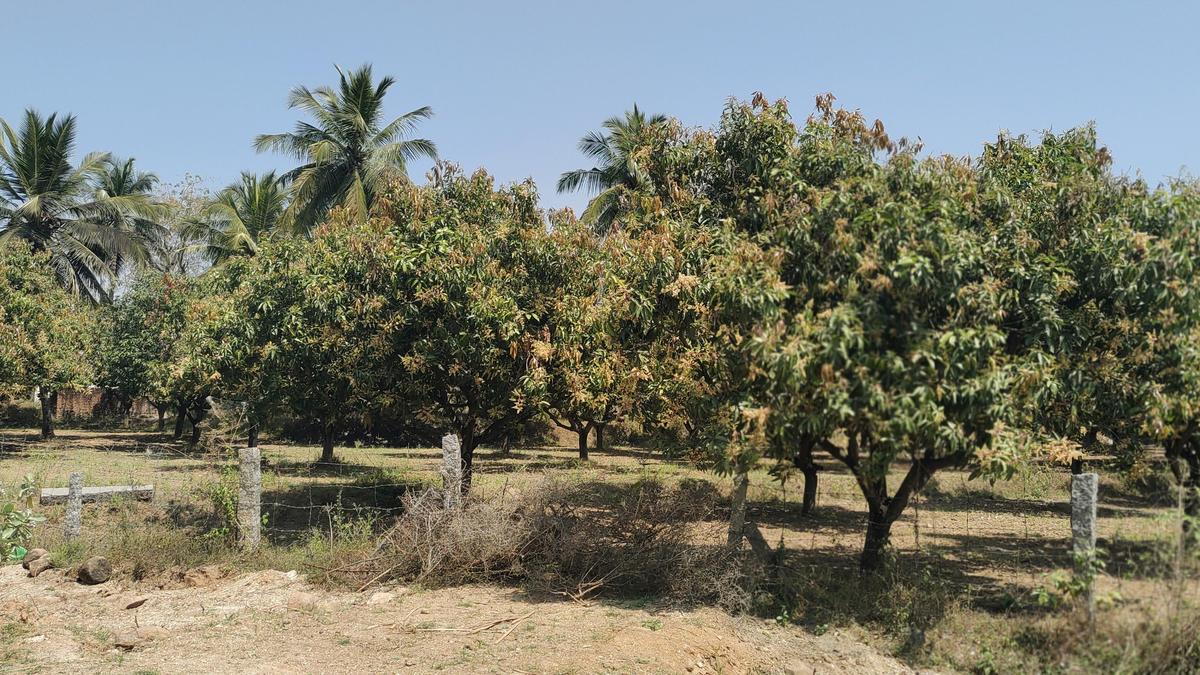
A mango orchard at Penumuru in Chittoor district. | Photo Credit: File photo A harsh dry spell and severe rainfall shortages due to El Niño conditions have put the mango orchards across Chittoor and Annamayya districts in serious crisis as farmers prepare their trees for the upcoming flowering season. With the soil rapidly drying and local water tables under immense pressure, mango growers fear that the prolonged dry spell will wreck the 2027 season’s blooms, fruit set, and overall yields.The numbers behind the rainfall deficit are alarming. Chittoor received only 445.7 mm of rain against its usual 677 mm — a 34.2% shortfall. Meanwhile, in Annamayya district, the situation is even distraught, with just 302.5 mm recorded against a normal 574 mm, with a 47.3% deficit.Chittoor district alone has roughly 51,736 hectares planted with Totapuri mangoes, boasting an expected production capacity of 5.17 lakh tonnes. Considering the wider belt spanning Chittoor, Tirupati, Annamayya, and Kadapa, Totapuri cultivation stretches across nearly 90,000 hectares, with close to 50,000 farmers involved and producing an estimated 9 lakh tonnes every year.The major mago growing hubs include Bangarupalem, Puthalapattu, Aragonda, Thavanampalle, Puttur, and Palamaner in Chittoor district; Rayachoti and Rajampet in Annamayya district, and Railway Koduru in Tirupati district respectively.Kothur Babu, the president of the Chittoor District Mango Producers’ Association, said that traditional mango farming follows a rigid calendar. Once the May-August harvest wraps up, farmers immediately dive into pruning, cleaning up orchards, applying manure, and managing whatever irrigation they have left. Flowering usually gets rolling between December and February, paving the way for pollination and fruit setting.“Though a bit of dry weather is actually necessary right before flowering kicks off, severe and prolonged water stress starves the trees and stops uniform blooms from happening,” he said.Chittoor is a vibrant centre for mango pulp production as thousands of local processing unit workers, drivers, and transporters rely on a steady stream of the harvested fruit. “If this intense water crunch continues, Chittoor could easily see a 10 per cent to 20 per cent drop from its usual 5.17 lakh tonnes. The production loss could be more than one lakh tonnes in 2027,” said a Horticulture Department official in Annamayya district.Meanwhile, mango growers said they desperately need rain over the next few weeks to save their trees and protect the traditional annual economy. Published - November 11, 2026 09:32 pm IST
Chittoor, Annamayya mango growers fear dry spell, rainfall deficit likely to impact 2027 yields
Full Article
Original Source
Read the full article at Thehindu →KhanList aggregates and links to publicly available news content. We do not host full articles from third-party sources. Always verify important information with original sources.