
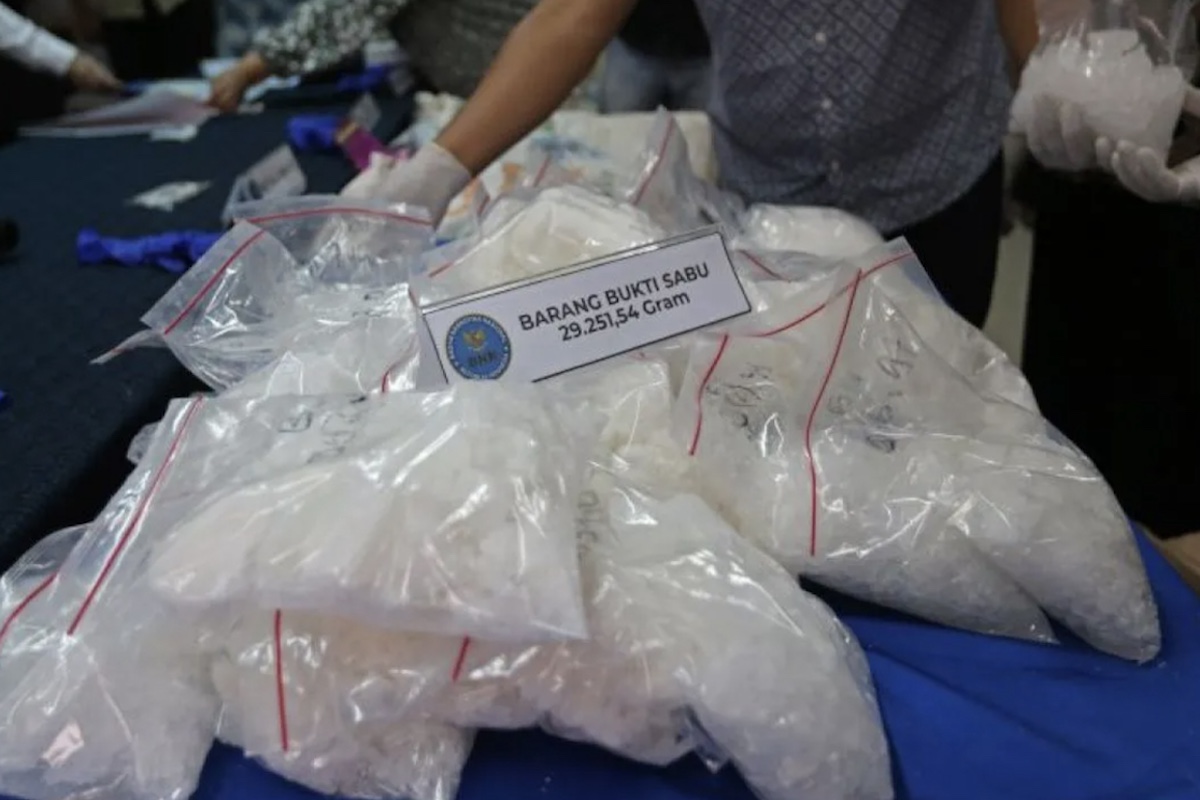
On a quiet street in Aceh, a shophouse that looked like every other one on the block was hiding a meth lab. When Indonesian agents raided it on October 21, they found about 1.2 tons of methamphetamine, part of it still in liquid form. Eleven people were arrested in Indonesia, two of them Chinese nationals. Seven more were detained in China. The lead did not come from Aceh. It came from Beijing, where investigators had been tracking the network since October 2025 before handing their findings to Indonesia’s National Narcotics Agency (Badan Narkotika Nasional, or BNN) in September. Malaysian police joined the chase too, because the suspects had reached Aceh by way of Malaysia. All three capitals have hailed the bust as a model of cross-border policing, but the trilateral operation’s larger lesson is easy to miss. For more than a decade, China, Indonesia and Malaysia have built their drug-control ties two at a time. Aceh is the first known case in which all three worked the same network together. Indonesia and China signed a memorandum on narcotics control in March 2012 and extended it in 2017, an agreement that produced real, actionable intelligence. By 2017, Beijing had notified Jakarta of about 1,097 tons of precursor chemicals shipped to Indonesia since 2014 – the kind of data that tells investigators where labs get their supplies. As early as 2016, BNN’s chief floated posting Indonesian officers inside China’s narcotics commission. Malaysia’s channel to Beijing has also delivered. In August 2025, Chinese intelligence led Malaysian police to more than 1.03 tons of fentanyl citrate, in a country where the drug had almost no local market. In July, the two governments confirmed a new security working group. Their extradition treaty, under discussion since 2018, still awaits a second round of talks. Indonesia and Malaysia share the longest record. In 2018, BNN and the Malaysian police took down a Malaysia-Aceh-Medan syndicate that moved meth through Penang. This April, the two countries’ drug chiefs met in Bali and agreed on faster lines of communication. Each pairing worked within its own lane. The Aceh network crossed all three lanes at once: a Chinese lead, a Malaysian transit route and an Indonesian lab. Catching it required the three agencies to move together, and in October they did. The shift comes at a critical moment, because the regional drug trade is growing faster than the tools built to stop it. The United Nations Office on Drugs and Crime (UNODC) reported that East and Southeast Asia seized 349 tons of methamphetamine in 2025, 48% more than the year before and over five times the haul of a decade earlier. Inside Indonesia, BNN puts potential spending on illegal drugs at 524 trillion rupiah a year, or roughly US$32 billion. The business model is changing too. Crystal meth once crossed the Strait of Malacca ready to sell, packed into fishing boats. Now traffickers increasingly ship liquid drugs, which are easier to hide, and finish them close to their customers. In January, BNN raided a North Jakarta apartment that was turning narcotics into vape liquid for what it called a China-Malaysia network. The Aceh lab ran on the same idea at a far greater scale. Indonesia is no longer only a market. It is becoming a factory. The route begins in Myanmar’s Shan State, which the UNODC identifies as the region’s main source of methamphetamine, then runs through Malaysia and across the strait to Sumatra. Each of the three countries can see one stretch of it. None can see the whole thing. The fix is within reach. A permanent trilateral channel, with liaison officers in Beijing, Jakarta and Kuala Lumpur, would keep the next lead from sitting for eleven months before it reaches the agency that can act on it. Financial intelligence units belong at the table, too. Indonesia’s police chief is now hunting whoever financed the Aceh lab, and that money almost certainly moved across borders. Beijing holds two levers no one else has: tighter oversight of precursor exports and influence over the armed groups along its border with Myanmar. Jakarta and Kuala Lumpur should also push to put the arrangement in writing and publish it. Informal police cooperation tends to fade when diplomatic relations cool. Public rules on what data is shared, and under which legal safeguards, would protect citizens and keep the partnership alive beyond any single government. Seizures alone will not shrink demand, and the buyers who were waiting for the Aceh shipment have not gone anywhere. Treatment and prevention deserve the same cross-border energy that enforcement is now getting. On the supply side, though, the three governments finally have a model tested on a real case. The task now is to make it routine, so the next lab is found by design rather than by luck. Muhammad Zulfikar Rakhmat is the director of the China-Indonesia Desk at the Jakarta-based Center of Economic and Law Studies (CELIOS), an independent research institute. Yeta Purnama is a researcher at CELIOS.
Chinese tip in Aceh meth bust makes a case for three-way policing
Full Article
Original Source
Read the full article at Asiatimes →KhanList aggregates and links to publicly available news content. We do not host full articles from third-party sources. Always verify important information with original sources.