
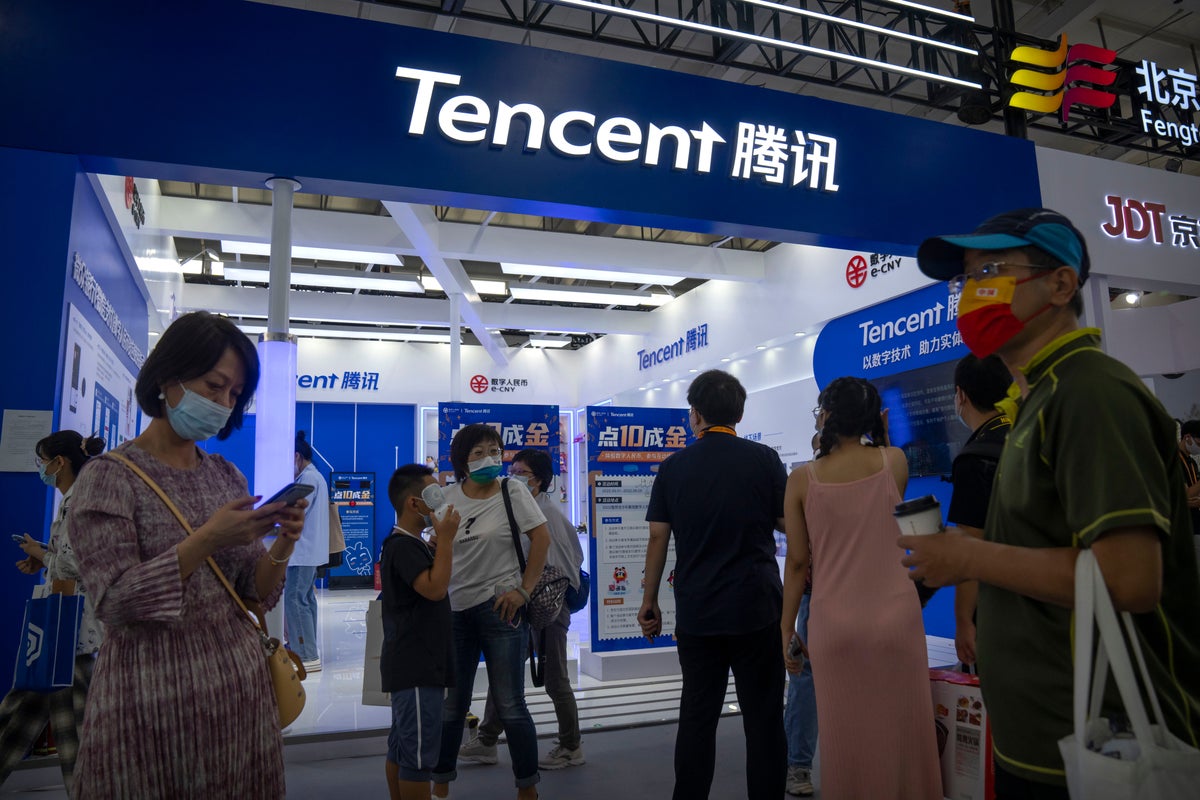
Chinese technology firms are bracing for impacts on their ambitious artificial intelligence plans as the U.S. tightens restrictions on China's access to the world's cutting-edge chips.Chinese tech giant Alibaba, which on Thursday announced another quarter of strong revenue growth for its global AI cloud and compute services, warned that the new U.S. rules could affect some of its global data center expansion plans. It said it was still assessing the repercussions.The Trump administration this week issued new rules in the wake of Nvidia CEO Jensen Huang’s resignation, following the news that he’d had an extramarital affair with a woman alleged to be a Chinese spy.The rules now restrict remote computing access through data centers in third countries, the latest U.S. move to curtail China’s abilities to use advanced Nvidia chips to train its increasingly capable AI models. Alibaba's AI revenues are surging as demand grows As the technology race between the two superpowers intensifies, existing U.S. export restrictions already barred China from getting the world’s most powerful chips.But some Chinese companies have been able to bypass those restrictions by renting remote computing access to train AI models, pushing the U.S. to close what some policymakers called a loophole.As global AI usage grows, Alibaba has been expanding its capabilities across chips, cloud infrastructure and AI models. It launched its flagship Qwen4-Max AI model earlier this week. In September, Alibaba's CEO called its new Zhenwu V900 chip the “most powerful” AI chip in China, while it announced massive data center investment plans in China and abroad.Alibaba Cloud’s AI-related revenue currently comes significantly from China and there’s still a lot of “untapped demand” from Chinese enterprises, said Jacob Cooke of the Beijing-based consultancy WPIC Marketing + Technologies.For the latest July-September quarter, Alibaba reported a 53% year-on-year revenue surge for its AI cloud and compute services to nearly 61 billion yuan ($9 billion). Total revenue for the quarter rose 10% from the year before to almost 272 billion yuan ($41 billion), slightly better than what analysts had expected.While the company has a strong cash buffer, capital expenditures jumped 60% during the quarter to 50.5 billion yuan ($7.6 billion) thanks to its increased spending on AI infrastructure buildout. Tencent says US chip curb ‘sets everyone back in China’ Chinese tech giant Tencent on Wednesday said the new U.S. rule on chip access “sets everyone back in China.”“Everyone is actually having less compute, advanced compute, to work with, no matter when you actually started leasing or building capacities outside of China,” Tencent President Martin Lau said on an earnings call. Training timelines for Tencent’s next versions of its AI models would probably be impacted, he said.“Chinese AI firms are still heavily dependent on the most frontier Nvidia chips," said James Chai, a researcher at the ISEAS – Yusof Ishak Institute in Singapore, with new U.S. rules on remote access cutting off a huge portion of Chinese firms’ access to compute.A study released in October by the Institute for Progress, a U.S. think tank, estimated that remote access to AI chips through overseas data centers could account for roughly one-third of China’s AI compute by the end of 2027.Nvidia, meanwhile, said it is now “no longer shipping” chips including the H200, one of its more powerful chips, though not the most advanced, although the Trump administration greenlighted some sales to China, reflecting how Nvidia has toughened its stance on China following Huang’s ouster.Analysts expect the U.S. will step up its chip export control policies against China after Huang's relationship with Alice Huang, a former senior executive of Singapore-based cloud computing company Megaspeed, raised U.S. national security concerns. Earlier reporting by The New York Times suggested that U.S. officials suspected Alice Huang was a Chinese spy recruited in part to potentially influence Nvidia to make its most advanced chips more available to Chinese companies.Beijing has rejected claims that Alice Huang was a Chinese spy, and has called the new U.S. rules blocking Chinese companies' remote access to computing power overseas “economic coercion.”Analysts and industry leaders in China say the U.S.’s tightening of chip export control measures would ultimately accelerate China’s push to make its domestic chip industry self-sufficient.“Over the longer run, we believe all Chinese players would actually have to rely on domestic supply chains and domestic chips, which we actually see the industry is actually progressing very fast,” said Tencent's Lau.
Chinese tech firms fear AI hits from US curbs after Nvidia fallout
Full Article
Original Source
Read the full article at Independent →KhanList aggregates and links to publicly available news content. We do not host full articles from third-party sources. Always verify important information with original sources.