
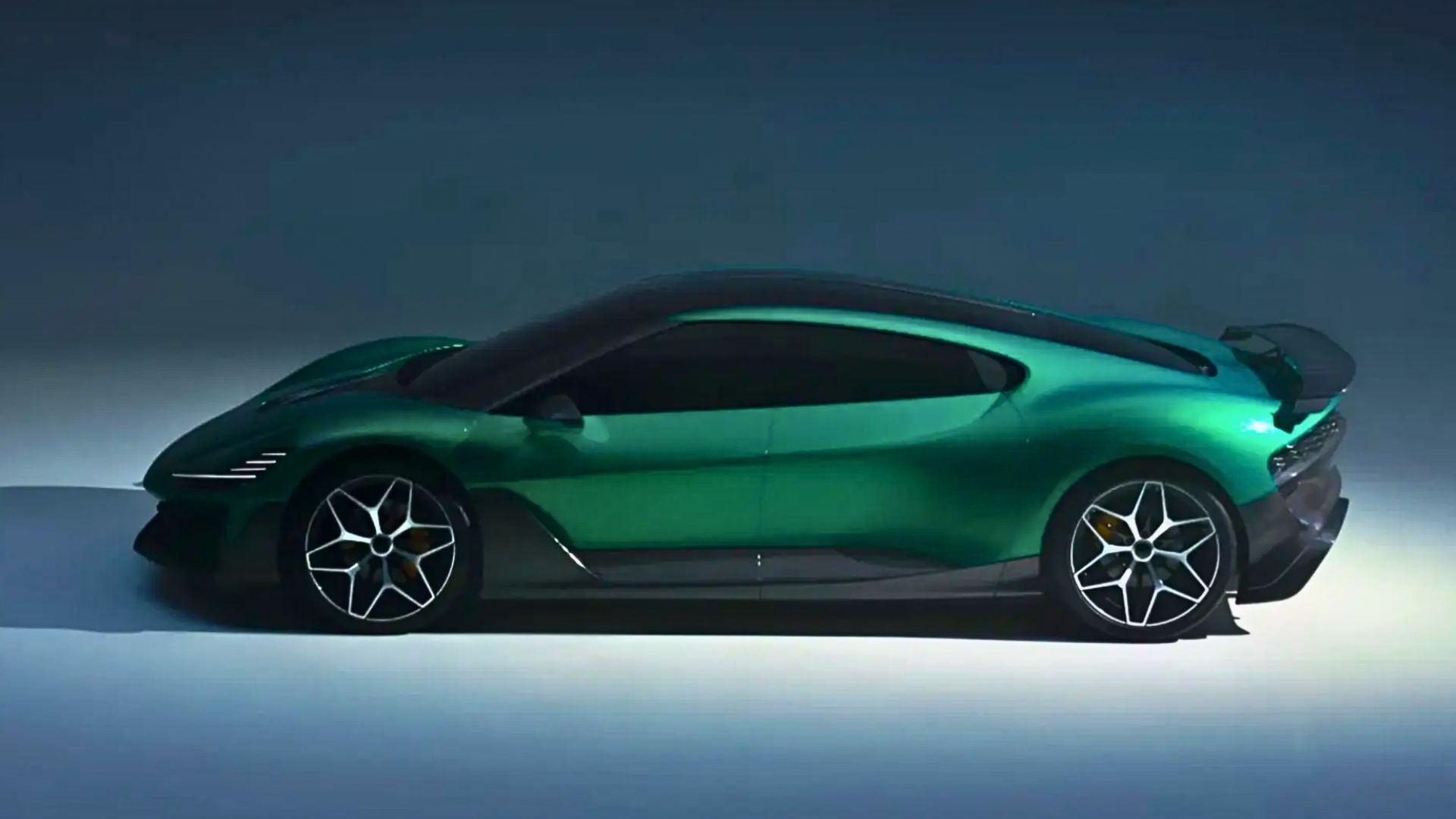
Dreame’s brief attempt to enter the automotive industry appears to be over. The Chinese company, best known for robot vacuums and other smart home appliances, has reportedly canceled its electric hypercar program, including the extraordinary rocket-assisted version it unveiled just months ago. The reversal marks a dramatic change from the company’s earlier ambitions, which included a 1,876-horsepower Bugatti-inspired electric supercar and even plans for a luxury SUV. Interesting Engineering previously covered Dreame’s entry into the sector. Now, according to reporting by Electrek, those automotive ambitions have been shelved. From CES hypercar to canceled project Dreame first announced its automotive ambitions in 2025, then revealed its Nebula NEXT 01 concept at CES 2026. The four-motor electric hypercar was claimed to produce 1,876 hp, with Dreame initially advertising a 0–62 mph time of around 1.8 seconds. Then came an even more ambitious proposal. At an April event in San Francisco, Dreame presented a rocket-assisted “Jet Edition,” claiming that solid-fuel rocket boosters could help propel the car from 0 to 62 mph in an extraordinary 0.9 seconds. The concept was based on a real engineering idea. Conventional cars eventually become traction-limited, meaning additional wheel power cannot necessarily translate into faster acceleration. Rocket thrust, acting independently of tire grip, could theoretically bypass that limitation. But Dreame’s solution was always going to face enormous practical hurdles. Now, the entire project has been canceled before reaching production. Nearly 1,000 employees, then a rapid wind-down Reports from Chinese media indicate that Dreame’s automotive operation, known as the Star Project, grew rapidly and employed close to 1,000 people at its peak. That expansion was followed by layoffs, with the remaining team reportedly reduced to personnel handling the project’s closure, supplier settlements, and corporate deregistration. Reuters reported that Dreame has withdrawn from the luxury EV venture, citing challenges including fierce competition, long development and production cycles, and the sustained investment required to build cars at scale. Dreame has indicated that technologies and research assets developed during the project could instead be integrated into other areas of its business, which now include smart home products, outdoor technology, smart mobility, and embodied AI. Questions over how far the cars really progressed The cancellation has also brought new scrutiny to Dreame’s ambitious automotive presentations. Reports citing former employees have alleged that some of the vehicles displayed were far from production-ready prototypes. Those claims should be treated as allegations rather than independently verified descriptions of the vehicles, but they add context to just how quickly the project appears to have unraveled. What is clear is that Dreame never brought its EVs into mass production or made the heavy manufacturing investments normally required to become an automaker. Reuters reported that the project’s termination is therefore not expected to have a major impact on the company’s financial health. Building an EV is easier said than done Dreame’s reversal is also a reminder that the EV industry has created an unusual temptation for companies outside the traditional automotive world. Electric powertrains have fewer moving parts than internal combustion engines, and advances in batteries, motors, software, and contract manufacturing have lowered some barriers to entry. Companies with expertise in electronics, software, robotics, or consumer technology have increasingly wondered whether they can make the leap into automobiles. Some have succeeded. Others have discovered that designing an impressive concept and manufacturing a safe, reliable vehicle at scale are two very different challenges.Dreame’s automotive adventure lasted roughly a year. In that time, it went from promising a Bugatti-inspired 1,876-hp electric hypercar to proposing a version with rocket boosters, and now to abandoning its car-making ambitions altogether.Get the latest in engineering, tech, space & science - delivered daily to your inbox.Kaif Shaikh is a journalist and writer passionate about turning complex information into clear, impactful stories. His writing covers technology, sustainability, geopolitics, and occasionally fiction. A graduate in Journalism and Mass Communication, his work has appeared in the Times of India and beyond. After a near-fatal experience, Kaif began seeing both stories and silences differently. Outside work, he juggles far too many projects and passions, but always makes time to read, reflect, and hold onto the thread of wonder.
Chinese robot vacuum maker abandons its 1,876-hp electric hypercar project
Full Article
Original Source
Read the full article at Interestingengineering →KhanList aggregates and links to publicly available news content. We do not host full articles from third-party sources. Always verify important information with original sources.