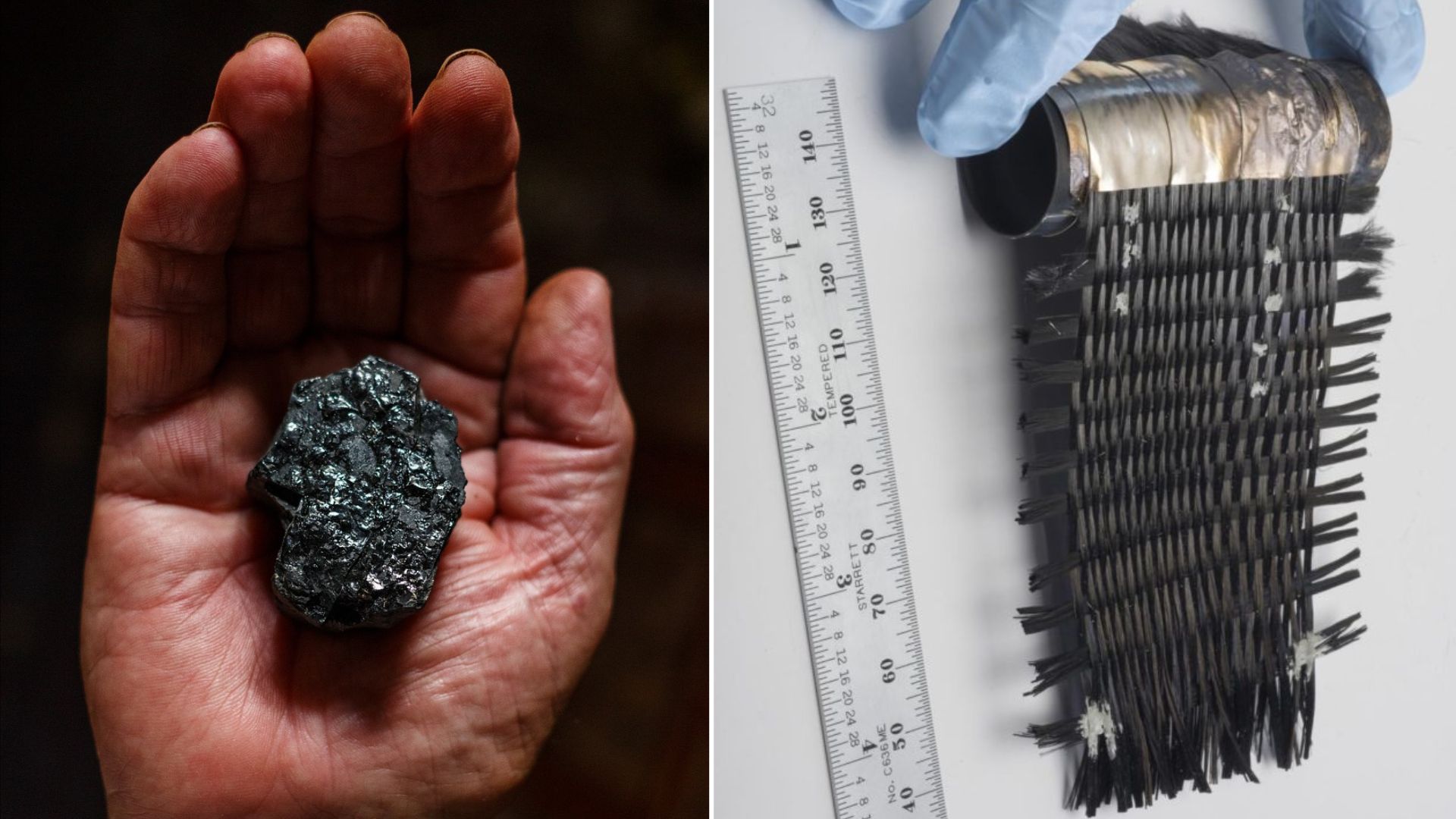
Could coal have a future beyond power plants? A new process in China aims to turn it into premium carbon materials used in high-tech industries.Picryl/ Needpix Coal has long been associated with electricity generation, steelmaking, and carbon emissions. But a new technology unveiled in China aims to give the fossil fuel a very different role. Transforming it into high-value carbon materials used in industries ranging from energy storage to aerospace. The technology, presented at an industry conference in Taiyuan, Shanxi Province, converts ordinary coal into premium carbon materials through a specialized coal liquefaction process. Developers say the approach could significantly increase the economic value of coal while reducing emissions associated with conventional coal utilization. A different approach to coal utilization According to the company, the technology was jointly developed by Zhaoqing Shunxin Coal Chemical Industry Technology Co., Ltd. and Guangdong Coal-based Carbon Materials Research Co., Ltd. It was reviewed by an expert panel organized by the China International Association for the Promotion of Science and Technology in October 2025, which assessed the process as having reached an internationally leading level and recommended accelerating its commercialization. Rather than burning coal for energy or converting it into fuels, the process focuses on extracting carbon-rich molecular structures that can serve as feedstock for advanced engineering materials. The developers say the technology is based on quantum chemistry, separating coal molecules according to their chemical structure and bond strength. Molecules with lower bond energies are converted into oil and gas, while highly stable aromatic structures are transformed into condensed-ring pitch. A carbon-rich precursor used to manufacture advanced carbon materials. From coal to aerospace-grade materials One of the most notable aspects of the technology is the range of materials it claims can be produced. According to the developers, the condensed-ring pitch can be used to manufacture carbon foam, carbon fibers, 3D graphene, super-activated carbon, and supercapacitor-grade activated carbon. These materials are widely used across sectors including aerospace, energy storage, electronics, and advanced manufacturing. The company also claims its carbon foam exceeds China’s Class A flame-retardancy standard and is suitable for military and aerospace applications. If these performance claims are validated at commercial scale, the technology would shift coal from being primarily an energy resource to serving as a raw material for high-performance engineered products. Environmental and economic potential The developers also highlight environmental benefits. According to the company, approximately 60% of the carbon contained in coal can be converted directly into carbon materials rather than being released through combustion. The process is also claimed to reduce carbon dioxide emissions by around two tonnes per tonne of coal processed, while generating virtually no waste gas, wastewater, or solid waste. Economically, the approach aims to move coal further up the value chain. Instead of producing a commodity worth hundreds or thousands of yuan per tonne, the process is designed to generate advanced carbon materials that can command values ranging from tens of thousands to hundreds of thousands of yuan per tonne, depending on the final product. These figures were provided by the technology’s developers and have not been independently verified. Moving toward commercialization The technology has already taken its first step toward industrial deployment. The developers announced a cooperation agreement with the state-owned China Pingmei Shenma Group to construct a 6,000-tonne-per-year coal-based carbon materials project in Henan Province. They also said several carbon products produced using the process have completed user testing with downstream manufacturers and are now ready for commercial-scale deployment. Although the technology still faces the challenge of proving its performance at industrial scale, it reflects a broader shift in how coal is being viewed. Rather than serving solely as a fuel, researchers are increasingly exploring its potential as a source of advanced materials, potentially opening new applications for one of the world’s most abundant carbon resources. Recommended ArticlesGet the latest in engineering, tech, space & science - delivered daily to your inbox.Kaif Shaikh is a journalist and writer passionate about turning complex information into clear, impactful stories. His writing covers technology, sustainability, geopolitics, and occasionally fiction. A graduate in Journalism and Mass Communication, his work has appeared in the Times of India and beyond. After a near-fatal experience, Kaif began seeing both stories and silences differently. Outside work, he juggles far too many projects and passions, but always makes time to read, reflect, and hold onto the thread of wonder.
Chinese quantum chemistry tech transforms coal into carbon fibers and graphene
Full Article
Original Source
Read the full article at Interestingengineering →KhanList aggregates and links to publicly available news content. We do not host full articles from third-party sources. Always verify important information with original sources.