
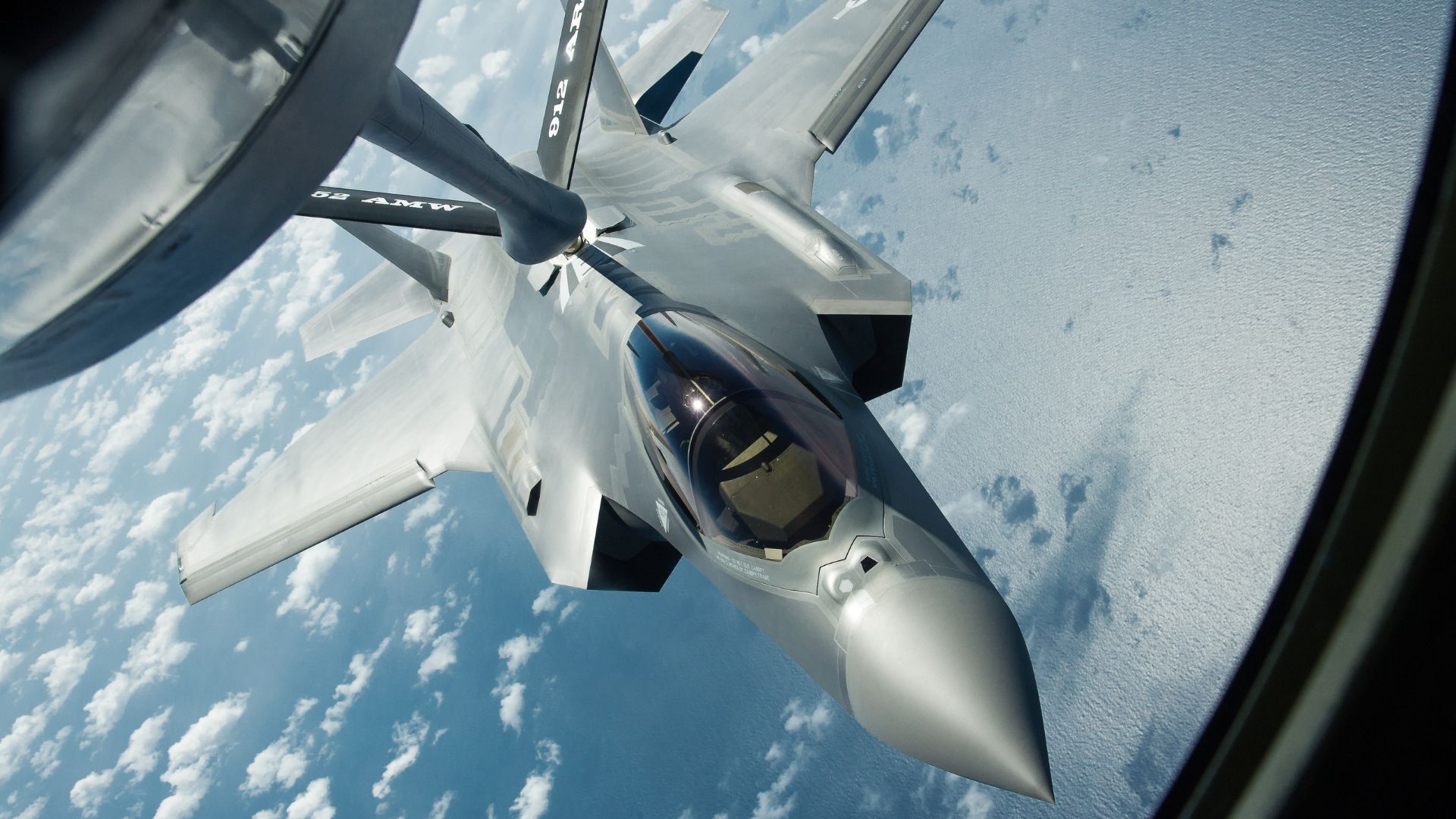
The F-22 and F-35 are notorious for frustrating radar detectors, but their heat signatures are difficult to hide. China has developed a lightweight AI system that could allow air-to-air missiles to recognize their infrared signatures in flight. The new system achieved up to 97.1 percent accuracy identifying F-22 and F-35 targets during simulated laboratory tests. Researchers from the Beijing Institute of Technology and China Airborne Missile Academy designed it for missile-mounted infrared imaging systems. The work tackles a practical problem facing future missile seekers. They need to process infrared imagery almost instantly, yet missiles have strict limits on computing power, weight and available space. Reading fighter heat Aircraft produce infrared signatures through engine exhaust, aerodynamic heating and other sources across the airframe. Heat-seeking missiles can detect those emissions, while fighters can deploy flares to create competing infrared targets. That creates a recognition problem for the missile. An infrared seeker needs to determine whether the heat it sees belongs to the aircraft or a decoy, often with only milliseconds available to make that assessment. The researchers trained their system using 3,245 infrared images collected by a missile-borne scanning system. The dataset included three airborne target categories, with simulated F-22 and F-35 aircraft among them. The model reached 97.1 percent recognition accuracy during testing, according to the researchers. A separate test produced recognition rates of about 90% for the simulated fighter targets. Those results do not show how the system would perform against actual F-22 or F-35 aircraft. Lead researcher An Jiangshan said the relevant test data remains confidential and cannot be disclosed. Making AI smaller The researchers also had to solve a hardware problem before putting the model aboard a missile. Conventional deep-learning systems can require too many computing resources for compact weapons with tight size and power constraints. The team reduced its model to 16.1 percent of the parameters used by previous methods. It also brought computational requirements down to 19.2 percent, according to the study. A dedicated AI accelerator helped push the system further. The hardware uses optimized convolution operations, parallel processing, and data buffering to process infrared imagery more efficiently. During hardware testing, the system achieved 96.4 percent accuracy and processed each image in roughly 1.5 milliseconds. Its overall power consumption reached about 2.2 watts, giving the researchers a relatively low-power system for missile-mounted applications. That speed could matter during an engagement because a missile cannot spend long deciding what its sensor sees. Processing the imagery onboard could let the seeker classify targets without depending on external computing systems. New stealth challenge The research does not establish that Chinese missiles can identify operational F-22 or F-35 fighters. The experiments used simulated targets, and the researchers say further work will be needed to improve both recognition accuracy and processing speed. The team also limited its study to close-range air-to-air missile fuzes. It has not yet established whether the approach could work against surface-to-air missile systems. For the US, the research points to a familiar problem with a newer twist. Stealth aircraft can dramatically reduce radar detection, but they cannot eliminate the heat generated by their engines and movement through the air. More capable infrared sensors could turn those unavoidable emissions into useful targeting information. Compact AI processors may then help future missile seekers make sense of that information faster than earlier systems could. Get the latest in engineering, tech, space & science - delivered daily to your inbox.Aamir is a seasoned tech journalist with experience at Exhibit Magazine, Republic World, and PR Newswire. With a deep love for all things tech and science, he has spent years decoding the latest innovations and exploring how they shape industries, lifestyles, and the future of humanity.
Chinese missiles autonomously spot F-22, F-35 heat signatures with 90 percent accuracy
Full Article
Original Source
Read the full article at Interestingengineering →KhanList aggregates and links to publicly available news content. We do not host full articles from third-party sources. Always verify important information with original sources.