
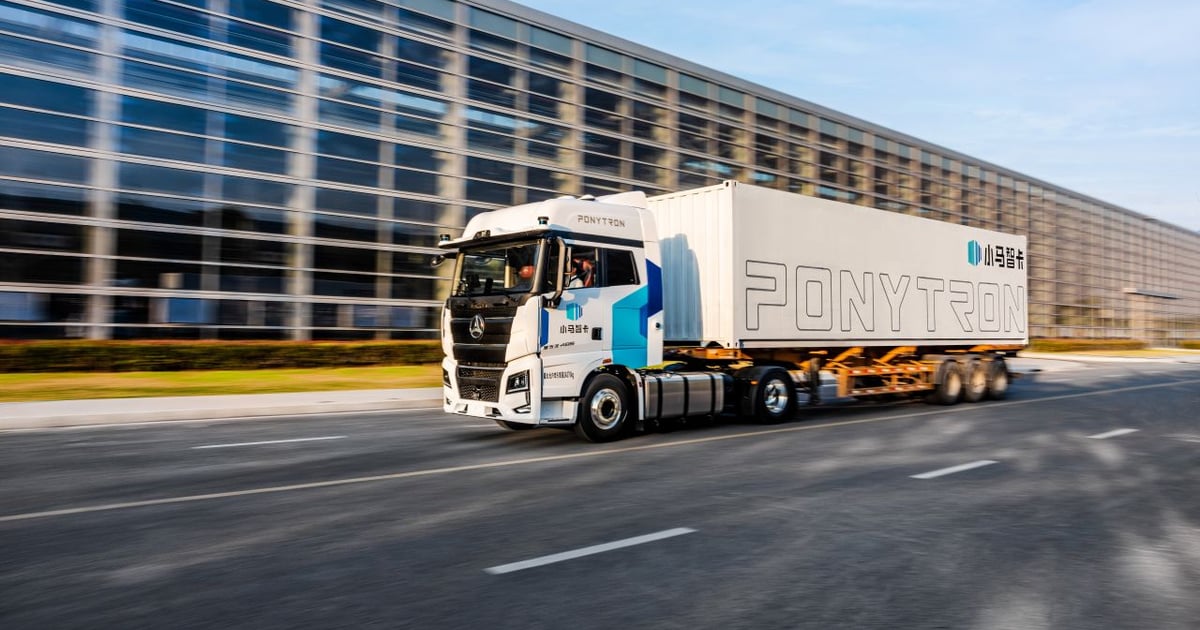
Self-driving tech vendor Pony.ai has revealed bold plans to scale its autonomous truck rollout.The company, based in Guangzhou, says it can deploy between 500 to 1,000 self-driving heavy-duty trucks in its home country over the next two to three years.However, the scale of Pony.ai’s ambitions for its light-duty trucks is significant, with 100,000 targeted to hit the road by 2030.As of November, last year, Pony.ai had a fleet of around 200 trucks.Heavy-duty robotrucks are expected to be used for long-haul freight in ports, on highways and in specialized bulk transportation in western China, while light-duty vehicles will generally operate in urban environments, traveling between retail stores, distribution centers and cold-chain refrigerated facilities.The company has been around for a decade, raising funds and developing automated technology for robotaxis and commercial vehicles, achieving early success with robotaxis in China before expanding into the Middle East and Europe.Related:IBM Signs $240M Deal for Nvidia-Powered AI ClusterAccording to vice president He Xing, the painstaking development process has led to this point, with hardware costs having dropped significantly -- by about 70% in the latest generation of heavy-duty trucks -- and are no longer prohibitive.“We had been waiting for the right moment. Our truck technology had already reached a high level, but the cost of building an L4 Robotruck remained high,” he said in a statement. L4 is considered fully driverless in certain scenarios by the Society of Automotive Engineers.“The reduction in ADK [autonomous driving kit] costs benefited both heavy- and light-duty trucks,” Xing added. That is why we did not rush into large-scale production earlier.”At the heart of all three applications -- robotaxis, light-duty trucks and heavy-duty trucks -- lies the same underlying technology, with driverless taxis and small trucks more closely linked because they operate in similar urban environments. They share the same core tech stack, with synergies estimated to be around 90%.Heavy-duty trucks require more specific vehicle adaptation but make their driving decisions using the same methodology.Data from all three feeds into a shared development loop, while PonyWorld 2.0, the company’s proprietary world model, scans the data to identify areas requiring improvement through self-diagnosis and targeted data collection.The sort of dramatic scaling Pony.ai has in mind for its light-duty vehicles in particular requires more than just advanced automated tech and AI models, with the company highlighting the need for “vehicles, freight demand, established operating networks, maintenance capabilities and infrastructure such as logistics hubs and charging facilities”.Related:New Premium Tier for ChatGPT BusinessAmong the vehicle manufacturers the company has worked with so far are Sany Truck on heavy-duty robotrucks and CATL on light-duty ones, but it envisages an autonomous driving-as-a-service model to emerge, in which vehicle manufacturers produce the trucks, logistics partners own and run the fleets, and Pony.ai provides its Virtual Driver and technical services.While the rollout is currently focused on China, Pony.ai says it sees potential for autonomous trucks in overseas markets.In the U.S., Bot Auto completed what it claimed was the country’s first “humanless” commercial freight run earlier this year, and other companies are testing extensively, mostly in Texas and southern states.About the AuthorContributing WriterGraham Hope has worked in automotive journalism in the U.K. for 26 years, including spells as editor of leading consumer news website and weekly Auto Express and respected buying guide CarBuyer.
Chinese Company Envisions 100,000 Self-Driving Trucks on Road by 2030
Full Article
Original Source
Read the full article at Aibusiness →KhanList aggregates and links to publicly available news content. We do not host full articles from third-party sources. Always verify important information with original sources.