
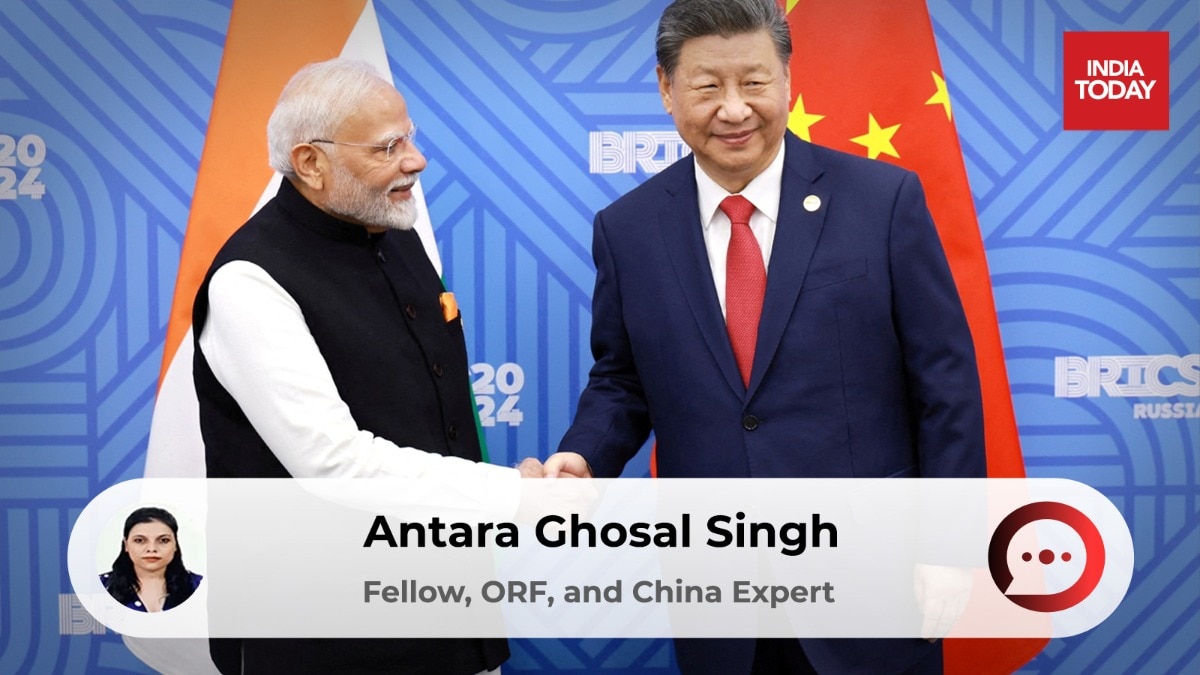
Chinese online commentary around PM Modi's SCO visit centred on his long flight detour to Central Asia through China. The debate brought India's transit constraints, regional frictions and the wider China-India thaw into focus.India was criticised for taking advantage of the "thaw" in China-India relations to make demands that hit China’s core interests.As PM Modi wrapped up his Central Asia tour, paying a state visit to Uzbekistan and attending the SCO summit in Bishkek, Kyrgyzstan, the buzz on the Chinese internet was all about his travel route. Various commentaries on the Chinese internet highlighted how PM Modi had to fly an additional 3,000 kilometres, spend five extra hours in the air and take a big detour through China to reach his destination in Central Asia.The five Central Asian countries have oil and gas, rare earths, and critical minerals – exactly what India needs to upgrade its manufacturing sector. The Central Asian countries, as well as New Delhi, want to establish itself as a trade hub connecting South Asia and Central Asia. However, there is no direct land border between India and the five Central Asian countries. Any passage must rely on third-party countries, and this is where New Delhi’s problem begins, noted an article on Sohu.com.The shortest route for India to reach Central Asia is to fly over Pakistan's airspace, which will take around three hours to reach Tashkent. But after the Pahalgam terror attack, India-Pakistan ties have deteriorated drastically and Pakistani airspace has been closed to India for more than a year now.India had long considered ways to break through its Pakistan dilemma by cooperating with Iran and establishing the Chabahar Port, hoping to open a sea-land intermodal transport route to Central Asia and thereby bypass Pakistan. India and Iran signed a 10-year contract in May 2024 and India had also fulfilled its $120 million commitment to the port. However, amidst the ongoing US-Iran war, the US revoked Chabahar's sanctions exemption. In July 2026, during US airstrikes on Iran, a tower at Chabahar port was reportedly destroyed. In the 2026-27 fiscal year Indian budget, there was no new allocation for Chabahar Port. With frequent clashes in the Persian Gulf, Iranian airspace is no longer safe for transit. The third route for India could have been to circle north around Russia. But given Russia now has a war zone within its territory, the security level of this route is also questionable. So, the only reliable option for India to reach Central Asia right now is China.STRATEGIC EMBARRASSMENT FOR INDIA?Chinese observers called it a major embarrassment for a country like India, which prides itself on being a rising major power with nuclear weapons, aircraft carriers, and 1.4 billion people, to get trapped in the subcontinent and grappling to connect with the Eurasian heartland. The fact that India needed to seek China's consent and permission, from a country it often portrays as its biggest strategic challenge, to reach the countries of Central Asia is symptomatic of New Delhi’s foreign policy failure. They further argued that India’s hardline foreign policies in its own neighbourhood, fence-sitting on the US-Iran conflict, its complex calculation in the China-US great power competition, trying to balance its participation in BRICS and SCO with that in the QUAD are among the many reasons that have led to its current predicament.Portraying the situation as a new normal in India's Central Asia strategy, the Chinese side argued that, going forward, India has difficult choices to make. The animosity between India and Pakistan is unlikely to ease any time soon, while the Iran-India corridor cooperation is also unlikely to stabilise. Sooner or later, India would have to negotiate for an air corridor through China or else face huge losses for its domestic airlines. What would such a negotiation entail? What bargaining chips would India have to exchange? What adjustments or compromises would it have to make? These are among the questions looming large over New Delhi.INDIA TAKING ADVANTAGE OF THE THAW?The issue of India seeking an air corridor through China has been doing the rounds in Beijing ever since the Tianjin summit at the end of August 2025, when PM Modi visited China for the first time in over seven years and both sides took major decisions, including the resumption of direct flights between China and India, visa facilitation, consensus on border management and the resumption of the pilgrimage route to Mount Kailash.As the Guangzhou-Delhi direct flight resumed on October 27, a Reuters news story on Air India urging the Indian government to negotiate with China to allow its flights to fly over Xinjiang airspace and set up emergency landing points in Urumqi, Kashgar, and Hotan generated much debate and discussion on Chinese social media space like Weibo.India was criticised for taking advantage of the "thaw" in China-India relations to make demands that hit China’s core interests. After all, the Xinjiang airspace and the mentioned airports belong to the PLA's Western Theatre Command and serve as strategic frontlines for China in responding to potential conflicts along the China-India border. Both from the perspective of national security and commitment to ally Pakistan, China seems reluctant to even temporarily open Xinjiang's airspace, not even for humanitarian passages, but it is also not willing to jeopardise the positive momentum in China-India relations. Hence, this may explain the current arrangement involving the long detour for PM Modi’s flight.However, the questions remain: Has India formally taken up Air India’s request with China? Has China officially turned it down? What was the scope of the airspace transit permission provided to PM Modi by China?Neither side has made any official public statements on these issues as everything remains shrouded in secrecy and speculation. But the raging debate in China indicates that air transit could very well emerge as an important topic of discussion between the two countries.- EndsPublished By: Priyanka KumariPublished On: Sep 3, 2026 17:44 IST
Chinese chatter on PM Modi's SCO visit
Full Article
Original Source
Read the full article at Indiatoday →KhanList aggregates and links to publicly available news content. We do not host full articles from third-party sources. Always verify important information with original sources.